BREAKING: “DNA Evidence Points to a Suspect” — How Fake Forensic Headlines Destroy Investigations and Innocent Lives
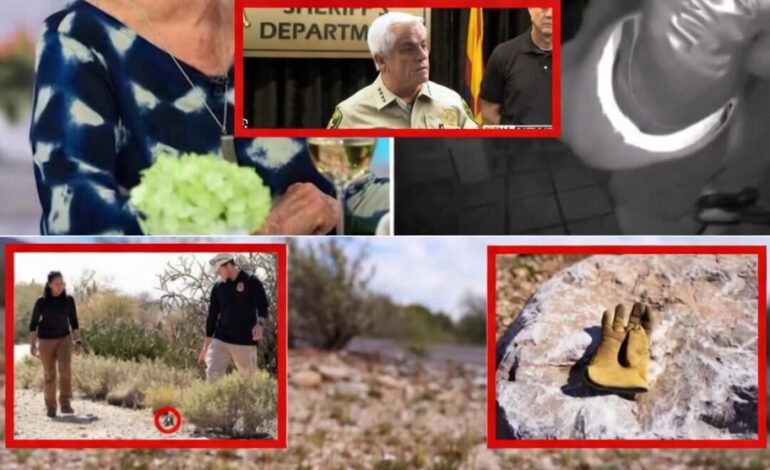

| CORE FINDING: FABRICATED FORENSIC CLAIMS IN ACTIVE MISSING PERSONS CASES CAUSE DOCUMENTED, MEASURABLE HARM
Claims of “breaking DNA evidence” pointing to named or described suspects — when issued without verified law enforcement sources — are among the most dangerous forms of disinformation in missing persons cases. They direct public suspicion at innocent people. They overwhelm real tip lines with false leads. They can alert real perpetrators. And they exploit the public’s deep psychological trust in forensic science. This article explains exactly how these fabrications work, documents their real-world consequences, and gives you the tools to identify and reject them before they spread. |
Why “DNA Evidence” Is the Most Powerful Disinformation Tool in a Missing Persons Case
There are few phrases in modern life that carry more instant authority than “DNA evidence confirms.” We have been trained — by decades of crime television, by landmark wrongful conviction reversals, by scientific consensus — to treat DNA as the gold standard of truth. It is precise. It is scientific. It does not lie.
Fabricators know this. And they exploit it with surgical precision.
When a high-profile missing persons case captures national attention, fake “breaking forensic news” stories follow within days. They adopt the language of official press releases. They deploy specific-sounding details — a glove, a nearby business, a DNA match, a suspect profile. They brand themselves with the word BREAKING in capital letters. And they spread faster than any correction can travel.
This article is a thorough, sourced examination of how fake forensic claims work, why they are so effective, what documented harm they have caused in real cases, and what every reader — and every journalist — can do to stop them.
Anatomy of a Fake Forensic Headline
The specific type of fabrication examined in this article follows a tight, recognizable template. Here is what it typically contains — and why each element is deliberately chosen.
The “BREAKING” Label
The word BREAKING is not regulated. Anyone can apply it to any claim. In legitimate journalism, it signals that a story is developing in real time, sourced directly from officials, and may be updated as information becomes available. In disinformation, it signals urgency designed to override the reader’s analytical pause. It says: share now, verify later.
In real law enforcement announcements, major forensic breakthroughs are announced at press conferences, via official department statements, or through verified wire services like the Associated Press or Reuters. They are not first reported in anonymous social media posts or by sites with no named authors.
The Specific-Sounding Physical Evidence
Fake forensic stories almost always contain a specific physical object — a glove, a piece of clothing, a discarded item. This specificity is deliberate. Vague claims feel like rumor. Specific claims feel like reporting. The detail of a named object makes the story feel as though it came from someone with access to the investigation — an insider, a leak, a source.
Real forensic evidence details are almost never released publicly during an active investigation. Doing so would compromise the case, alert suspects, and potentially taint jury pools. When specific physical evidence is “revealed” in a social media post with no official source, the specificity is a fabrication technique, not a sign of credibility.
The Nearby Business or Location
Fake suspect stories almost always include a geographically plausible location — a restaurant near the victim’s home, a shop on the same street, a workplace in the neighborhood. This geographical specificity serves two functions: it makes the story more believable, and it provides a target for online harassment of real, innocent people who work or live nearby.
This is not hypothetical. Documented cases from multiple high-profile investigations show that online communities, armed with fabricated “evidence,” have targeted real workplaces and real individuals with harassment campaigns, threats, and coordinated public accusations — all based on invented forensic details.
The Unnamed or Vaguely Described Suspect
The fabrication examined here refers to “an employee” rather than a named individual. This is deliberate. It creates a category of suspicion broad enough to implicate anyone fitting a loose description, while remaining just vague enough to avoid immediate defamation claims. It gives online communities a starting point for their own speculation — and that speculation quickly produces real names attached to the invented accusation.
The Absent Source
Real forensic announcements cite specific law enforcement agencies, specific spokespeople, and specific statements. Fake forensic stories use passive constructions: “DNA has reportedly matched,” “sources say,” “investigators are believed to suspect.” These formulations gesture toward authority without providing any. There is no named officer. No department statement. No press conference. No wire service report. Just the claim, floating free of any verifiable origin.
Why We Trust DNA Evidence — And Why Fabricators Exploit That Trust
To understand why fake forensic headlines are so effective, you have to understand the genuine and well-earned public trust in DNA evidence — and its limits.
The Real Power of DNA Evidence
Since the first criminal conviction based on DNA evidence in 1988, forensic DNA analysis has transformed criminal justice. The Innocence Project, founded in 1992, has used DNA evidence to exonerate more than 250 wrongfully convicted individuals in the United States. Those cases have been among the most powerful demonstrations of the technology’s precision and reliability.
DNA analysis works by examining specific locations in the genome where natural human variation is so high that the statistical probability of two unrelated people sharing the same profile is extraordinarily small — often expressed in billions or trillions to one. This is genuinely remarkable science. Its track record of exonerating the innocent is beyond dispute.
The Limits That Fabricators Rely On You Not Knowing
What the public is far less aware of are the well-documented limitations of forensic DNA evidence — limitations that real forensic scientists write about extensively, but that rarely penetrate popular understanding.
- DNA tells you that genetic material was present at a location. It does not tell you when it was deposited, how it got there, or whether the person whose DNA it is was involved in any crime.
- Secondary transfer — where DNA passes from one person to an object they never touched directly — is a documented phenomenon. Research has shown that DNA can be transferred through handshakes, shared surfaces, and even contaminated collection equipment.
- Touch DNA, made possible by modern sensitivity advances, can detect as few as 25 to 30 cells. This makes it far more prone to accidental contamination than earlier methods.
- The ‘prosecutor’s fallacy’ — confusing the probability of a DNA match with the probability of guilt — is a well-documented cognitive error that affects not just juries but also the general public consuming forensic news.
- Real forensic labs operate under strict chain-of-custody and quality control requirements. A DNA ‘match’ that has not gone through verified laboratory protocols and peer review is not a match in any scientifically meaningful sense.
Fabricators do not need to defeat real DNA science. They only need to attach the label “DNA evidence” to a claim and let the public’s existing trust do the rest.
Real Consequences: What Happens When Fake Forensic Claims Spread
This is not a theoretical concern. There is a documented record of harm caused by false forensic claims and fabricated suspect information in high-profile cases. Here are verified examples drawn from real investigations.
The Richard Jewell Case: A Template for Online Mob Dynamics
In 1996, Richard Jewell was a security guard who discovered a bomb at the Atlanta Olympics and helped evacuate people before it exploded. Within days, media reports — sourced from unnamed FBI officials — named him as the lead suspect. He was never charged. He was ultimately exonerated. The real bomber, Eric Rudolph, evaded capture for years.
Jewell spent months under public accusation, surveillance, and media harassment for a crime he did not commit. The “leak” that identified him as a suspect caused documented, lasting harm to his life, reputation, and health. He sued multiple media organizations and won settlements. He died in 2007, never fully free of the association.
In the social media era, the Jewell dynamic plays out faster and at greater scale. The structural problem — unverified suspect information spreading beyond any correction’s reach — is dramatically amplified.
The Boston Marathon Bombing: Reddit’s Catastrophic False Identification
Following the April 2013 Boston Marathon bombing, Reddit communities undertook a crowdsourced investigation that identified Sunil Tripathi, a missing Brown University student, as a primary suspect. The identification was based on photo analysis and online speculation. It was entirely wrong.
Tripathi’s family, already searching desperately for their missing son, was subjected to harassment, threats, and public accusations. Sunil Tripathi was later found dead, a victim of suicide unconnected to the bombing. The Reddit communities that spread the identification issued apologies. The harm was irreversible.
The real bombers, Dzhokhar and Tamerlan Tsarnaev, were identified through official law enforcement investigation — not crowdsourced online speculation.
The Germany Cotton Swab Contamination Case
In a documented case from Germany described in peer-reviewed forensic literature, a contaminated cotton swab used to collect DNA evidence at a crime scene led investigators to spend two years targeting Romani communities as suspects. The contamination originated in the manufacturing process of the swab — not at the crime scene at all. The DNA profile that investigators spent two years chasing belonged to a factory worker who had never been near the crime.
This case illustrates a crucial point: even genuine, laboratory-processed DNA evidence can point investigators in catastrophically wrong directions when collection or handling protocols fail. A social media post claiming a DNA match has none of these safeguards at all.
The Sherri Papini Case: When DNA Evidence Was Real But Misread
In 2016, Sherri Papini disappeared in Northern California and was found weeks later, claiming she had been kidnapped and abused. Investigators found DNA evidence on her clothing that did not belong to her husband. This real DNA evidence initially seemed to support her kidnapping account.
It was not until 2020, when additional DNA analysis linked the evidence to a specific ex-boyfriend, that the full picture emerged. Papini had staged the kidnapping, fled to her ex-boyfriend’s apartment, and inflicted injuries on herself to support the deception. She pleaded guilty in 2022 and was sentenced to 18 months in prison.
The Papini case demonstrates that even verified, official DNA evidence can be misinterpreted or deliberately placed to mislead. A social media post claiming DNA points to a suspect carries none of the verification, chain of custody, or prosecutorial review that real forensic evidence requires.
The Four Specific Harms Caused by Fake Forensic Claims in Active Cases
Harm 1: Innocent People Are Targeted
When a fabricated claim places suspicion on “an employee at a nearby restaurant” or similarly described individual, it immediately activates online communities that specialize in identifying people from limited descriptions. Within hours, real names are attached to invented accusations. Those named individuals face harassment, threats, loss of employment, and in extreme cases, physical danger.
This has happened repeatedly in documented cases. The Boston Marathon misidentification is the most widely studied, but similar dynamics have played out in dozens of missing persons cases where online speculation produced confident false identifications of real, innocent people.
Harm 2: Real Investigations Are Contaminated
Every false lead that floods a tip line represents time and resources that could have been spent following real ones. In the Nancy Guthrie investigation, the FBI confirmed it was processing up to 10,000 hours of video footage and fielding tips from across the country. When fabricated forensic claims generate waves of tips based on invented evidence, investigators must spend time assessing and dismissing them rather than pursuing genuine leads.
More seriously, if a real suspect is monitoring news coverage of the investigation — as perpetrators in kidnapping cases sometimes do — a fabricated forensic claim that points suspicion in a false direction can give them information about what investigators are and are not looking at.
Harm 3: The Victim May Be Endangered
In an active kidnapping where the victim may still be alive, the stakes of disinformation are at their highest. If a perpetrator believes investigators are close to identifying them based on fabricated reports, they may take action to eliminate evidence. If the fabricated story suggests investigators are pursuing a false lead, it may give a perpetrator false confidence.
Law enforcement agencies consistently ask the public and media to allow them to manage information in active kidnapping cases precisely because of these risks. Unauthorized forensic claims — real or invented — undermine that information management and can directly affect the victim’s safety.
Harm 4: It Permanently Damages Trust in Real Forensic Breakthroughs
When fabricated forensic claims circulate and are later exposed, they leave a residue of skepticism. People who shared the false story may become cynical about subsequent real announcements. This skepticism benefits no one — especially not families waiting for genuine investigative breakthroughs. Cry-wolf dynamics, where false alarms dull response to real alerts, are a well-documented consequence of repeated disinformation in the same news cycle.
How to Verify a Forensic Claim in an Active Investigation: A Step-by-Step Guide
The question is not whether forensic evidence in the Nancy Guthrie case or any other investigation will eventually emerge. It is how to tell real announcements from fabricated ones when they appear. Here is a reliable verification process.
- Check for an official law enforcement source. Real forensic announcements come from named spokespersons at identified agencies — the Pima County Sheriff’s Department, the FBI Phoenix Field Office, the Tucson Police Department. They are issued via official press releases on agency websites, or through statements attributed by name in wire service reporting from AP, Reuters, or established local outlets. If the claim has no named law enforcement source, it is not verified.
- Check the agency’s official communication channels. Every major law enforcement agency maintains official social media accounts and press release archives. If the FBI or Pima County Sheriff’s Department had announced a DNA match linking a suspect to the Nancy Guthrie case, it would appear on their official accounts and website within hours. Check those before believing a social media post.
- Look for wire service coverage. AP, Reuters, and NPR cover major forensic developments in high-profile missing persons cases within minutes of official announcement. The absence of wire service coverage of a claimed forensic breakthrough is a strong indicator that the breakthrough did not happen.
- Assess the language. Real forensic announcements are careful, qualified, and specific about what the evidence does and does not prove. They say things like “investigators have identified a person of interest” or “DNA evidence is being analyzed.” They do not say “DNA confirms suspect” or “police now know who did this.” Absolute certainty in forensic language is a red flag.
- Identify the original source. Where did this claim first appear? An anonymous social media post? A site with no editorial history? A page that posts exclusively sensational content about the same case? The origin of a claim is as important as its content.
- Wait before sharing. In the first hours of a claimed forensic breakthrough, the most responsible action is to wait. Real breakthroughs remain real after verification. False ones disappear under scrutiny. The cost of waiting a few hours is negligible. The cost of spreading a fabrication is not.
| QUICK VERIFICATION CHECKLIST FOR FORENSIC CLAIMS
Is there a named law enforcement spokesperson quoted directly? Does the claim appear on the official agency website or social media? Is it covered by AP, Reuters, or NPR? Does the language acknowledge uncertainty, or does it claim absolute certainty? Who posted this first, and what is their track record? If you cannot verify YES to the first three questions: do not share. |
What Real Forensic Breakthroughs in Missing Persons Cases Look Like
To help distinguish fabrications from real announcements, it is worth examining what verified forensic developments in missing persons cases actually look like when they are publicly released.
| Feature | Real Official Announcement vs. Fabricated Claim |
| Source | Real: Named detective, FBI special agent, or department spokesperson. Fake: Anonymous, vague ‘sources say,’ or unnamed ‘investigators.’ |
| Platform | Real: Official agency website, verified press conference, wire service report. Fake: Social media post, content farm website, anonymous Telegram channel. |
| Language | Real: Careful qualifications — ‘person of interest,’ ‘evidence is being analyzed,’ ‘investigation is ongoing.’ Fake: Absolute certainty — ‘DNA confirms,’ ‘police know who did it.’ |
| Timing | Real: Announced when investigators have determined it serves the investigation. Fake: Appears within days of high public interest, optimized for viral spread. |
| Specificity | Real: Specific about what was found, vague about how it connects to prosecution strategy. Fake: Specific about the suspect or location, vague about any verifiable source. |
| Follow-up | Real: Followed by additional official statements, legal proceedings, or named witness confirmation. Fake: Followed by silence, more speculation, or doubling down without new sources. |
The Online Investigator Problem: When Good Intentions Create Real Harm
It would be unfair to suggest that everyone who shares unverified forensic claims in missing persons cases does so with malicious intent. Many people who share and amplify these stories are genuinely invested in finding the missing person. They want to help. They believe that spreading information — any information — increases the chances of a breakthrough.
This motivation is understandable. It is also, in practice, harmful.
The Jason Landry Case: A Documented Example of Sleuth-Driven Harm
The 2020 disappearance of Texas State University student Jason Landry became a focal point for online investigative communities. Thousands of people joined Facebook groups, analyzed evidence, and generated theories. Multiple individuals were publicly named as suspects based on community analysis. None of those identifications were verified by law enforcement. Several people named were entirely innocent.
The Texas Attorney General’s office, which took over the investigation, dedicated hundreds of hours to reviewing tips generated by online communities — the vast majority of which required time to assess and dismiss. Investigators concluded that the online attention, while well-intentioned, had complicated rather than advanced the investigation.
What Investigators Actually Want From the Public
Law enforcement agencies in active missing persons cases are consistent and specific about what public help they find useful:
- Verified, first-hand tips submitted through official tip lines — not social media speculation
- Sharing official, agency-issued missing persons alerts with accurate photographs and descriptions
- Reporting genuine sightings with specific location, time, and description details directly to investigators
- Not contaminating the information environment with speculation, amateur forensic analysis, or unverified claims about suspects
The Pima County Sheriff’s Department and FBI have asked the public to submit tips via their official tip lines in the Nancy Guthrie investigation. That is the most meaningful thing a member of the public can do.
Platform Responsibility: Are Social Media Companies Doing Enough?
The spread of fake forensic claims in active investigations raises direct questions about the responsibility of social media platforms. The current answer, assessed honestly, is mixed at best.
What Platforms Can Detect
Automated systems are reasonably effective at detecting synthetic media — deepfake videos, AI-generated images, manipulated photographs. They are significantly less effective at detecting purely textual fabrications, particularly those that do not repeat verbatim content flagged in previous moderation actions.
A fake forensic claim written in original language, posted from a new account, in a community not previously flagged for misinformation, will almost certainly reach thousands of people before any automated review is triggered.
What Platforms Struggle With
The structural incentives of social media platforms reward engagement, and fabricated forensic claims generate enormous engagement — shares, outraged comments, counter-claims, debunks. All of this activity signals to algorithms that the content is worth amplifying. Platforms have made incremental progress on political misinformation, but the specific category of fabricated forensic claims in missing persons cases has received far less systematic attention.
What Platforms Should Do
Media literacy researchers and disinformation scholars have consistently recommended several interventions that remain only partially implemented: friction mechanisms that prompt users to verify before sharing content flagged as potentially false; faster amplification of official law enforcement corrections when agencies identify fabrications; and dedicated response protocols for active missing persons and kidnapping cases, given the heightened stakes.
Common Questions About Forensic Claims in Missing Persons Cases
How Do I Know If a Forensic Announcement Is Real?
Check for three things in this order: a named law enforcement spokesperson, an official agency statement on a verified government website, and coverage by AP, Reuters, or NPR. If all three are absent, the claim is not verified regardless of how specific or credible it sounds.
Is It Possible That Leaked Forensic Information Could Be Real Even Without an Official Source?
Yes, genuine leaks from law enforcement investigations do occur. However, in practice, genuine leaks reach established journalists at named outlets with verified track records — not anonymous social media accounts. When a genuine leak produces a real forensic development, it quickly generates official confirmation or denial. If neither emerges within hours, the claim is almost certainly not a genuine leak.
What If Online Communities Identify the Right Person by Accident?
Even when online communities arrive at a correct identification — which is rarer than they typically believe — the method causes harm. Publicly naming suspects before charges are filed or official announcements are made can compromise prosecutions, endanger witnesses, and alert suspects to destroy evidence. The rare case where amateur identification is correct does not justify the many cases where innocent people are targeted. Investigations must follow evidence chains that can withstand legal scrutiny, not social media consensus.
What Should I Do If I See a Fake Forensic Claim Going Viral?
Do not share the claim even to debunk it without prominent correction framing. Report it to the platform using its misinformation reporting tools. If you have a significant audience, post a brief, clear debunk that points to the official law enforcement source. Focus attention on official investigation resources — tip lines, official missing persons pages, verified alerts — rather than on the fabrication itself.
Are There Legal Consequences for Publishing Fake Suspect Claims?
Publishing false claims that a specific person committed a crime — or implying such claims through fabricated forensic details sufficient to identify that person — creates potential exposure under defamation law in most jurisdictions. In the United States, private individuals (not public figures) have an easier time pursuing defamation claims, as they do not need to prove actual malice. The operator of a site that publishes fabricated forensic claims pointing to identifiable individuals can face civil liability. The anonymity of many content farm operators makes enforcement difficult, but not impossible.
Key Takeaways
- Fabricated forensic claims — “BREAKING: DNA matches suspect” — are among the most harmful forms of disinformation in active missing persons cases because they exploit deep public trust in real forensic science.
- The claims follow a recognizable template: a specific-sounding object, a geographically plausible location, a vaguely described suspect, and an absent verifiable source.
- Real forensic announcements always come from named law enforcement spokespersons, official agency channels, and established wire services. The absence of these sources is disqualifying.
- Documented cases — including the Boston Marathon bombing misidentification, the Sherri Papini investigation, and the Germany DNA contamination case — show that even well-intentioned forensic analysis can destroy innocent people’s lives when it runs ahead of verified official information.
- The specific harms in active kidnapping cases include: targeting innocent people, overwhelming real tip lines, potentially endangering the victim, and permanently contaminating trust in genuine future announcements.
- The six-step verification process described in this article can be completed in under three minutes. Use it before sharing any forensic claim from an active investigation.
- In the Nancy Guthrie case: as of March 6, 2026, no law enforcement agency has announced any DNA match, suspect identification, or forensic breakthrough. The investigation remains active. Tips should be submitted via official Pima County Sheriff’s Department or FBI channels.
Sources and Further Reading
- Vosoughi, S., Roy, D., and Aral, S. (2018). The spread of true and false news online. Science, 359(6380). MIT Media Lab — documenting that false news spreads six times faster than true news.
- National Research Council (2009). Strengthening Forensic Science in the United States: A Path Forward. National Academies Press. Landmark review of forensic science reliability.
- JSTOR Daily / Kobilinsky, L. (2019). How Forensic DNA Evidence Can Lead to Wrongful Convictions. Peer-reviewed analysis of secondary transfer and contamination risks.
- Science/AAAS (2015). Forensics Gone Wrong: When DNA Snares the Innocent. Coverage of the Amanda Knox DNA controversy and related cases.
- Innocence Project Annual Report 2025 (innocenceproject.org). Documents 250+ exonerations and systemic forensic reliability issues.
- Colorado Bureau of Investigation (2024). Internal Affairs Findings on DNA analyst data manipulation — Yvonne Woods case. Official government statement.
- Texas Monthly (December 2025). The Jason Landry Disappearance — in-depth investigation of online sleuth harm in an active missing persons case.
- Pima County Sheriff’s Department — official press releases on Nancy Guthrie investigation, February-March 2026.
- First Draft (firstdraft.org) — Resource library on forensic disinformation typologies.
About This Article: This piece was written as a media literacy and public safety resource in response to a fabricated forensic claim circulating during an active kidnapping investigation. No specific suspect is named or implied. All real case examples are drawn from verified, publicly documented sources. The article does not contain or reproduce the fabricated forensic claim that prompted it. Anyone with genuine information about the Nancy Guthrie disappearance should contact the Pima County Sheriff’s Department tip line or the FBI Phoenix Field Office directly. Published: March 6, 2026.
Discover more from MatterDigest
Subscribe to get the latest posts sent to your email.