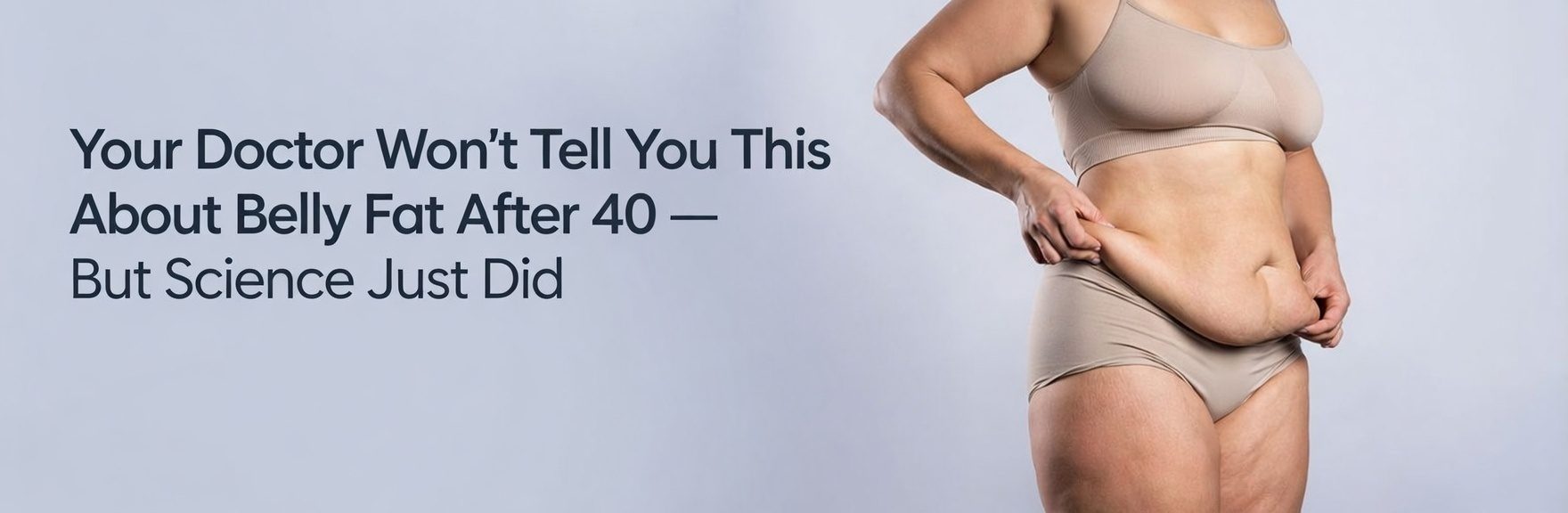
Your Doctor Won’t Tell You This About Belly Fat After 40 — But Science Just Did

Why Does Belly Fat Seem to Appear Out of Nowhere After 40?
You didn’t change much. You’re still eating roughly the same foods. You’re moving your body. But somewhere around your 40th birthday, your waistline started expanding anyway — and it feels like nothing works anymore.
Here’s the uncomfortable truth: belly fat after 40 is not a willpower problem. It’s a biology problem. And the advice most people get — eat less, move more — ignores the deeper science entirely.
In this article, you’ll learn what actually drives midlife belly fat accumulation, why it’s more dangerous than regular fat, and — most importantly — what the latest research says actually works to reverse it.
This isn’t about quick fixes. It’s about understanding your body so you can finally work with it, not against it.
1. What Is Visceral Fat — and Why Does It Matter More Than the Scale?
Not all fat is the same. That’s one of the most important things modern science has taught us — and one of the most overlooked facts in mainstream health advice.
Subcutaneous Fat vs. Visceral Fat: What’s the Difference?
Subcutaneous fat sits just under your skin. You can pinch it. It’s the fat on your thighs, arms, and hips. It’s largely cosmetic and, while excess amounts carry health risks, it’s relatively inert.
Visceral fat is different. It wraps around your internal organs — your liver, pancreas, intestines. You can’t see it or pinch it, but it’s highly metabolically active. Think of it less like storage and more like a rogue endocrine organ pumping out harmful compounds.
What is visceral fat?
Visceral fat is the fat stored deep in the abdominal cavity surrounding your organs. Unlike subcutaneous fat under the skin, visceral fat actively releases inflammatory chemicals and hormones that raise your risk of heart disease, type 2 diabetes, and metabolic syndrome.
The key insight from a 2023 study published in Nature Metabolism: you can have a normal BMI and still carry dangerous levels of visceral fat. Researchers call this “metabolically obese, normal weight” — and it affects an estimated 30 million Americans.
Your waist circumference is a far better predictor of visceral fat risk than your weight or BMI. Men with waists over 40 inches and women over 35 inches are in the high-risk zone, according to the American Heart Association.
2. The Real Reasons Belly Fat Increases After 40
This is where it gets interesting — and where most articles fall short. Here are the science-backed reasons your belly fat accumulates faster after 40, even if you haven’t changed your habits.
Metabolic Rate Decline: It’s Real, But Not the Full Story
Yes, your metabolism slows with age. But a landmark 2021 study in Science — which analyzed 6,400 people across 29 countries — found that metabolic rate stays relatively stable from ages 20 to 60. The dramatic slowdown most people experience is more about muscle loss and lifestyle shifts than age itself.
Muscle Loss (Sarcopenia): The Silent Belly Fat Driver
After 30, adults lose 3-8% of muscle mass per decade. After 60, that rate accelerates. Muscle is your metabolic engine — it burns calories at rest. Less muscle means fewer calories burned throughout the day, even if you eat the same amount.
The calories your body doesn’t burn get stored — and after 40, they increasingly get stored as visceral fat, not subcutaneous fat. This is why the composition of weight gain changes so dramatically with age.
Insulin Resistance: When Your Cells Stop Listening
Insulin sensitivity tends to decline with age. When your cells become resistant to insulin, your pancreas pumps out more of it. High insulin levels signal your body to store fat — especially around the abdomen.
This creates a vicious cycle: visceral fat itself promotes insulin resistance, which promotes more visceral fat storage. Breaking this cycle is the central challenge of managing midlife belly fat.
Hormonal Changes: The Estrogen and Testosterone Effect
Women experience a significant shift in fat distribution during perimenopause and menopause as estrogen levels drop. Estrogen had previously directed fat toward the hips and thighs. Without it, fat migrates to the abdomen. Men face a parallel shift as testosterone levels decline — a condition called andropause. Lower testosterone is directly associated with increased visceral fat and decreased muscle mass.
3. Why Visceral Fat Is So Dangerous — The Science Is Alarming
This isn’t just about looking different in the mirror. Visceral fat is now understood to be an active driver of chronic disease — not just a passive result of it.
Here’s what the research shows visceral fat actually does in your body:
- Releases pro-inflammatory cytokines like TNF-alpha and IL-6, driving chronic low-grade inflammation throughout the body
- Produces excess cortisol, amplifying the stress response and further promoting fat storage
- Secretes free fatty acids directly into the portal vein, hitting your liver first — contributing to non-alcoholic fatty liver disease
- Disrupts adiponectin production, a hormone that normally protects against insulin resistance and inflammation
- Increases your risk of cardiovascular disease by up to 40%, independent of other risk factors (Harvard T.H. Chan School of Public Health, 2024)
- Strongly associated with cognitive decline and dementia risk — visceral fat in midlife predicts brain changes decades later
The bottom line:
Visceral fat isn’t just excess energy storage — it’s an active threat to your long-term health. The good news is it’s also more responsive to intervention than subcutaneous fat. When you start losing weight through the right interventions, visceral fat tends to come off first.
4. What Actually Works: The Evidence-Based Approach to Losing Belly Fat After 40
Let’s get specific. Here are the interventions with the strongest research backing for reducing visceral fat in adults over 40.
Caloric Deficit — But Not Too Severe
A modest caloric deficit of 300-500 calories per day is optimal for midlife fat loss. Severe restriction backfires. It triggers muscle loss and activates starvation responses that preferentially preserve visceral fat. Slow and steady genuinely wins here.
Time-Restricted Eating and Intermittent Fasting
A 2023 meta-analysis in Obesity Reviews found that time-restricted eating (eating within an 8-10 hour window) reduced visceral fat by an average of 4.3% over 12 weeks — independently of calorie intake. The mechanism involves improved insulin sensitivity and enhanced fat oxidation during fasting periods.
For people over 40, a 10-hour eating window (say, 9am to 7pm) is often more sustainable than strict 16:8 fasting, while still capturing most of the metabolic benefits.
Protein: The Most Underutilized Tool
Most people over 40 eat far less protein than they need. Research consistently shows that higher protein intake (1.2-1.6g per kg of body weight) preserves muscle during weight loss, boosts satiety, and directly reduces visceral fat accumulation. A 2024 study in the American Journal of Clinical Nutrition found that adults over 50 who increased protein intake lost 2x as much visceral fat as those who didn’t, even with identical calorie deficits.
5. The Foods That Fight Belly Fat After 40
No single food melts belly fat. But certain dietary patterns consistently reduce visceral fat in clinical research. Here’s what to prioritize — and what to limit.
Eat More Of These
- Fatty fish (salmon, sardines, mackerel): Omega-3 fatty acids reduce visceral fat and inflammation. Aim for 2-3 servings per week.
- Fiber-rich vegetables and legumes: Soluble fiber feeds beneficial gut bacteria and directly reduces visceral fat. Each 10g increase in daily soluble fiber is associated with a 3.7% reduction in visceral fat (Annals of Internal Medicine).
- Green tea: EGCG catechins have been shown in multiple trials to modestly but significantly reduce visceral fat — particularly when combined with exercise.
- Extra virgin olive oil: The oleocanthal in EVOO has anti-inflammatory properties comparable to low-dose ibuprofen.
- Fermented foods: Yogurt, kefir, kimchi, and sauerkraut improve gut microbiome diversity, which is increasingly linked to reduced visceral fat accumulation.
Limit or Eliminate These
- Added sugars and sugar-sweetened beverages: Fructose is disproportionately metabolized to visceral fat via the liver. Liquid calories are especially problematic.
- Refined carbohydrates: White bread, pasta, and pastries spike insulin — the primary signal for visceral fat storage.
- Trans fats: Even small amounts (1-2% of calories) significantly increase visceral fat, independent of total calorie intake.
- Alcohol: Even moderate drinking (1-2 drinks/day) is associated with increased visceral fat, particularly in people over 40.
6. Exercise That Actually Targets Visceral Fat (It’s Not What Most People Think)
Here’s a surprise: hundreds of crunches per day won’t reduce belly fat. Spot reduction is a myth thoroughly debunked by research. But certain types of exercise are specifically powerful against visceral fat.
Resistance Training: The #1 Priority After 40
Lifting weights — or any resistance-based exercise — is the most effective single intervention for reducing visceral fat in adults over 40. A comprehensive 2022 meta-analysis in the British Journal of Sports Medicine found that resistance training reduced visceral fat by 6.1% even without significant weight loss. The mechanism is straightforward: more muscle = higher resting metabolic rate = more fat burned around the clock.
You don’t need to become a bodybuilder. Two to three sessions per week targeting major muscle groups is sufficient to see meaningful results.
HIIT: Big Results in Less Time
High-intensity interval training burns more visceral fat per minute of exercise than steady-state cardio. A 2023 JAMA Internal Medicine study found HIIT reduced visceral fat 28.5% more than moderate-intensity continuous exercise over 12 weeks.
For people over 40, modified HIIT — lower-impact intervals with adequate recovery — achieves similar results with reduced injury risk. Think: cycling intervals, swimming, or incline walking alternating with flat walking.
Daily Steps: Underrated and Underused
Non-exercise activity thermogenesis (NEAT) — the calories burned through everyday movement — can account for up to 350 extra calories per day. Simply aiming for 8,000-10,000 steps daily, independent of formal exercise, significantly reduces visceral fat accumulation over time.
7. Sleep, Stress, and the Cortisol-Belly Fat Connection
This section is where most belly fat advice completely falls apart. Diet and exercise matter enormously — but they won’t fully work if cortisol is chronically elevated.
Why Cortisol Targets Your Belly
Cortisol — your primary stress hormone — directly promotes visceral fat storage. Abdominal fat cells have more cortisol receptors than other fat cells. When you’re chronically stressed, your body interprets this as a survival threat and stores energy in the most accessible place: your belly.
A 2024 study in Psychoneuroendocrinology found that people with high chronic stress had 46% more visceral fat than low-stress counterparts — even after controlling for diet and exercise.
Sleep Deprivation: The Overlooked Fat-Gain Trigger
Getting less than 6 hours of sleep per night is independently associated with significantly higher visceral fat. Sleep deprivation elevates cortisol, disrupts ghrelin and leptin (hunger hormones), and impairs glucose metabolism — all of which promote visceral fat storage.
The fix isn’t complicated, but it is non-negotiable: prioritize 7-9 hours of quality sleep. For many people, improving sleep alone produces measurable reductions in visceral fat within weeks.
Stress Reduction Practices That Work
- Mindfulness meditation: Even 10 minutes daily reduces cortisol levels by measurable amounts within 8 weeks
- Yoga: Combines physical activity with parasympathetic nervous system activation — particularly effective for visceral fat reduction
- Deep breathing exercises: Activate the vagal nerve, shifting your body from sympathetic (fight-or-flight) to parasympathetic (rest-digest) mode
- Social connection: Loneliness is a significant stress trigger — maintaining strong relationships is protective against chronic cortisol elevation
8. Hormones, Menopause, Andropause, and Belly Fat
For both women and men, hormonal changes in midlife are a major — and often unaddressed — driver of visceral fat. Here’s what you need to know.
For Women: Estrogen, Menopause, and Shifting Fat Distribution
The menopausal transition typically begins in the mid-to-late 40s and involves a dramatic drop in estrogen. This shift moves fat storage from the hips and thighs to the abdomen. Women often gain an average of 5 lbs during the menopausal transition — but more concerning is the shift in fat composition and location.
Hormone replacement therapy (HRT) has been shown in multiple randomized controlled trials to reduce visceral fat accumulation during menopause. The Women’s Health Initiative follow-up data (2024 reanalysis) suggests that for healthy women entering menopause before age 60, the benefits of HRT outweigh risks. This is a conversation to have with your doctor — but know the option exists and has solid evidence behind it.
For Men: Testosterone, Andropause, and Belly Fat
Men lose about 1-2% of testosterone per year after age 30. Low testosterone is directly associated with increased visceral fat and decreased muscle mass — creating a self-reinforcing cycle. Research shows that normalizing testosterone levels in hypogonadal men consistently reduces visceral fat, often dramatically. If you’re a man over 40 struggling with unexplained belly fat gain, fatigue, and loss of muscle, getting testosterone levels tested is a reasonable and often overlooked step.
9. Frequently Asked Questions About Belly Fat After 40
How long does it take to lose belly fat after 40?
With consistent diet, exercise, and lifestyle changes, measurable reductions in visceral fat typically begin within 6-12 weeks. Because visceral fat is metabolically active, it often responds faster than subcutaneous fat — many people notice a reduction in waist circumference before they see significant scale changes.
Can you lose belly fat after menopause?
Yes, absolutely. Postmenopausal belly fat loss is harder but entirely achievable. The key strategies — resistance training, high protein intake, adequate sleep, and stress management — remain effective after menopause. Some women also find that addressing hormonal imbalances through HRT accelerates results.
Does drinking water help reduce belly fat?
Staying well-hydrated supports every metabolic process, including fat oxidation. Drinking water before meals reduces calorie intake. And replacing sugary beverages with water directly removes one of the primary drivers of visceral fat. It’s not a magic solution, but it matters.
Are belly fat supplements effective?
Most supplements marketed for belly fat have weak to no evidence. The exceptions with some credible research: green tea extract (EGCG), berberine (improves insulin sensitivity), and magnesium (supports sleep and reduces cortisol). None of these are substitutes for diet and lifestyle changes — but they may provide modest additional support.
10. Key Takeaways and Your Action Plan
Let’s bring it all together. Here’s your evidence-based action plan for reducing belly fat after 40:
- Understand the real enemy: visceral fat, not just the number on the scale. Measure your waist circumference monthly.
- Prioritize protein: aim for 1.2-1.6g per kg of bodyweight to preserve muscle and reduce visceral fat.
- Lift weights 2-3x per week: resistance training is the single most effective intervention for visceral fat in adults over 40.
- Try time-restricted eating: a 10-hour eating window is sustainable and scientifically validated.
- Sleep 7-9 hours: non-negotiable for hormonal balance and fat metabolism.
- Manage stress actively: chronic cortisol elevation is a visceral fat accelerator.
- Reduce sugar and refined carbs: these drive insulin spikes that signal visceral fat storage.
- Talk to your doctor about hormones: testosterone (men) and estrogen (women) have a direct impact on belly fat distribution.
- Be patient and consistent: visceral fat responds to sustained lifestyle change, not crash dieting.
The science is clear. Belly fat after 40 is not inevitable, and it’s not just about calories. It’s about hormones, sleep, stress, muscle mass, and insulin sensitivity working together. Address the whole system — and the results follow.
Discover more from MatterDigest
Subscribe to get the latest posts sent to your email.