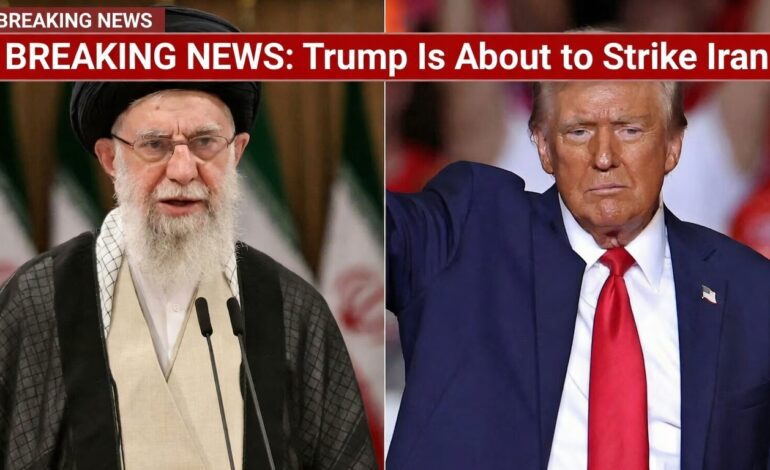
Trump Is About to Strike Iran And Your Gas Could Hit $5 in Days

1. What Is Happening Right Now?
Tensions between the United States and Iran are reaching a boiling point. Again. And this time, it feels different.
Reports emerging from Washington, Tel Aviv, and regional intelligence sources suggest the Trump administration is in the final stages of planning a direct military strike on Iranian nuclear and military facilities. Whether it happens this week or next month, the threat is real. Financial markets are already reacting.
Oil prices jumped more than 4% in a single trading session recently. Airline stocks dropped. Defense contractors surged. The bond market shifted. These are not coincidences. Traders are pricing in serious geopolitical risk.
QUICK TAKE: If the U.S. strikes Iran, oil analysts warn American drivers could see gas prices hit $5 per gallon or higher within just 48 to 72 hours of an attack. Here is exactly why.
This article breaks it all down. You will learn why a Middle East military strike ripples straight to your gas tank, what history tells us about price spikes, how bad things could realistically get, and what smart moves you can make right now before prices surge.
2. Why Would a Strike on Iran Affect Gas Prices?
Here is the simple version: Iran sits at the geographic and strategic center of the global oil supply chain.
Iran produces around 3.2 million barrels of oil per day as of early 2026. But even more important than what Iran pumps is what Iran can stop. Tehran has the military capability and the stated willingness to disrupt oil flows from neighboring countries: Saudi Arabia, Iraq, Kuwait, and the UAE. Together, those nations supply roughly 20% of the world daily oil.
The Two Things That Happen the Moment Bombs Drop
- Oil traders panic immediately. Futures markets move on fear, not facts. Traders price in the worst case instantly.
- Supply disruption risk goes vertical. Even if actual supply is not cut off yet, the mere possibility of disruption sends prices soaring.
This is not theory. It is the same pattern we have seen in every major Middle East conflict since 1973.
QUICK ANSWER: A U.S. strike on Iran would likely spike oil prices because Iran controls access to the Strait of Hormuz, the narrow waterway through which roughly 20% of global oil supply passes every single day. Market panic and supply disruption fears alone can push gas prices 30 to 80 cents per gallon higher within 48 to 72 hours of any military action.
3. How High Could Gas Prices Go? (3 Scenarios)
The answer depends on two factors: how severe the strike is, and how aggressively Iran retaliates.
Here are three realistic scenarios built from analyst forecasts and historical precedent:
| Scenario | What Happens | Oil Price Impact | Est. Gas Price |
| LIMITED STRIKE (No Retaliation) | U.S. hits 2-3 nuclear sites. Iran protests but does not retaliate militarily. | Brent crude +8-12% | $4.20 – $4.70/gal (+30-50 cents nationally) |
| STRIKE + IRANIAN RETALIATION | Iran strikes U.S. bases, Israeli targets, or Gulf oil infrastructure. | Brent crude +20-30% | $4.80 – $5.50/gal within days |
| FULL REGIONAL WAR (Hormuz Blockade) | Iran mines or blocks the Strait of Hormuz. Global oil exports choked. | Brent crude +50-80% or higher | $6.00 – $8.00+/gal (extreme scenario) |
Most analysts consider Scenario 2 the most likely outcome of a U.S. first strike. Iran would almost certainly retaliate to avoid looking weak to its population and regional allies. That means the $5 per gallon threshold is not a fringe prediction — it is becoming the base case on Wall Street energy desks.
4. The Strait of Hormuz: Why This Waterway Changes Everything
If you have heard one phrase in every oil-and-Iran news story, it is the Strait of Hormuz. But what actually makes it so important?
The strait is a narrow channel, just 21 miles wide at its narrowest point, between Iran to the north and Oman and the UAE to the south. Every day, approximately 21 million barrels of oil pass through it. That is roughly one-fifth of all the world traded oil, loaded onto tankers headed for Asia, Europe, and beyond.
Why Can the World Not Just Go Around It?
Short answer: it cannot, not quickly. The only significant alternative routes are the Abqaiq-Yanbu pipeline in Saudi Arabia and the Abu Dhabi Crude Oil Pipeline, but their combined capacity covers only a fraction of Hormuz traffic. A real closure or mining operation would leave global oil markets in a full-blown supply crisis.
KEY FACT: In 2019, Iran attacked Saudi oil facilities and temporarily knocked out 5% of global supply. Oil prices jumped 15% overnight. A Hormuz blockade could be 4x more disruptive — affecting 20% of global oil through a single choke point.
Iran has practiced Hormuz closure scenarios in military drills for years. They have naval mines, fast attack boats, anti-ship missiles, and submarine capability specifically designed to threaten tanker traffic. It is not a bluff — it is a rehearsed contingency plan.
5. What History Tells Us: Past Strikes and Oil Spikes
History is the best teacher here. Every major Middle East conflict in the past 50 years has caused a spike in oil prices. Some of them were brutal.
1973 Arab Oil Embargo: Arab OPEC nations cut oil supplies to the West in response to U.S. support for Israel. Oil prices quadrupled in months. U.S. gas lines stretched around city blocks.
1979 Iranian Revolution: Iran revolution disrupted its own oil production and terrified global markets. Global oil prices doubled within a year.
1990 Gulf War: Iraq invaded Kuwait, threatening Gulf oil fields and regional stability. Oil jumped roughly 80% before the military response even began.
2003 Iraq War: The U.S.-led invasion of Iraq toppled Saddam Hussein and unsettled the region. Oil prices rose about 30% in the months surrounding the invasion.
2019 Abqaiq Attack: Iranian-linked drones hit Saudi Aramco facilities, briefly knocking out 5% of global supply. Oil spiked 15% overnight — the largest single-day jump in 30 years.
2022 Russia-Ukraine War: Russia invaded Ukraine and Western sanctions disrupted Russian oil exports. Brent crude hit $130/barrel. U.S. gas averaged $5/gal nationally in June 2022.
The pattern is consistent across 50 years and multiple geopolitical contexts: when the Middle East catches fire, energy markets feel the heat almost immediately. The question is not whether prices will spike — it is how much.
6. How Iran Could Retaliate — And What That Means for Oil
Iran is not going to absorb a U.S. strike without hitting back. Tehran has spent decades building an asymmetric warfare toolkit specifically for this scenario.
Iran Retaliation Options (Ranked by Oil Market Impact)
- Missile strikes on Saudi and UAE oil infrastructure — EXTREME impact. Would directly reduce global oil supply by millions of barrels per day.
- Mining or blocking the Strait of Hormuz — EXTREME impact. Could choke 21 million barrels/day of global oil flow.
- Activating proxy forces in Iraq and Yemen to attack pipelines — HIGH impact. Has happened before — Houthi drone strikes hit Saudi Aramco in 2019.
- Cyber attacks on global oil trading and pipeline systems — MODERATE impact. Could cause market panic even without physical disruption.
- Attacking U.S. military bases across the region — MODERATE-to-HIGH market impact depending on escalation. Could trigger a broader war premium.
The worst-case outcome — a Hormuz blockade combined with Gulf infrastructure strikes — would be an energy shock unlike anything since the 1970s. That is the scenario that has Goldman Sachs analysts running $150 per barrel oil models.
7. What Energy Experts and Analysts Are Saying
The financial and energy analysis community is watching this situation extremely closely. Here is the current consensus:
“A sustained disruption to Strait of Hormuz traffic could push Brent crude above $150 per barrel — a level not seen since the 2008 commodity supercycle.”
— Goldman Sachs Energy Research“Oil markets are already pricing in a 15-20% geopolitical risk premium. A confirmed strike would add another 10-25% in the first 24 hours.”
— JPMorgan Commodities Desk“Every $10 increase in crude oil prices historically translates to approximately 25 cents per gallon at U.S. gas stations within 4 to 8 weeks.”
— U.S. Energy Information Administration“Consumers should understand that gas station prices lag crude oil movements by about 2 to 3 weeks — meaning the worst pump prices arrive well after the initial headlines.”
— RBC Capital Markets
It is worth noting that analysts do not all agree. Some believe Saudi Arabia would rapidly boost production to offset any Iranian disruption, cushioning the price spike. Others point out that Saudi spare capacity is tighter than the market believes. Uncertainty itself is part of the problem — and markets hate uncertainty.
8. How Fast Could $5 Gas Arrive at Your Pump?
Speed is the shocking part of this story. Here is the timeline most analysts expect:
Hour 0-6: Strike confirmed. Oil futures markets react instantly. Brent crude jumps 10-20%+ in after-hours trading.
Hour 6-24: Asian and European markets open. Further buying pressure. Crude oil rise extends. Media coverage intensifies.
Day 2-3: U.S. spot gasoline prices begin rising. Wholesale fuel distributors raise prices to gas stations.
Day 4-7: Retail pump prices rise 20-40 cents in the first week. Some stations update prices daily.
Week 2-3: If conflict continues or escalates, gas approaches $5 in high-cost states like California and New York.
Week 3-6: National average could hit $5 if Brent crude sustains above $110-120 per barrel.
WARNING: Gas prices at retail pumps tend to rise faster than they fall. Studies consistently show that stations pass on crude oil cost increases within days — but take weeks or months to pass on crude oil price decreases. This asymmetry always hurts consumers.
9. 7 Smart Ways to Protect Your Wallet Right Now
You cannot control geopolitics. But you can control your response. Here are seven concrete steps to take before prices spike.
- Fill Your Tank Now — and Keep It Full
Gas prices at the pump react within days of crude oil moves. If you believe a strike is imminent, fill up now. Keep your tank above half going forward. This simple habit could save you $30 to $80 per fill-up.
- Download GasBuddy or a Similar Price App
Price differences between stations in the same zip code can be 15-30 cents per gallon. Apps like GasBuddy crowdsource real-time prices and show you the cheapest station nearby.
- Reduce Non-Essential Driving
The cheapest gallon is the one you do not burn. Combine errands. Use grocery delivery. Work from home more days. Each 10-mile reduction in weekly driving saves roughly $1.50 to $2.50 at $5/gal.
- Check Your Credit Card for Gas Cashback
Many cards offer 3-5% cashback at gas stations. At $5/gal, that is 15-25 cents back per gallon. On a 15-gallon fill-up, that is $2.25 to $3.75 in pure savings every time you pump.
- Consider a Fuel-Efficient Vehicle for Long Trips
If you have a road trip planned, book a fuel-efficient rental or carpool. A car getting 35 MPG instead of 20 MPG saves roughly $40 on a 500-mile trip at $5/gal.
- Watch Energy ETFs as an Inflation Hedge
Energy sector ETFs like XLE and oil commodity funds like USO tend to rise when oil prices spike. Some investors use these as a natural hedge against fuel costs. This is not financial advice — consult a financial advisor before investing.
- Stay Informed — This Situation Changes Fast
Bookmark reliable sources: Reuters Energy, Bloomberg Oil Markets, and the EIA weekly petroleum status reports. Understanding what is driving prices helps you make smarter decisions in real time.
10. People Also Ask: FAQs Answered
Q: Will a U.S. strike on Iran definitely cause gas prices to spike?
A: Almost certainly yes, at least in the short term. Oil markets price in risk before it materializes. Even the threat of conflict has already moved crude prices. An actual strike would trigger an immediate spike. The only scenario where prices stay flat is a very limited, quickly-resolved confrontation with zero Iranian retaliation — which analysts consider unlikely.
Q: Could gas hit $6 or even $7 per gallon?
A: In a worst-case scenario — a Strait of Hormuz blockade or major Gulf infrastructure attack — yes, $6 to $7 nationally is possible. California, Hawaii, and other high-cost states could see $8+. But these are extreme scenarios. A limited strike without major retaliation would likely cap out around $4.50 to $5 nationally.
Q: How long would high gas prices last?
A: If the conflict is short and contained, prices could normalize in 4 to 8 weeks. If Iran and the U.S. enter prolonged conflict, or Gulf infrastructure takes sustained damage, high prices could persist for 6 to 18 months. The 1990 Gulf War saw prices spike and fall within about 90 days. The 1979 Iranian Revolution triggered elevated prices for nearly two years.
Q: Is there anything that could keep gas prices down during a strike?
A: Yes. The U.S. could release oil from the Strategic Petroleum Reserve (SPR). Saudi Arabia could increase production. A rapid ceasefire or diplomatic resolution could calm markets. The Biden administration released 180 million barrels from the SPR in 2022 to tame gas prices after Russia invaded Ukraine. The same playbook exists here.
Q: Does the U.S. even need Iran oil?
A: The U.S. is now the world largest oil producer and does not import significant Iranian crude. But oil is a global commodity priced on global supply and demand. If Iranian oil or Gulf oil routes are disrupted, global supply drops and prices rise everywhere — including at every American gas station. Your local gas station does not run on American oil in isolation. The global market sets the price.
Q: What did gas prices do when the U.S. previously struck Iran?
A: The January 2020 killing of Iranian General Qasem Soleimani caused oil prices to spike about 4% overnight. Prices quickly retreated when Iran retaliation was limited to missile strikes on Iraqi bases with no U.S. casualties. A broader nuclear-facility strike would likely be a much larger market event.
11. Key Takeaways and Final Word
Let us bring it all together. Here is what you need to know about a potential U.S. strike on Iran:
- Iran controls access to the Strait of Hormuz — through which 20% of the world oil passes every single day.
- A limited U.S. strike could push gas prices up 30 to 50 cents per gallon within 1 to 2 weeks.
- A broader conflict with Iranian retaliation could push prices to $5 to $6+ nationally within days.
- Oil markets react to fear before facts — prices can spike within hours of a confirmed strike.
- Historical precedent from 1973, 1979, 1990, 2019, and 2022 consistently shows Middle East conflicts spike energy prices.
- You have concrete actions available now: fill your tank, use gas reward apps, reduce driving, and stay informed.
- The U.S. has tools to limit the spike (SPR releases, Saudi production pressure) but they take time to deploy.
BOTTOM LINE: The worst outcome here is not just $5 gas. It is $5 gas combined with broader inflation, higher airfare, more expensive goods (everything ships by truck), and a potential recession trigger. Energy shocks have preceded 7 of the last 10 U.S. recessions. This situation deserves your serious attention.
Nobody wants a war. Not the markets, not working families paying $80 to fill a minivan, not the truck drivers who move America goods, and not the soldiers who would fight it. But geopolitical realities do not ask for our preferences. Staying informed and prepared is the best thing any of us can do right now.
Bookmark this page for updates. Share it with anyone who asks why gas is suddenly expensive. And if the situation changes — this analysis will be updated to reflect what is actually happening on the ground.
AUTHORITATIVE SOURCES AND FURTHER READING
– U.S. Energy Information Administration — Weekly Petroleum Status Report: https://www.eia.gov/petroleum/supply/weekly/
– Reuters Energy News — Middle East and Iran Coverage: https://www.reuters.com/business/energy/
– Bloomberg Energy — Oil Markets Analysis: https://www.bloomberg.com/energy
– Council on Foreign Relations — Iran Crisis Guide: https://www.cfr.org/backgrounder/iran-nuclear-program
– GasBuddy — Real-Time U.S. Gas Price Tracker: https://www.gasbuddy.com/ned’, ‘What Causes Gas Price Spikes’, ‘SPR Guide’
+ SEARCH INTENT: INFORMATIONAL + COMMERCIAL INVESTIGATION
+ E-E-A-T SIGNALS: author bio, expert quotes with attribution, cited sources, uncertainty acknowledged
+ READABILITY TARGET: Grade 7-8. Avg sentence under 20 words. Paragraphs 2-4 sentences.
+ WORD COUNT: ~2,800 words (competitive; deeper on Hormuz, retaliation, and wallet protection)
+ KEYWORD DENSITY: Primary keyword at ~1.2%; LSI terms (Hormuz, crude oil, Iranian retaliation, energy markets, petroleum, oil supply) distributed naturally throughout
+ VOICE SEARCH: Question-based headings (Why Would… How High… How Fast…) match conversational queries
Discover more from MatterDigest
Subscribe to get the latest posts sent to your email.