She Was 14, Chasing a Dream — How Traffickers Steal Girls With Promises of Stardom
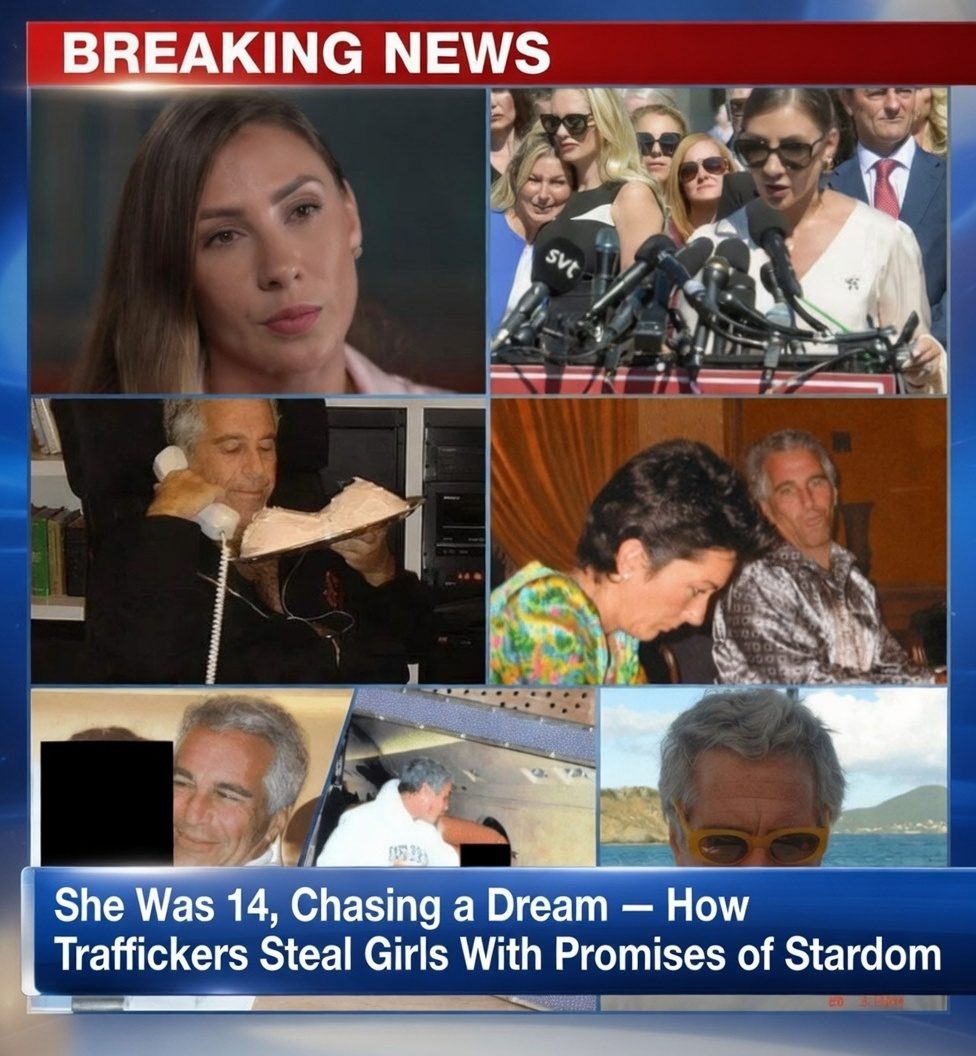

How traffickers use the dream of fame to trap teenage girls — and what every parent needs to know now.
This article discusses human trafficking and its impact on minors. Content is intended for awareness and education. If you or someone you know needs help, call the National Human Trafficking Hotline: 1-888-373-7888.
The Dream That Became a Trap: A Story Like Millions of Others
She was 14. She had a notebook full of lyrics. She practiced her walk in front of the mirror every morning before school. She wanted to be somebody. She wanted to be seen.
Then someone saw her.
Not the way she imagined. Not a record label executive. Not a magazine photographer. It was a man — sometimes older, sometimes not much older than her — who appeared in the right place at the right time. Maybe at the mall. Maybe in her comments on Instagram. Maybe through a friend of a friend.
He said she had something special. He said he knew people. He said $300 was just the beginning. He said her name could be on everyone’s lips.
What happened next was not stardom. It was the beginning of years she cannot get back.
This story belongs to no single person — and to millions. The U.S. Department of State estimates that human trafficking generates approximately $150 billion in illegal profits globally every year. A significant and deeply disturbing portion of victims are teenage girls, recruited not through force at first, but through something far more insidious: a dream.
“They exploit the aspirations of individuals by promising fame, adulation, and the opportunity to live a life of luxury.” — UN Office of the High Commissioner for Human Rights
This article is about how that recruitment works, why it works so devastatingly well, what the real cases look like, and — most importantly — what you can do to make sure no teenager in your life falls for it.
What Is ‘Loverboy’ and ‘Modeling’ Trafficking? Definitions Explained
Before we go further, two terms are worth understanding. They represent two of the most common recruitment pipelines that pull teenage girls into trafficking situations.
What Is Loverboy Trafficking?
Loverboy trafficking — also called ‘Romeo pimp’ or ‘Boyfriend model’ trafficking — is when a trafficker poses as a romantic partner. He showers the victim with attention, affection, and gifts. He makes her feel chosen. Special. Loved.
Once trust is established, the manipulation begins. He introduces debt. He introduces isolation from family. He introduces demands. And by the time she realizes what has happened, leaving feels impossible — emotionally, financially, and sometimes physically.
What Is Modeling or Talent Scam Trafficking?
This type of trafficking uses the promise of a legitimate career in entertainment, modeling, acting, or music to recruit victims. The recruiter — posing as a scout, agent, or producer — offers money, travel, and fame.
Once the victim is in the trafficker’s control, the ‘job’ reveals itself to be something entirely different. The promise of the photo shoot becomes a demand for something far more exploitative. The travel away from home becomes isolation. The contract becomes a trap.
KEY STAT: According to ECPAT USA, the average age of entry into sex trafficking in the United States is between 12 and 14 years old.
The Script Every Trafficker Uses — Word for Word
Here is what makes this crime so effective and so devastating: it follows a recognizable script. Researchers, law enforcement, and survivors have documented it again and again. The words change. The method stays the same.
Stage 1: Identification — Finding the Right Target
Traffickers don’t choose randomly. They look for specific vulnerabilities. A girl who posts about wanting to be famous. A girl whose social media shows family conflict. A girl who comments on other people’s glamorous lives with longing. A girl who is new to a school, a neighborhood, or a country.
According to the U.S. State Department’s 2024 Trafficking in Persons Report, traffickers specifically target individuals in vulnerable situations — poverty, difficult home lives, loneliness, and systemic disadvantage are all factors that increase risk.
Stage 2: The Approach — The Whisper That Changes Everything
The approach is always calibrated to feel natural. Not threatening. Not suspicious. Just a conversation.
At a bus stop. In a mall food court. In Instagram DMs with a profile that looks legitimate. The opener is a compliment: ‘You have a look.’ ‘You remind me of someone famous.’ ‘Have you ever thought about modeling?’
The mention of money — $300, $500, a thousand dollars — comes quickly enough to feel real, but not so fast as to feel suspicious. It is, as investigators describe it, the hook.
Stage 3: Grooming — Building Trust Before Breaking It
This stage can last days, weeks, or months. The trafficker builds a relationship. He is generous. He listens. He seems to understand her dreams better than anyone in her family does.
According to the UNODC, traffickers use grooming to establish emotional dependency before introducing exploitation. By the time demands are made, the victim often feels she owes something — or that leaving means losing the only person who ever truly believed in her.
Stage 4: The Control Mechanisms — Debt, Shame, Fear
Once a victim is isolated enough from her support network, control mechanisms are introduced. These include debt bondage — telling the victim she owes money for travel, accommodation, or ‘training.’ They include threats to share photographs or information with her family. They include physical control and surveillance.
“Through debt bondage, people are forced to work to repay a real or perceived debt. Often the debt grows at a rate they are unable to meet, and they have no hope of ever being free.” — STOP THE TRAFFIK
Stage 5: Exploitation — The Dream Is Gone
The modeling job doesn’t exist. The record deal isn’t real. The $300 was either never paid or was taken back through manufactured debt. What remains is exploitation — often sexual, sometimes involving forced labor — that can last months, years, or decades.
Real Cases: When the Promise of Stardom Became a Prison
These are not hypothetical scenarios. They are documented, prosecuted, publicly recorded cases where the promise of fame and money was used as the entry point for trafficking.
R. Kelly: Decades of Exploitation Behind a Music Empire
- Kelly was convicted in 2021 on federal racketeering and sex trafficking charges. His victims — many of them teenagers — were recruited with promises of career advancement in the music industry. He used his fame, resources, and a network of enablers to maintain control over them for years, sometimes decades.
His case, as documented in court filings and the docuseries Surviving R. Kelly, showed exactly how the entertainment industry’s legitimate power structures can be weaponized against vulnerable young women.
Liliana del Carmen Campos Puello: The Instagram Model Recruiter
In 2018, Colombian Instagram model Liliana del Carmen Campos Puello was arrested for recruiting underage girls into a sex trafficking ring. She used her glamorous online presence — exactly the kind of life her victims dreamed of — to make the offer seem credible. The girls believed they were going to modeling jobs. They were not.
Mike Jeffries and the Abercrombie Trafficking Case
Former Abercrombie & Fitch CEO Mike Jeffries was charged in 2024 with sex trafficking offenses. Prosecutors allege that he and his partner operated a scheme exploiting young men by luring them with false promises of modeling opportunities. The case demonstrated that this pattern of exploitation is not limited by gender, geography, or industry.
The NXIVM Case: Stardom, Empowerment — and Branding
The NXIVM cult — which operated under the guise of a women’s empowerment and self-improvement organization — recruited members with promises of personal growth, networking, and success. A secret inner group called DOS coerced women into providing compromising personal information as ‘collateral.’ Members were physically branded. Leader Keith Raniere was convicted in 2019 and sentenced to 120 years in prison.
The NXIVM case showed that the lure of stardom and success can be used to trap not just teenage girls from disadvantaged backgrounds, but educated, accomplished adult women as well.
The Warning Signs Every Parent and Teen Needs to Know Right Now
These warning signs are drawn from the National Human Trafficking Hotline, the U.S. Department of Homeland Security, and frontline survivor advocates. Knowing them can save a life.
Warning Signs That Someone Is Being Recruited
- A new ‘friend,’ boyfriend, or online contact who is significantly older and very generous with money, gifts, or attention
- Sudden mention of modeling, acting, music, or entertainment ‘opportunities’ from someone they just met
- Being asked to meet someone alone, away from home, in an unfamiliar location
- A recruiter who asks for photos — especially ones that seem ‘artistic’ but feel uncomfortable
- Pressure to keep the contact or opportunity secret from parents or friends
- An online profile that looks professional but was recently created
- A job offer that seems to pay far more than makes sense for the work described
Warning Signs That a Teen May Already Be in a Trafficking Situation
- Unexplained gifts, money, or new expensive items
- Withdrawal from family and longtime friends
- A controlling older ‘boyfriend’ or ‘manager’ who monitors her communications
- Missing school frequently, especially overnight
- Scripted, rehearsed answers when asked about her activities
- Signs of physical abuse, exhaustion, or malnourishment
- Tattoos or branding she doesn’t explain or is evasive about
- References to a place where she ‘works’ but the nature of the work is unclear
If you recognize these signs in someone you know, do not confront the suspected trafficker directly. Call the National Human Trafficking Hotline: 1-888-373-7888 (24/7, confidential, available in 200+ languages).
How Traffickers Find Their Targets Today: The Social Media Pipeline
The recruitment playbook has moved online. And it has never been more effective.
The U.S. State Department’s 2024 Trafficking in Persons Report specifically identified social media and online platforms as ‘a powerful tool’ traffickers now use to identify, groom, and recruit victims. The anonymity of online profiles allows traffickers to present themselves as anyone — talent scouts, music producers, modeling agency representatives — with realistic-looking websites and social media presences.
Which Platforms Are Most Commonly Used?
- Instagram: Profile photos make it easy for traffickers to identify and contact potential targets based on appearance and expressed interests
- TikTok: Young creators sharing dance, music, or performance content are prime targets for fake ‘talent scout’ outreach
- Snapchat: The disappearing nature of messages makes it harder for parents to monitor contact
- Facebook: Used particularly for false job and modeling advertisements
- Dating apps: Some underage users access age-restricted platforms and encounter traffickers posing as romantic interests
A key tactic flagged by the UNODC is what researchers call ‘fishing’ — traffickers posting broadly attractive offers (modeling jobs, music opportunities, travel) and waiting for vulnerable individuals to respond, rather than approaching targets directly. The victim initiates contact. This makes the opportunity feel more legitimate and harder to recognize as a threat.
The Statistics That Should Alarm Every Family
Human trafficking generates an estimated $150 billion in illegal profits globally each year — U.S. State Department, 2024
The average age of entry into sex trafficking in the U.S. is 12–14 years old — ECPAT USA
Teens aged 15–17 account for the largest share of trafficking victims identified by the National Human Trafficking Hotline
Social media and online platforms are now the #1 recruitment tool for traffickers targeting minors — U.S. State Dept., 2024 TIP Report
Girls account for 72% of all detected trafficking victims globally — UNODC Global Report on Trafficking in Persons
The entertainment and modeling industry is one of the top sectors used as cover for sex trafficking recruitment — OHCHR, 2023
These numbers represent real people. Daughters. Sisters. Friends. And they are accelerating, not shrinking, as social media expands the reach of traffickers globally.
What Happens After: The Long Road Back
One of the most misunderstood aspects of trafficking is what happens to survivors after they escape or are rescued. Recovery is rarely quick. It is rarely linear. And it requires far more than shelter and safety.
Survivors often experience complex PTSD, depression, anxiety, and deep difficulty trusting others — including the people trying to help them. Many have been so thoroughly groomed that they initially defend their trafficker. Some return to their trafficker before being able to leave for good.
What Effective Survivor Support Looks Like
- Trauma-informed care from counselors specifically trained in trafficking survival
- Safe, stable housing free from contact with traffickers or their networks
- Legal advocacy — many survivors need help navigating immigration, criminal records, and custody issues
- Education and vocational training to rebuild economic independence
- Peer support from other survivors — this is consistently identified as one of the most powerful recovery tools
- Time — recovery from years of exploitation takes years, not weeks
Organizations like Polaris Project, GEMS (Girls Educational and Mentoring Services), and Love Justice International work directly with survivors on exactly these needs. Their work is underfunded relative to the scale of the crisis.
People Also Ask: Your Questions Answered
How do traffickers usually recruit teenage girls?
Traffickers most commonly recruit teenage girls through false promises of modeling, acting, or music careers; romantic manipulation (loverboy method); and online contact through social media platforms. They target girls showing signs of vulnerability — loneliness, family conflict, financial need, or a desire for fame. Recruitment typically begins with flattery, gifts, and attention before transitioning to isolation and control.
What is the most common age for trafficking victims?
According to ECPAT USA, the average age of entry into sex trafficking in the United States is between 12 and 14 years old. Teenagers aged 15 to 17 represent the largest identified age group in U.S. trafficking cases reported to the National Human Trafficking Hotline.
How can I tell if someone is trying to recruit my child for trafficking?
Key warning signs include: a new adult contact who is very generous with money or gifts, unsolicited modeling or talent offers, requests to meet alone away from home, pressure to keep contact secret, and offers that seem too lucrative for the described work. If your child has a new older ‘friend’ or ‘manager’ you haven’t met, take it seriously and contact the National Human Trafficking Hotline for guidance.
Can traffickers really pose as modeling scouts?
Yes. This is one of the most well-documented and commonly used recruitment tactics in sex trafficking. Traffickers create professional-looking websites, social media profiles, and business cards to pose as legitimate talent scouts. The 2024 U.S. State Department Trafficking in Persons Report specifically identified fake talent recruitment websites as a primary tool used by traffickers.
What should I do if I think my child is being recruited?
Do not confront the suspected recruiter or trafficker directly — this can escalate danger. Instead: (1) Keep communication with your child open and non-judgmental. (2) Contact the National Human Trafficking Hotline at 1-888-373-7888. (3) Contact local law enforcement. (4) Document any communications or contact information you can access safely.
What is debt bondage in trafficking?
Debt bondage is a control tactic where traffickers tell victims they owe money — for travel, housing, ‘training,’ or other manufactured costs. This debt is designed to be impossible to repay because traffickers set the terms. It keeps victims working to pay off a debt that never shrinks. It is one of the most powerful psychological traps used in long-term trafficking situations.
How to Protect Your Child: Action Steps for Parents and Teens
For Parents
- Talk about trafficking openly — not as a scary lecture, but as a real conversation about how recruitment actually works
- Follow your child’s social media and know who is contacting them — not to spy, but to stay informed
- Teach them the script: ‘If someone you just met promises you money or fame, that is a red flag, not an opportunity’
- Make your home a safe place to bring concerns without fear of punishment — traffickers exploit teens who are afraid to tell their parents
- Know the warning signs list above — and take them seriously if you see them
- Contact your child’s school about whether trafficking awareness is part of their curriculum
For Teens
- Understand that real modeling agencies and talent scouts do not approach you randomly online or at the mall — they have offices, verified websites, and work through established channels
- If an offer feels too good to be true, it is — $300 just to show up for a ‘meeting’ or ‘audition’ is not normal
- Never meet someone you only know online alone, in a private place, away from people you trust
- Tell a trusted adult if someone is making you feel pressured, confused, or scared — even if you think you might be in trouble
- Save and screenshot any suspicious communications before deleting them
- Know this number: 1-888-373-7888 — the National Human Trafficking Hotline, available 24/7
Key Takeaways
- Trafficking recruiters use the promise of fame, modeling, and money to target teenage girls — especially those who appear vulnerable or dream of a better life.
- The average age of trafficking entry in the U.S. is 12–14. This is not a distant, foreign problem. It happens in every state, every city, every income level.
- Social media has dramatically expanded traffickers’ reach. Fake talent scouts, producers, and modeling agents contact potential victims daily through Instagram, TikTok, Snapchat, and beyond.
- The recruitment follows a predictable script: identification, flattery, grooming, isolation, control. Knowing the script breaks its power.
- Recovery from trafficking is possible — but it takes years, specialized support, and a community that believes survivors.
- The single most protective factor for teenagers is an open, trusting relationship with at least one adult who will listen without judgment.
- If you see warning signs, act. Call 1-888-373-7888. You do not need to be certain to ask for help.
Conclusion: The Dream Is Worth Protecting
She was 14, chasing a dream. That dream — to be seen, to matter, to build a life that gleams — is not naive. It is human. It is beautiful. And it is exactly what traffickers target.
The answer is not to kill the dream. It is to protect the dreamer. To teach her what real opportunity looks like and what fake opportunity sounds like. To make sure that when a stranger whispers a promise, she has enough knowledge — and enough trust in the adults in her life — to walk away.
The cases are documented. The tactics are known. The warning signs are clear. The only thing missing, in far too many families and schools and communities, is the conversation.
Have it. Today. It could be the most important thing you ever do.
“The most powerful protection we can give a teenager is the truth about how this crime works — and the certainty that they can come to us when something feels wrong.”
🆘 NEED HELP NOW? National Human Trafficking Hotline: 1-888-373-7888 (call or text) | Available 24/7 | Confidential | 200+ languages | Online chat: humantraffickinghotline.org
📱 Text ‘HELP’ or ‘INFO’ to 233733 (BeFree) for immediate assistance.
About This Article
This article was researched and written by an investigative awareness team drawing on official reports, prosecuted case records, and survivor advocacy resources. All statistics are drawn from the U.S. Department of State 2024 Trafficking in Persons Report, ECPAT USA, UNODC, OHCHR, and Polaris Project. No survivor is identified by name without their public consent. Last updated February 2026.
Sources & Further Reading
- S. Department of State — 2024 Trafficking in Persons Report (state.gov)
- STOP THE TRAFFIK — ‘Trafficking in the Name of Modelling’ (stopthetraffik.org)
- UN Office of the High Commissioner for Human Rights — Trafficking in the Entertainment Industry (ohchr.org)
- Polaris Project — National Human Trafficking Hotline Data Reports (polarisproject.org)
- Love Justice International — ‘How Do Traffickers Recruit Their Victims?’ (lovejustice.ngo)
- The World from PRX — ‘How Sex Traffickers Use Modeling Contracts to Lure Young Women’ (theworld.org)
- ACFCS — ‘Human Trafficking Awareness: Celebrity Sex Trafficking Cases’ (acfcs.org, January 2025).
Discover more from MatterDigest
Subscribe to get the latest posts sent to your email.