The Neighbor Who Knew My Husband’s Final Words

The Neighbor Who Knew My Husband’s Final Words
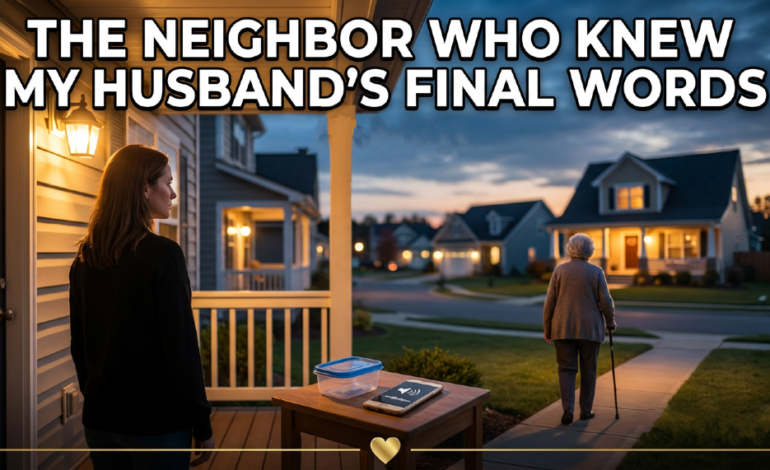
The doorbell rang at 7:42 p.m., three weeks to the day after the funeral. I was still wearing the same black sweater I’d had on at the graveside—hadn’t found the energy to wash it, or maybe didn’t want to lose the faint scent of rain and white roses that lingered in the wool. Through the peephole: Mrs. Carter from next door. In the early eighties, always in soft cardigans, the one who left a foil pan of lasagna on our porch every Christmas, even after we stopped putting up lights.
I opened the door partway. “Hi, Mrs. Carter.”
“Hello, dear.” Her voice was quieter than usual. She held a small plastic container—nothing fancy, just clear with a blue lid. “I made banana bread. Thought you might want some. And… I need to talk to you.”
I stepped aside. She moved carefully, cane tapping the hardwood like a slow heartbeat. She sat on the very edge of the couch, as if afraid to disturb the cushions that still held the faint shape of Mark’s back.
She set the container on the coffee table. Didn’t open it.
“I heard about the accident,” she said. “The hospital. The… decision.”
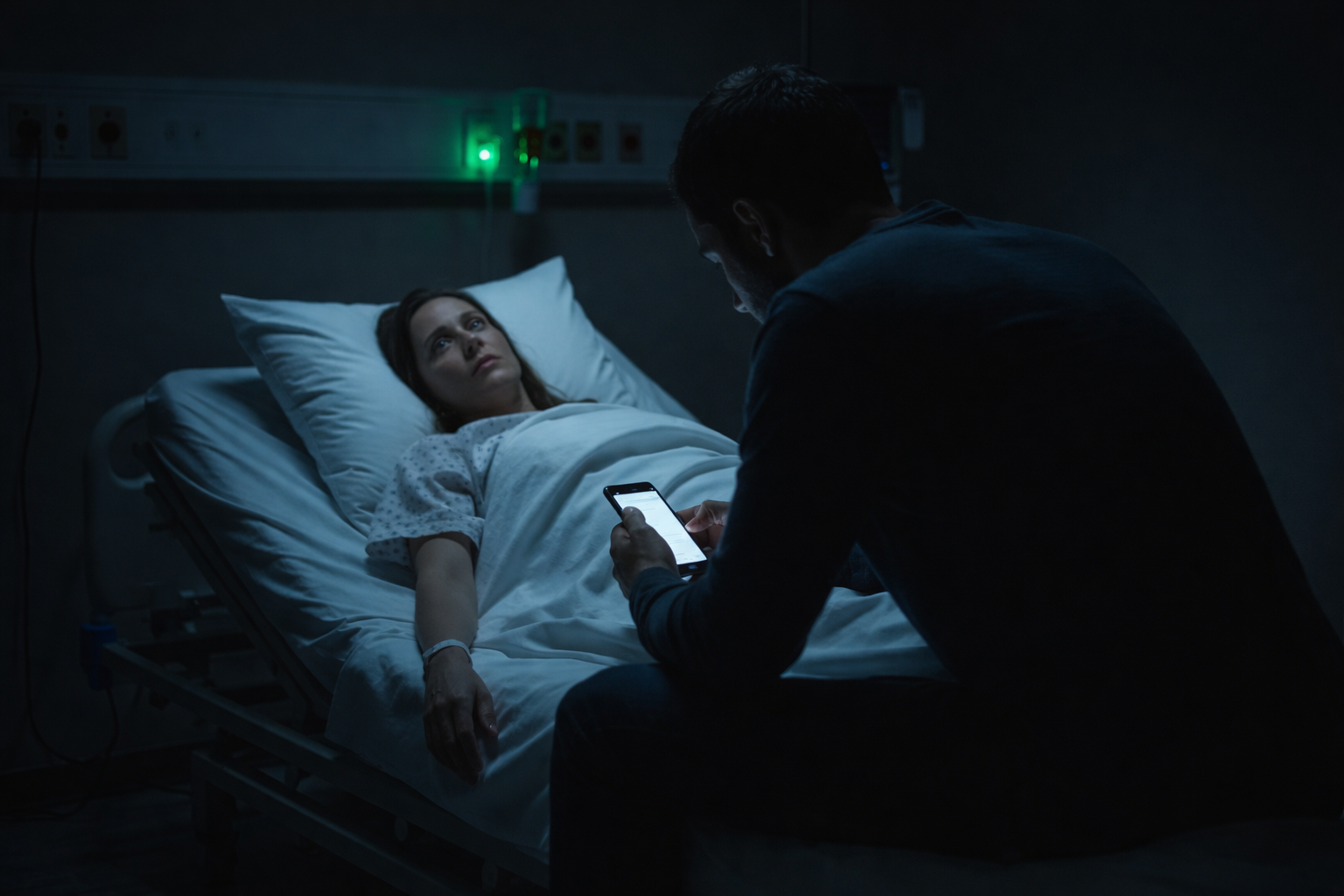
I nodded. Throat tight. Mark had been driving home late from the office—wet roads, a delivery truck that didn’t stop. Brain death declared after forty-eight hours. I’d signed the papers for organ donation because that’s what he wanted. He’d filled out the form years earlier, casual, like it was just another form at the DMV. “If something happens, let me help someone keep going.” I’d laughed then. Teased him about playing the hero.
Now it wasn’t funny.
Mrs. Carter folded her hands. “I know his last words.”
The room went quiet. The ceiling fan clicked once overhead.
“He was alone in the car,” I said carefully. “No one was with him. The police said he didn’t speak at the scene. The paramedics said he was unconscious.”
She looked at me—really looked. Eyes shiny but steady. “I know what he said. Word for word. To the very end.”
I felt the air leave my lungs in a slow leak. “How?”
She reached into her cardigan pocket. Pulled out her phone. Older model, screen cracked at one corner. Tapped once. Held it out.
A voice. His voice. Rough, struggling, the way it sounded when he was exhausted after a long day.
“…tell her… I’m sorry… for all the late nights… tell her I love her… always did… tell Emily…”
The recording ended. Static. Then nothing.
I stared at the phone like it might disappear.
“Where did you get that?” My voice came out thin.
“The recipient.” She lowered the phone. “My grandson, Ryan. He got Mark’s lungs.”
The words hit like cold water. Ripples. Then waves.
Ryan. The quiet kid who’d moved in with her two years ago after his parents split. Twenty-four. Cystic fibrosis since he was little. On the transplant list for years. I’d seen him in the yard sometimes—thin, oxygen tank on wheels, giving a small wave when Mark tossed him a football over the fence.
“He woke up three days after the surgery,” she said. “First thing he did was grab the nurse’s hand. Said he had to tell someone something. They thought it was the anesthesia talking. But he kept repeating it. The same. Like someone had whispered it straight into him.”
I pressed my palm to my chest. Felt my own lungs rise and fall. Ordinary. Mine.
“He asked for my phone,” she went on. “Made me record it so he wouldn’t lose the words. Said they felt… borrowed. Like they weren’t his to keep.”
I closed my eyes. Saw Mark’s face in the ICU—peaceful, tubes everywhere, monitors flatlining one by one. I’d kissed his forehead. Told him it was okay to go. Told him I’d be okay.
Apparently, he hadn’t believed me.
Mrs. Carter reached across the table. Touched my wrist. Her skin was cool, thin.
“Ryan wants to meet you,” she said. “He thinks maybe hearing it from him will help. Or maybe it’ll hurt more. He doesn’t know. But he carries your husband’s breath now. And those words.”
I didn’t answer right away.
Instead, I opened the container. The warm smell of banana bread rose up—comforting, familiar, the way Mark used to smell when he came back from helping her fix the mailbox or carry in groceries.
I took a small bite. Tasted salt before the sweetness.
“Tell him yes,” I said finally. “Tell him I’ll come over tomorrow.”
She nodded once. Stood slowly.
At the door, she paused. “Dear… he also said one more thing. After the ‘I love her.’”
I waited.
“He said… ‘Tell her to leave the porch light on. I’ll find my way back in the dark.’”
The sob came fast and sharp. I covered my mouth.
Mark’s old promise. Every business trip, every late night at the office—he’d text the same thing. Leave the porch light on. I’ll find my way back. I’d roll my eyes. Leave it on anyway.
Mrs. Carter stepped outside. Cane tapping down the walkway.
I closed the door. Walked to the front porch. Flipped the switch.
The light came on—steady warm glow over the steps.
Somewhere in the city, two lungs that used to belong to him were pulling in air. Carrying his last apology. His last promise.
I sat on the porch swing he’d hung too high because he liked the view. Listened to the neighborhood settle into night. Felt my own breath match something bigger, quieter.
Not gone.
Just… redistributed.
Discover more from MatterDigest
Subscribe to get the latest posts sent to your email.