Israel Seeks Talks With Lebanon as Globe Rallies to Preserve U.S.–Iran Ceasefire
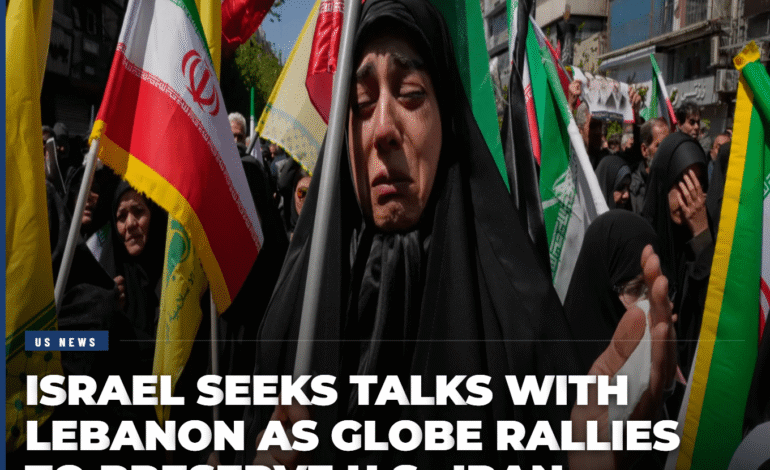

As Netanyahu offers direct negotiations on Hezbollah disarmament, Israeli airstrikes continue to kill hundreds in Beirut — and the fragile two-week truce with Iran hangs by a thread.
The Middle East entered one of its most dangerous diplomatic moments on Thursday, April 9, 2026, when Israeli Prime Minister Benjamin Netanyahu simultaneously announced peace talks with Lebanon and vowed to keep bombing it. That contradiction — talk and strike at the same time — has put the entire US-Iran ceasefire at risk, alarmed world leaders, and forced a scramble of back-channel diplomacy stretching from Beirut to Islamabad to Washington.
⚡ Quick Answer: What Is Happening Right Now?
Israel is seeking direct talks with Lebanon to disarm Hezbollah, while simultaneously conducting airstrikes that have killed over 300 Lebanese civilians in a single day. The strikes are threatening the fragile two-week US-Iran ceasefire announced April 8. The US, Iran, and global powers are scrambling to keep the deal alive ahead of formal peace negotiations in Islamabad on April 12.
What Happened: A Ceasefire Announcement Met by Airstrikes
On the evening of April 8, 2026, President Donald Trump announced a two-week ceasefire between the United States and Iran — a significant pause in a war that had been raging since February 28, when US and Israeli forces launched strikes on Tehran. Pakistani Prime Minister Shehbaz Sharif, whose government brokered the deal, declared that the truce covered “all fronts,” explicitly mentioning Lebanon.
The ink wasn’t dry before Israel launched its most widespread attacks on Lebanon since the war began. At least 203 people were killed on April 8 alone, according to Lebanon’s Health Ministry — including scores in densely populated Beirut neighborhoods hit without warning. By April 9, the cumulative toll reached over 303. Adam Nsouli, a 25-year-old nurse at the American University Hospital in Beirut, described scenes of chaos: the smell of smoke, walls of fire, and sounds he said he couldn’t shake.
Israel’s position? The ceasefire doesn’t apply to Lebanon. “The two-week ceasefire does not include Lebanon,” Netanyahu’s office stated bluntly. Israel insists it is fighting Hezbollah — an Iran-backed militant group — not Iran itself. That legal distinction, however, has satisfied almost no one outside Tel Aviv and Washington.
“If Iran wants to let this negotiation fall apart in a conflict where they were getting hammered, over Lebanon — that’s ultimately their choice. We think that’s dumb.”
— US Vice President JD Vance, speaking in Budapest, April 9, 2026
Netanyahu’s Lebanon Talks Announcement: What It Means
On Thursday, April 9, Netanyahu made a surprise announcement: Israel’s cabinet would begin direct negotiations with Lebanon “as soon as possible.” The goal, he said, was dual: disarming Hezbollah and achieving a historic, sustainable peace agreement between the two countries.
“Following repeated requests from the Lebanese government to open peace negotiations with us, last night I instructed the Cabinet to begin direct negotiations with Lebanon,” Netanyahu said in a video address. He framed it as another step in his legacy of normalizing relations with Arab states: “I have already brokered peace with Arab countries four times, and I intend to do it again.”
But critically, Netanyahu made clear this was not a ceasefire. Military operations would continue while talks were sought. Minutes after his announcement, Hezbollah launched a barrage of rockets that triggered sirens in northern Israel — a reminder that neither side had laid down its arms.
Sources told CNN and CBS News that Netanyahu’s decision came directly at Trump’s request. In a phone call on April 8, Trump asked Netanyahu to “be a little more low-key” with Lebanon operations to protect the fragile Iran deal. Israel agreed to be a “helpful partner” — but refused to formally include Lebanon in the ceasefire terms. The Lebanon talks offer are effectively a diplomatic cover while airstrikes continue.
Key Players in the Crisis
Pursuing direct Lebanon talks while vowing to continue strikes on Hezbollah. Insists Lebanon is outside the ceasefire scope. Faces pressure from Trump to scale back operations.
Continues Strikes
Announced the US-Iran ceasefire. Privately asked Netanyahu to reduce Lebanon operations. Publicly backed Israel’s position that Lebanon is a “separate skirmish.”
Balancing Act
Set to lead the US delegation to Islamabad peace talks on April 12. Called Lebanon a “legitimate misunderstanding” and warned Iran against walking away from negotiations.
Lead Negotiator
Declared Israeli strikes on Lebanon a “blatant violation” of the ceasefire. Warned Iran’s “finger remains on the trigger.” His negotiating team was en route to Islamabad.
Under Pressure
Pursuing a diplomatic track that he said international actors were viewing “positively.” Lebanon is pushing for a temporary ceasefire as a precondition to broader talks.
Seeking Truce
Ceasefire broker who publicly stated the deal included Lebanon. Pakistan is hosting the April 12 Islamabad talks and is a critical neutral mediator between Washington and Tehran.
Key Broker
The Core Dispute: Is Lebanon in the Ceasefire or Not?
This is the question that could determine whether the ceasefire survives. And right now, it has no clear answer — which is itself dangerous.
| Who Says Lebanon IS Included | Who Says Lebanon IS NOT Included |
|---|---|
| Pakistan (ceasefire mediator) | United States |
| Iran | Israel |
| Hezbollah | VP Vance (called it a “misunderstanding”) |
| Iran’s Parliament Speaker Ghalibaf | Netanyahu’s office (formal statement) |
| Multiple diplomatic sources (per CBS News) | US officials (post-Netanyahu phone call) |
CBS News reported something particularly striking: multiple diplomatic sources said Trump himself had been told the ceasefire applied to the whole Middle East region and agreed it did — before a phone call with Netanyahu shifted the US position. This suggests the ambiguity was not accidental, but a product of competing pressures on Washington.
Iran’s Foreign Minister Abbas Araghchi put it directly: the US was “letting Netanyahu kill diplomacy.” And Iran’s Parliament Speaker warned bluntly that “time is running out.”
Washington Steps In: State Department Hosts Emergency Talks
To prevent the collapse, the US State Department moved quickly. Secretary of State Marco Rubio’s office announced hastily arranged three-way talks in Washington for next week. The meeting will bring together:
- US Ambassador to Lebanon Michel Issa
- Lebanese Ambassador Nada Hamadeh Moawad
- Israeli Ambassador Yechiel Leiter
The talks are described as preliminary — a discussion about how to launch direct talks, not the talks themselves. But even getting all three parties in a room is significant. Lebanon had previously insisted there would be “no negotiations under fire,” but the Lebanese government has also been pushing hard behind the scenes for exactly this kind of framework, with the US as mediator and guarantor.
Lebanese PM Nawas Salam has pledged to restrict weapons in Lebanon to “legitimate forces only” — a coded reference to reining in Hezbollah. That offer forms the skeleton of a potential deal.
The Islamabad Talks: What’s Actually at Stake
While the Lebanon crisis dominates headlines, the bigger prize is the Islamabad negotiations set for April 12. These talks, led by VP Vance on the US side, are meant to translate the two-week ceasefire into a lasting framework addressing Iran’s nuclear program, missile capabilities, and regional proxy forces.
Iran’s negotiating team was confirmed en route to Islamabad — though an early post from Iran’s ambassador announcing their arrival was quickly deleted, signaling the diplomatic sensitivity. Trump confirmed in a phone interview that Iranian leaders “talk much differently when you’re at a meeting than they do to the press. They’re much more reasonable.” He added: “They’re agreeing to all the things that they have to agree to. Remember, they’ve been conquered.”
That framing — Iran as defeated — is contentious. Iran’s new Supreme Leader Mojtaba Khamenei (son of Ayatollah Ali Khamenei, who was killed in February’s US-Israeli strikes) released a statement declaring Iran had won the war and demanding compensation for damages. Iran’s leverage is real: it still effectively controls the Strait of Hormuz, the waterway through which roughly 20% of global oil trade flows.
Despite Trump’s announcement that the Strait had reopened for shipping, executives and analysts told CNN that companies are refusing to send vessels through. The uncertainty surrounding the ceasefire — combined with the lack of any clear Iranian guidance on safe passage — means only a handful of ships have made the journey since the truce. Trump separately warned Iran not to charge ships to traverse the strait, saying Tehran was “doing a very poor job.” Until Hormuz fully reopens, the global economy remains at risk.
Timeline of the Crisis
War Begins
US and Israeli forces launch coordinated strikes on Iran, killing Supreme Leader Ayatollah Ali Khamenei. Hezbollah fires rockets into northern Israel in solidarity with Tehran.
Lebanon Front Opens
Full-scale fighting between Israel and Hezbollah begins across Lebanon. Over the following weeks, more than 1,700 Lebanese are killed.
US-Iran Ceasefire Announced
Trump announces a two-week ceasefire. Pakistan’s PM Sharif, who brokered it, says it includes Lebanon. Hours later, Israel launches its heaviest strikes on Lebanon since the war started, killing 203 in a single day.
Netanyahu’s Dual Move
Netanyahu announces direct Lebanon talks while vowing to continue operations. Death toll from strikes rises to 303+. Global condemnation mounts. Trump privately asks Netanyahu to scale back. State Department confirms Washington talks next week.
Crisis Continues
Israel insists there is no ceasefire in Lebanon. Iran warns of “strong responses.” WHO calls for Israel to rescind evacuation orders affecting Beirut hospitals. Ceasefire holds in Iran theater but Lebanon remains active warzone.
Islamabad Talks
Vance leads US delegation in first formal round of negotiations with Iran. Iran’s team is expected to arrive. The fate of the ceasefire — and Lebanon — likely hinges on what happens in that room.
How the World Is Responding
The international response to Israel’s strikes on Lebanon has been swift and severe. Several major powers issued rare public condemnations:
- United Kingdom: Said it was “deeply troubled” by Israeli attacks
- France: Called the strikes “unacceptable”
- Italy: Condemned the “bombings on civilian population”
- WHO: Called on Israel to rescind evacuation orders affecting two main Beirut hospitals as the Lebanese health system buckled under casualties
- Gulf Arab states and European nations: Uniting on demands to preserve the ceasefire and reopen Hormuz, driven by energy dependency
An aid worker described the strikes as appearing “indiscriminate” — hitting areas crowded with homes, not known militant strongholds. That claim has fueled calls for an independent investigation. Israel’s Defense Minister Israel Katz pushed back, stating more than 200 “terrorists” were eliminated, using language that equated the casualty count with combatants.
Hezbollah’s Role: Why This Isn’t Just Israel vs. Lebanon
Understanding the Lebanon crisis requires understanding what Hezbollah actually is. It isn’t simply a militant group — it’s Iran’s most powerful regional ally and the cornerstone of the “axis of resistance,” a network of armed groups across the Middle East aligned with Tehran against Israel.
When Hezbollah fired rockets into Israel on February 28 after the US-Israeli strikes on Iran, it was fulfilling a long-established mutual defense commitment with Tehran. For Iran, Hezbollah in Lebanon is not a proxy in a distant conflict — it’s an existential asset. That’s why Vance’s comment that Lebanon has “nothing to do with Iran” struck many analysts as diplomatically naive, whatever its legal accuracy in the ceasefire text.
Israel’s stated goal — complete Hezbollah disarmament — is something Lebanon’s central government has never been able to achieve. Hezbollah operates a parallel state within Lebanon, with its own military, social services, and political representation. Disarming it would require either Hezbollah’s consent or a military defeat that Lebanon’s own army cannot deliver. Netanyahu’s offer to talk is meaningful — but the ask is extraordinary.
What Happens Next: Three Scenarios
Scenario 1: The Islamabad Talks Succeed
Iran and the US reach a preliminary framework in Islamabad. Lebanon is addressed as part of a broader regional settlement. Israel scales back operations in exchange for diplomatic momentum on Hezbollah disarmament. The ceasefire holds, Hormuz reopens fully, and formal negotiations begin. This is the optimistic scenario — and the one the White House is publicly banking on.
Scenario 2: Lebanon Collapses the Deal
Iran walks away from Islamabad, citing continued Israeli strikes as proof that the US cannot enforce ceasefire terms. The two-week truce expires without a framework. Fighting resumes on the Iran front. Lebanon becomes a flashpoint that reignites the broader war. Global oil prices spike as Hormuz uncertainty intensifies.
Scenario 3: A Managed Ambiguity
The most likely near-term outcome: all sides continue to disagree about Lebanon’s status while quietly de-escalating. Israel reduces — but doesn’t stop — strikes. Iran attends Islamabad talks but keeps pressure on. Washington hosts the Israel-Lebanon preliminary meeting, producing a joint statement that papers over disagreements. The ceasefire survives on paper while the situation on the ground remains volatile.
Frequently Asked Questions
Is Lebanon included in the US-Iran ceasefire?
It is genuinely disputed. Pakistan (the broker), Iran, and Hezbollah say yes. The US and Israel say no. Multiple diplomatic sources told CBS News that Trump initially agreed Lebanon was included before shifting position after a Netanyahu phone call. This ambiguity is the central crisis of the ceasefire’s first 48 hours.
Why is Israel still striking Lebanon during a ceasefire?
Israel’s legal position is that the ceasefire covers only direct US-Israel military action against Iran — not Israel’s separate campaign against Hezbollah in Lebanon, which predates the US-Iran war. Netanyahu argues the two are distinct conflicts. Critics, including Iran and Pakistan, call this a bad-faith interpretation of the deal.
What are the Islamabad talks, and will they succeed?
The Islamabad talks are formal negotiations between the US and Iran, hosted in Pakistan’s capital and scheduled for April 12, 2026. VP Vance leads the US side. They aim to translate the two-week ceasefire into a lasting deal covering Iran’s nuclear program, missiles, and proxies. Whether they succeed depends largely on whether Iran believes the US can rein in Israel on Lebanon.
What does Israel want from Lebanon talks?
Netanyahu stated two goals: full disarmament of Hezbollah and a formal, lasting peace agreement between Israel and Lebanon. Israel also wants to maintain control of territory it has seized along the Lebanese border and the Litani River area, to prevent future Hezbollah infiltration.
What is the Strait of Hormuz, and why does it matter?
The Strait of Hormuz is a narrow waterway between Iran and Oman through which approximately 20% of global oil trade passes. Iran effectively controls it and partially closed it during the war, causing global energy price shocks. The strait’s reopening is a key condition of the ceasefire, but shipping companies say uncertainty is keeping vessels away even after the truce announcement.
Key Takeaways
- 1. Israel is seeking peace talks with Lebanon — but has not halted airstrikes that have killed over 300 people in two days.
- 2. The US-Iran ceasefire is fragile — a fundamental dispute over whether Lebanon is included has put the truce at risk within 48 hours of its announcement.
- 3. The State Department is stepping in, hosting preliminary Israel-Lebanon talks in Washington next week, with the US as mediator.
- 4. The Islamabad talks on April 12 are the real prize — and Lebanon is the biggest threat to them happening at all.
- 5. Hormuz remains effectively closed to normal shipping despite official claims, keeping global energy markets on edge.
- 6. Global condemnation is mounting — UK, France, Italy, and the WHO have all criticized Israeli strikes on Lebanese civilians.
Primary Sources
- CNN Live Blog — US-Iran Ceasefire and Lebanon Crisis, April 9–10, 2026
- NPR — Israel Agrees to Talks with Lebanon, Vows to Fight On
- CBS News — US to Lead Ceasefire Talks Between Lebanon and Israel in DC
- NBC News — Israel’s Attacks Devastate Beirut and Threaten US-Iran Ceasefire
- Al Jazeera — Why Israel’s Attacks on Lebanon Could Cripple US-Iran Ceasefire
Discover more from MatterDigest
Subscribe to get the latest posts sent to your email.