2 Relatives of Soleimani Arrested by ICE After Rubio Revoked Their Green Cards
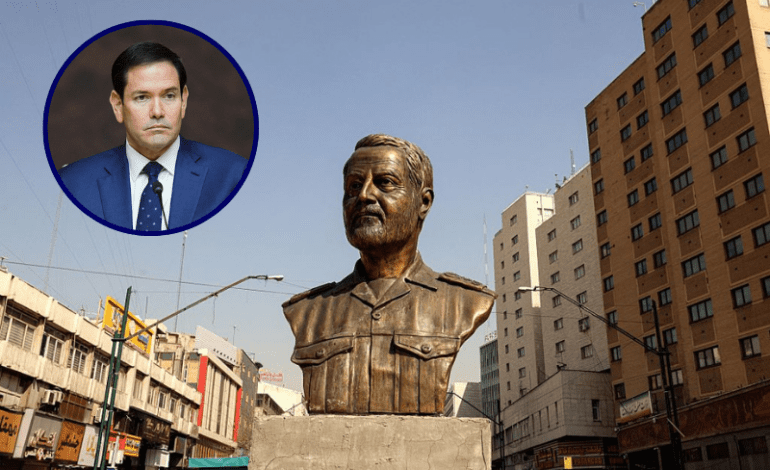

A High-Stakes Immigration Enforcement Action
On the surface, it looks like an immigration enforcement story. Two individuals — permanent U.S. residents — were arrested by ICE after having their green cards revoked by the Secretary of State.
But the details make this story far more significant. These two individuals are relatives of Qasem Soleimani — the head of Iran’s Islamic Revolutionary Guard Corps (IRGC) Quds Force, killed by a U.S. drone strike at Baghdad International Airport on January 3, 2020, on the orders of President Donald Trump.
Secretary of State Marco Rubio revoked the green cards on national security grounds. ICE followed with arrests. And now, a complex legal, diplomatic, and civil liberties battle is underway.
This article explains exactly what happened, who is involved, what the law says, and why this case sits at the intersection of immigration policy, national security, and U.S.-Iran geopolitics.
1. Who Are the Two Arrested Individuals?
The two individuals arrested are relatives of Qasem Soleimani who had been living in the United States as lawful permanent residents — commonly known as green card holders. Their exact identities and the nature of their familial relationship to Soleimani have been reported by major news outlets, though details in this rapidly evolving story continue to emerge.
They had reportedly been living legally in the United States for a period of years under their permanent resident status. There is no public indication they had any direct involvement in Soleimani’s IRGC activities or in any acts of terrorism. Their connection to this enforcement action is, by the government’s own account, primarily their family relationship to Soleimani.
| Important Distinction Being a relative of a designated terrorist does not, under standard U.S. immigration law, automatically make an individual deportable. The government’s authority to revoke green cards on these grounds — and the legal basis for doing so — is one of the central questions this case will test in the courts. |
Key Facts About the Arrested Individuals
| Factor | Detail |
| Status at Arrest | Lawful Permanent Residents (green card holders) |
| Connection to Soleimani | Family relatives of Qasem Soleimani |
| Basis for Revocation | National security — family ties to designated terrorist |
| Revoking Authority | Secretary of State Marco Rubio |
| Arresting Agency | U.S. Immigration and Customs Enforcement (ICE) |
| Legal Charges | Immigration violations following green card revocation |
2. Who Was Qasem Soleimani? A Brief Background
For readers unfamiliar with the name, a brief summary is essential to understanding why this story carries such weight.
Qasem Soleimani was the commander of the Quds Force — the elite international operations division of Iran’s Islamic Revolutionary Guard Corps (IRGC). The IRGC itself was designated as a Foreign Terrorist Organization by the U.S. State Department in 2019 — the first time the U.S. had ever applied that designation to a component of a foreign government’s military.
Soleimani was considered one of the most powerful military figures in the Middle East. U.S. officials accused him of orchestrating attacks on American troops and allies across Iraq, Syria, Lebanon, and beyond. He was on U.S. sanctions lists for years before his death.
The January 2020 Drone Strike
On January 3, 2020, a U.S. drone strike near Baghdad International Airport killed Soleimani along with several other individuals, including Abu Mahdi al-Muhandis, a leader of an Iran-backed Iraqi militia. The strike was ordered by President Donald Trump and immediately triggered an international crisis.
Iran responded with ballistic missile strikes on U.S. military bases in Iraq — a dramatic escalation that briefly brought the two countries to the edge of direct military conflict. The tensions subsided without further strikes, but the geopolitical fallout has lasted years.
| Soleimani: Key Facts | Details |
| Full Name | Qasem Soleimani |
| Role | Commander, IRGC Quds Force |
| IRGC Designation | Foreign Terrorist Organization (U.S., April 2019) |
| Date of Death | January 3, 2020 |
| Cause of Death | U.S. drone strike, Baghdad Airport, Iraq |
| Ordered by | President Donald Trump |
| Iran’s Response | Ballistic missile strikes on U.S. bases in Iraq |
3. What Did Marco Rubio Do? The Green Card Revocations Explained
Secretary of State Marco Rubio used his authority under U.S. immigration law to revoke the permanent resident status of the two Soleimani relatives. This is an extraordinary action — green card revocations by the Secretary of State on national security grounds are rare and legally contested.
What Authority Does the Secretary of State Have Over Green Cards?
Under the Immigration and Nationality Act (INA), the Secretary of State has broad authority related to visas and immigration status in certain national security contexts. Specifically, Section 237 of the INA outlines grounds for deportability, which include terrorism-related grounds.
The government’s argument appears to rest on the assertion that being a close family member of a designated terrorist leader — particularly the commander of a designated Foreign Terrorist Organization — constitutes a sufficient national security basis for revocation of permanent resident status.
Is This Legal?
That is the central question. Legal experts are divided. Here is the core tension:
- Green card holders have significant constitutional protections, including due process rights
- Courts have generally held that lawful permanent residents cannot be deported without meaningful opportunity to contest the charges
- However, the government has broad statutory authority in national security immigration cases
- The Secretary of State’s specific revocation authority in this context is legally novel and likely to be challenged
Immigration attorneys contacted by major news organizations in the wake of these arrests have noted that this action — revoking green cards purely based on family ties to a deceased foreign military commander — pushes into legal territory that has not been clearly defined by prior court decisions.
| Legal Expert Context
Immigration law scholars note that while the government has broad national security immigration powers, using those powers to revoke the status of individuals with no alleged personal wrongdoing — solely because of their family relationship — raises serious Fifth Amendment due process concerns. These cases are likely to produce significant court rulings. |
4. How ICE Made the Arrests — The Legal Process
Once Secretary Rubio revoked the green cards, the two individuals’ permanent resident status was nullified. This made them removable aliens under U.S. immigration law — and placed them within ICE’s enforcement jurisdiction.
ICE operates under the Department of Homeland Security (DHS) and is responsible for immigration enforcement, including the arrest, detention, and removal of individuals who are in the United States without lawful status or who have had their status revoked.
The ICE Arrest Process — Step by Step
- Secretary of State issues revocation of permanent resident status on national security grounds
- Revocation renders the individuals removable under the Immigration and Nationality Act
- ICE receives notification and issues detainer or arrest warrant
- Individuals are taken into ICE custody
- Immigration court proceedings begin — individuals may contest removal
- If removal is ordered and upheld, individuals are deported
The individuals in custody have the right to legal representation and can challenge their detention in immigration court and in federal court via habeas corpus petitions. Given the political and legal significance of this case, it is expected that advocacy organizations and attorneys will pursue every available legal avenue.
5. What Legal Rights Do Green Card Holders Have?
This is a question millions of lawful permanent residents across the United States are watching closely. Understanding the rights of green card holders — and how those rights can be affected by government action — is essential context for this story.
Rights Lawful Permanent Residents Hold
- Right to live and work permanently in the United States
- Right to due process before any immigration status change or removal
- Right to contest removal orders in immigration court
- Right to appeal immigration court decisions to the Board of Immigration Appeals (BIA)
- Right to petition federal courts via habeas corpus
- Constitutional protections under the First, Fourth, and Fifth Amendments
Rights Lawful Permanent Residents Do NOT Hold
- The right to vote in federal elections
- The same level of protection from deportation as U.S. citizens
- Absolute protection against national security-based immigration actions
The Critical Due Process Question
The Fifth Amendment of the U.S. Constitution guarantees that no person shall be ‘deprived of life, liberty, or property, without due process of law.’ Courts have consistently held that this protection applies to lawful permanent residents.
The question this case raises: did the individuals receive adequate due process before their green cards were revoked? Or were the revocations unilateral government actions with no meaningful prior notice or hearing? These procedural questions could determine the outcome of any legal challenge.
6. U.S.-Iran Relations Context — Why This Matters Now
The timing and political context of these arrests cannot be separated from the broader state of U.S.-Iran relations in 2026.
Following Soleimani’s killing in 2020, U.S.-Iran relations deteriorated severely. Nuclear negotiations under the JCPOA framework have stalled and restarted multiple times. Iran has continued to expand its nuclear enrichment programme. Proxy conflicts involving Iran-backed groups across the Middle East have continued to draw U.S. attention and resources.
The Trump administration — in its second term — has taken a significantly harder line on Iran than the Biden administration. Sanctions have been reimposed and expanded. Diplomatic channels have narrowed. And actions like this one — targeting family members of Soleimani through immigration enforcement — send a clear political signal both domestically and to Tehran.
What Signal Does This Send to Iran?
From the U.S. government’s perspective, this action signals several things:
- The U.S. has not forgotten or forgiven Soleimani’s alleged role in attacks on American personnel
- Family connections to designated terrorist leaders carry consequences under U.S. law
- The current administration is willing to use immigration enforcement as a geopolitical tool
From Iran’s perspective, these arrests are likely to be characterised as politically motivated persecution of civilian family members — a framing that Iranian state media has already begun promoting. This dynamic adds another layer of tension to an already fraught bilateral relationship.
7. Reactions from Legal Experts, Lawmakers & Civil Liberties Groups
The response to the arrests has been swift and divided along predictable lines — though with some notable nuances.
From Civil Liberties and Immigration Advocacy Groups
Organizations including the American Civil Liberties Union (ACLU) and the National Immigration Law Center have raised serious concerns about the precedent this case sets. Their core argument: punishing individuals for their family relationships — rather than their own conduct — violates fundamental principles of individual accountability under law.
From National Security Voices
Some national security analysts and conservative commentators have supported the action, arguing that allowing close relatives of designated terrorist leaders to maintain U.S. permanent residency creates unacceptable security risks. They point to the broad statutory authority Congress has granted the executive branch in national security immigration matters.
From Legal Scholars
Constitutional law professors have noted that this case is likely to become a landmark test of executive immigration power. The specific legal questions it raises — Can family ties alone justify green card revocation? What process is due before revocation? Does the Secretary of State have unilateral authority here? — have not been definitively resolved by prior court rulings.
| Landmark Case Potential
Multiple immigration law professors have described this case as one with potential landmark significance. The intersection of national security authority, due process rights for permanent residents, and the use of family relationships as a basis for immigration enforcement creates a constitutional question the Supreme Court may ultimately need to resolve. |
8. Immigration Enforcement Under the Current Administration
These arrests do not exist in isolation. They are part of a significantly expanded immigration enforcement framework under the current Trump administration’s second term.
Since January 2025, the administration has pursued aggressive immigration enforcement measures across multiple fronts:
- Expanded use of the Alien Enemies Act for deportation proceedings
- Significant increases in ICE arrest and detention operations
- Greater use of Secretary of State authority to revoke visas and immigration status
- Expanded definition of national security grounds for immigration enforcement
- Reduced limitations on who qualifies as an enforcement priority
The Soleimani relatives case fits within this broader enforcement expansion — but it is also distinctive because it involves individuals with lawful permanent resident status and no alleged personal wrongdoing. That distinction makes it a more significant legal and political flashpoint than standard enforcement actions.
How This Compares to Previous Administrations
| Approach | Biden Administration | Trump Admin (2nd Term) |
| Green Card Revocations | Rare; required strong evidence | Expanded; includes family-tie basis |
| ICE Enforcement Priority | Narrowed to criminal records | Broadened significantly |
| Nat. Security Immigration | Case-by-case adjudication | Systematic and expanded use |
| Iran Policy Posture | Diplomatic engagement (JCPOA) | Maximum pressure strategy |
| Due Process Emphasis | Procedural protections stressed | National security cited as override |
9. People Also Ask — Frequently Asked Questions
Why were Soleimani’s relatives living in the United States?
The individuals had obtained lawful permanent resident status through legal immigration channels. The specific circumstances of how they obtained their green cards have not been fully disclosed publicly. Their presence in the U.S. was legal until Secretary Rubio revoked their status.
Can the Secretary of State revoke a green card?
The Secretary of State has authority over certain immigration-related matters, particularly involving national security. However, the specific use of that authority to revoke permanent resident status on family-relationship grounds — without allegations of personal wrongdoing — is legally novel and is expected to face serious court challenges.
What happens to the two individuals now?
They are in ICE detention and can contest their removal in immigration court. They may also file federal habeas corpus petitions challenging the legality of their detention. Given the significance of the case, legal representation and advocacy support is expected to be substantial.
Is it legal to arrest someone just because of who their relative is?
Under standard U.S. law, guilt by association is not a recognized legal principle. However, immigration law operates under different rules than criminal law, and the government has broader authority in national security contexts. Whether family ties alone constitute sufficient legal grounds for green card revocation is the central question courts will now address.
How does this affect U.S.-Iran relations?
The arrests have added another point of tension to an already strained relationship. Iran’s government is expected to characterize the action as politically motivated persecution. The timing — amid ongoing maximum pressure sanctions and nuclear standoff — means the case has diplomatic as well as legal significance.
Have green cards ever been revoked on national security grounds before?
Green card revocations on national security grounds have occurred previously, but they typically involve individuals with direct ties to terrorist organizations or evidence of personal involvement in dangerous activities. Using family connection to a deceased foreign military commander as the sole basis is a more novel application of this authority.
What is the IRGC and why was it designated a terrorist organization?
The Islamic Revolutionary Guard Corps (IRGC) is an elite branch of Iran’s military tasked with protecting the Islamic Republic and exporting its revolutionary ideology. The U.S. State Department designated it as a Foreign Terrorist Organization in April 2019, citing its support for proxy militant groups across the Middle East and alleged involvement in attacks on U.S. personnel.
Discover more from MatterDigest
Subscribe to get the latest posts sent to your email.