Mark Milley’s Viral Speech on Military Loyalty Resurfaces as Trump Purges Generals.
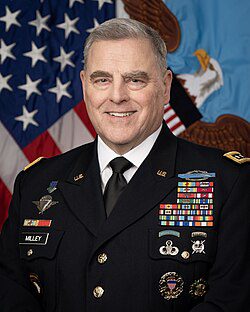

Mark Milley’s Viral Speech on Military Loyalty Resurfaces as Trump Purges Generals Who Refused Iran Invasion Order
A speech that General Mark Milley delivered years ago has exploded back into public consciousness — and this time, the words hit harder than ever. As Defense Secretary Pete Hegseth carries out the dismissal of more than a dozen senior military generals reportedly for refusing to support a proposed invasion of Iran, Milley’s famous reminder about who American service members actually serve has gone viral across every major platform. The message is simple, direct, and — in the current political climate — deeply charged: U.S. military personnel do not swear an oath to a president, a political party, or any individual. They swear an oath to the United States Constitution.
The timing of the resurgence is not coincidental. In a moment when the most senior military leaders in the country are reportedly being removed from their posts for declining to follow orders they considered unlawful or unconstitutional, Milley’s words have become a lightning rod for one of the most serious debates in American political life: the question of what military loyalty actually means, who it is owed to, and what a soldier’s duty requires when those two things come into conflict.
For millions of Americans watching the Pentagon purge unfold, this is no longer an abstract constitutional question. It is happening right now, in real time, at the highest levels of the most powerful military institution in the world.
What Did Mark Milley Say and Why Is His Speech Going Viral Right Now?
Mark Milley served as the 20th Chairman of the Joint Chiefs of Staff — the highest military position in the United States Armed Forces — from 2019 to 2023. During that time, he was at the center of some of the most consequential and contentious moments in recent American civil-military history. His relationship with the Trump administration during the first term was notoriously complicated. He clashed with the White House on multiple occasions over the appropriate use of military force, the role of the military in domestic political situations, and the limits of what a president can legitimately order the armed forces to do.
The speech that is now circulating widely across social media was delivered in the context of those tensions. In it, Milley made a statement that has lost none of its force in the years since he first delivered it. He reminded his audience — and by extension, the country — that American service members take an oath that is specific, deliberate, and constitutionally grounded. That oath is not to a person. It is not to a commander-in-chief as an individual. It is not to a political party or a political movement. It is to the United States Constitution — the document that defines the structure, limits, and values of the American republic.
U.S. service members do not take an oath to an individual, a party, or a wannabe dictator. They take an oath to the United States Constitution. That oath is not conditional. It does not expire when an order is given. It is the foundation on which every other military obligation rests.
The phrase wannabe dictator — which Milley used in a context that left no ambiguity about who he was referring to — was already widely reported when it was first spoken. But in the current moment, with senior generals reportedly being dismissed for refusing to support a military action that they assessed as unlawful or strategically catastrophic, those words have acquired a new and urgent relevance.
Social media platforms have been flooded with clips of the speech within hours of the general purge becoming public knowledge. The hashtags associated with Milley’s speech and with the dismissals have trended simultaneously — creating a parallel conversation in which his words serve as the moral and constitutional framework through which people are making sense of what they are watching happen at the Pentagon.
What Is the Trump General Purge and How Many Senior Officers Have Been Dismissed?
The dismissal of senior military officers by the Trump administration through Defense Secretary Pete Hegseth has been described by defense analysts and former military officials as unprecedented in its scale and in its apparent rationale. More than a dozen generals have reportedly been removed from their posts — a purge of senior military leadership that has no clear parallel in modern American history.
The stated justification for the dismissals, according to reporting from multiple outlets covering the Pentagon, centers on the refusal of these officers to support a proposed military action against Iran. The specific nature of what was proposed — whether it constituted a full military invasion, targeted strikes, or some other form of military operation — has not been fully confirmed in public reporting. What has been confirmed is that senior officers declined to support the action, that their declination was treated by the administration as insubordination, and that the consequence of that treatment was their removal from their positions.
The implications of that sequence of events are profound. If senior military officers are being removed from their posts specifically because they declined to support a military action they assessed as unlawful, unconstitutional, or strategically unsound, then the administration is not simply exercising its authority to appoint and remove military personnel. It is using that authority to reshape the military’s senior leadership in a way that removes those most likely to provide independent professional judgment and replaces them, implicitly, with those more willing to comply without question.
That is a fundamentally different kind of action than the normal rotation of military leadership. And it raises a question that defense experts, constitutional scholars, and former military officials are now asking with increasing urgency: Is what is happening at the Pentagon a legitimate exercise of executive authority over the military, or is it something else — something that the framers of the Constitution specifically designed the military oath and the system of civilian oversight to prevent?
What Does It Mean for a General to Refuse an Order They Consider Unconstitutional?
The question of what a military officer’s duty requires when they believe they have been given an unconstitutional or unlawful order is one of the most serious and carefully examined questions in military law and ethics. It is not a simple question, and it does not have a simple answer. But it does have a framework — one that has been built up over decades of legal precedent, military doctrine, and the specific lessons of history.
American military law is explicit on one key point: military personnel are required to follow lawful orders. That requirement is fundamental to the functioning of any military institution. Without the expectation of compliance with orders from the chain of command, military operations would be impossible to coordinate and impossible to execute.
But American military law is equally explicit on a second point: military personnel are not required to follow unlawful orders. An order that violates the law of armed conflict, that requires the commission of a war crime, that is clearly unconstitutional, or that crosses other specific legal thresholds does not carry the force of a lawful military order. Following such an order is not a defense in military law. It is, in certain circumstances, itself a violation.
The challenge that arises in practice — and the challenge that is at the heart of what is happening at the Pentagon right now — is the question of who determines whether an order is lawful. In the military chain of command, the general rule is that officers are expected to follow orders and to contest them through proper channels if they believe those orders are unlawful. The system is designed to prevent individual officers from substituting their own political or personal judgment for the institutional judgment of the chain of command.
But the system also recognizes that there are limits. When an order is not merely questionable but clearly and manifestly unlawful — when following it would require a service member to participate in something that any reasonable person would recognize as a serious violation of law or the Constitution — the obligation to refuse becomes active rather than passive. It is not just permitted. It may be required.
The question is not whether generals are allowed to refuse an unconstitutional order. American military law has always recognized that they are. The question is whether the Trump administration’s response to that refusal — mass dismissal — is itself a constitutional act, or whether it represents the use of executive power to silence the independent professional judgment the Constitution intended the military to preserve.
Who Is Pete Hegseth and What Is His Role in the General Purge?
Pete Hegseth was confirmed as Secretary of Defense in the early weeks of the Trump administration’s second term, in a confirmation process that was itself deeply contentious. His background — primarily as a Fox News host and Army National Guard veteran — was cited by critics as evidence of insufficient qualification for the role. His supporters argued that his military service and his alignment with the administration’s priorities made him the right choice to transform a Pentagon they described as captured by a progressive agenda and insufficiently responsive to presidential direction.
Since taking office, Hegseth has moved aggressively to reshape the military’s senior leadership and culture. He has been publicly outspoken about what he describes as woke ideology in the military, about the need to restore a warrior culture that he argues has been diluted, and about his view that the military’s primary obligation is to the president and to the administration’s strategic priorities.
That last point is where the constitutional controversy becomes sharpest. The Secretary of Defense does have broad authority over military personnel decisions, including the authority to recommend and execute the dismissal of senior officers. But the exercise of that authority in a way that specifically targets officers for their refusal to support a particular military action — rather than for demonstrated failures of performance, conduct, or fitness — raises serious questions about whether the authority is being used for its intended constitutional purpose or for something else entirely.
Former defense secretaries, retired military officials, and constitutional law experts have been increasingly vocal in their concerns about the precedent being set. The specific concern is not that the administration has the power to remove generals. It does. The concern is that using that power specifically against officers who provided independent professional military judgment — and who declined to support an action they assessed as unlawful — sends a message to the entire military that independent judgment is not welcome and that the consequence of providing it is career termination.
What Are the Constitutional Stakes of This Confrontation?
The confrontation now unfolding between the Trump administration and the senior military officers who have refused to support the proposed Iran action is not simply a story about personnel decisions at the Pentagon. It is a story about one of the most fundamental questions in American constitutional design: the relationship between civilian control of the military and the limits of what civilian leaders can lawfully order the military to do.
The principle of civilian control of the military is one of the cornerstones of the American constitutional system. It means that the military operates under the authority and direction of elected civilian officials — the president as commander in chief, the Secretary of Defense, and ultimately the Congress that funds and authorizes the armed forces. This principle exists to prevent the military from becoming an independent political force and to ensure that military power is accountable to democratic governance.
But civilian control does not mean unlimited civilian authority over military action. The Constitution places specific constraints on what the president and the executive branch can order the military to do. Congress has the exclusive constitutional authority to declare war. The law of armed conflict, which the United States has committed to through treaty and statute, constrains what military operations can lawfully involve. And the military oath itself — the oath to the Constitution rather than to any individual — is a structural reminder that the military’s ultimate obligation is to the law, not to whoever happens to hold the office of commander in chief at any given moment.
The current situation at the Pentagon sits directly at the intersection of all of these principles. Civilian officials are ordering military action. Senior officers are refusing on grounds of legality and constitutionality. And those officers are being dismissed for their refusal. Each of these steps raises constitutional questions that the framers of the American system specifically anticipated — and that the structures they built were designed to address.
Whether those structures are strong enough to hold under the pressure being applied to them right now is a question that constitutional scholars, military legal experts, and the American public are watching with an intensity that reflects how high the stakes actually are.
What Does This Mean for the Future of Civil-Military Relations in America?
The damage being done to civil-military relations by the current confrontation at the Pentagon is something that defense analysts describe as potentially lasting well beyond any single administration. The relationship between civilian government and the professional military is built on trust — the trust of civilians that the military will follow lawful direction, and the trust of military professionals that civilian leadership will not demand that they cross the lines that their oaths and their professional ethics require them to hold.
When that trust is damaged — when senior officers are dismissed for providing independent professional judgment, when the message sent throughout the military institution is that compliance is valued over competence and loyalty to persons is valued over loyalty to the Constitution — the effects are not easily reversed. The culture of an institution as large and as complex as the American military does not change overnight in either direction. But sustained pressure in the wrong direction does produce lasting harm.
The officers who are watching the general purge from the ranks below the dismissed generals are drawing conclusions about what the current environment requires of them. Some will conclude that the path to career survival is compliance without question. Others will conclude that their oath to the Constitution requires them to maintain their professional independence regardless of the personal cost. The distribution of those conclusions across the officer corps will shape the character of the American military for years to come.
General Milley’s resurfaced speech is a reminder that this question — loyalty to whom? — has been asked before. It was asked in the years leading up to the Civil War, when officers had to decide whether their loyalty was to their state or to the Union. It was asked in the aftermath of World War II, when the international community established the principle that following unlawful orders is not a defense. It has been asked in every era when the power of political leadership has pushed against the ethical limits of military service.
Each time it has been asked, the American military tradition has returned to the same answer: loyalty to the Constitution. Not to a person. Not to a party. Not to a movement. To the document that defines the republic that the military exists to defend. That answer is not comfortable in moments of political pressure. But it is the answer that the oath requires — and that Mark Milley, in words that are now circling the globe, has made impossible to forget.
Key Takeaways: The Milley Speech, the General Purge, and the Constitutional Question
Defense Secretary Pete Hegseth has reportedly dismissed more than a dozen senior generals for refusing to support a proposed military action against Iran — a purge of military leadership that has no clear parallel in modern American history.
General Mark Milley’s speech reminding the country that U.S. service members swear an oath to the Constitution — not to any individual, party, or wannabe dictator — has gone viral in direct response to the purge, providing the moral and constitutional framework through which millions of Americans are interpreting what they are watching.
American military law is clear that service members are required to follow lawful orders but are not required — and may be affirmatively obligated — to refuse unlawful ones. The question of whether the orders that prompted the dismissals were lawful is the central constitutional issue that the current confrontation raises.
The use of dismissal authority specifically against officers who provided independent professional military judgment sends a message throughout the military institution about what the current environment values — and what it does not.
The stakes of this confrontation extend far beyond individual personnel decisions. They go to the heart of how civilian control of the military is supposed to work, what limits apply to that control, and whether the structures the Constitution created to prevent the concentration of military power in individual hands are strong enough to hold under the pressure currently being applied to them.
The question Milley posed — loyalty to whom? — is not a rhetorical question. It is a constitutional one. And in the current moment, every officer still serving is being required to answer it.
© 2026 Matter News. All rights reserved.