Pope Leo XIV Speaks Out Against Trump and War

A Pope Who Won’t Stay Silent
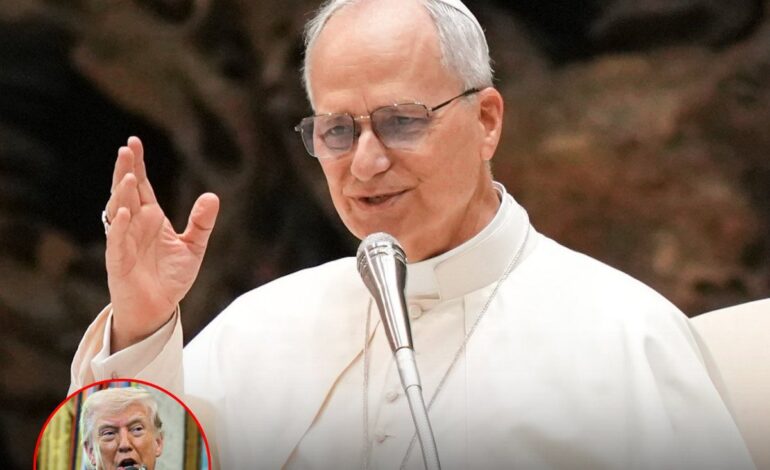
Something remarkable is happening at the Vatican. For the first time in history, the leader of the world’s 1.4 billion Catholics is an American — and he is using that platform to challenge the most powerful political forces in his home country.
Pope Leo XIV, born Robert Francis Prevost in Chicago, has emerged as one of the most outspoken moral voices opposing aspects of the Trump administration’s policies. From immigration crackdowns to the U.S. conflict with Iran, the Pope has drawn clear moral lines — and he has not blinked.
This article covers everything you need to know: what Leo XIV has actually said, why it matters, how Trump has responded, and what the Vatican’s position signals for the future of faith and politics in America.
| Pope Leo XIV’s Most Powerful Statement (Palm Sunday 2026) “Jesus is the King of Peace, who rejects war, whom no one can use to justify war. He does not listen to the prayers of those who wage war, but rejects them.” — Pope Leo XIV, Palm Sunday, March 29, 2026 |
Who Is Pope Leo XIV? A Brief Background
Pope Leo XIV was elected on May 8, 2025, becoming the 267th Bishop of Rome and the first-ever American-born pope. His birth name is Robert Francis Prevost. He was born on September 14, 1955, in Chicago, Illinois.
He spent decades as a missionary in Peru, serving as a parish pastor, bishop, and seminary administrator. This deep international experience shaped his worldview. He is not simply an American churchman — he is what Vatican observers call a ‘pan-American’ figure, deeply rooted in the global south.
Pope Leo XIV vs. Trump: What Has Actually Been Said
The relationship between Pope Leo XIV and President Donald Trump is complicated — and deliberately so. Leo has consistently avoided calling Trump out by name. But his words leave little doubt about who he is addressing.
On War and the Invocation of God
The most dramatic confrontation came on Palm Sunday, March 29, 2026. Speaking at a Mass near Rome, Pope Leo delivered what commentators described as a pointed moral rebuke — without once uttering Trump’s name.
| Verified Direct Quote
“This is our God: Jesus, King of Peace, who rejects war, whom no one can use to justify war. He does not listen to the prayers of those who wage war, but rejects them, saying: Even though you make many prayers, I will not listen: your hands are full of blood.” — Pope Leo XIV, Palm Sunday 2026, citing Isaiah 1:15 |
The sermon landed in a charged political moment. U.S. Secretary of Defense Pete Hegseth had, just days earlier, led a Christian worship service at the Pentagon where he prayed for ‘overwhelming violence’ against Iran and its adversaries. Reports from the Military Religious Freedom Foundation noted complaints from service members who were told the Iran conflict was ‘part of God’s divine plan.’
Pope Leo’s message was unmistakable: God cannot be conscripted to justify bloodshed. Any leader who does so, the Pope implied, prays in vain.
On Immigration and the Trump Administration
Immigration is the other major flashpoint. Pope Leo has spoken carefully but consistently on this issue. In a September 2025 interview with Crux’s Elise Allen — his first major interview as pope — he highlighted a letter his predecessor Pope Francis had written rebuking the Trump administration’s mass deportation plans.
| Verified Direct Quote “I was very happy to see how the American bishops picked that up, and some of them were courageous enough to go with that.” — Pope Leo XIV, Crux interview, September 2025 |
Leo made clear he would not engage in ‘partisan politics’ himself, preferring U.S. Catholic bishops to lead on domestic issues. But he left no ambiguity about his personal values: decisions made ‘more based on economics than on human dignity and human support’ concerned him deeply.
In November 2025, Leo formally backed U.S. Catholic bishops’ statement criticizing the Trump administration’s immigration and deportation policies. He emphasized that all people must be treated with dignity and humanity — regardless of legal status.
In a symbolic gesture, the Vatican confirmed that Leo would spend July 4, 2026 — America’s 250th anniversary — on Lampedusa, Italy’s southernmost island and a primary entry point for migrants from Africa and the Middle East. He declined Trump’s invitation to visit the United States.
On the Iran Conflict and Middle East Wars
As U.S.-Iran tensions escalated in early 2026, Pope Leo XIV’s voice grew louder. Speaking from Castel Gandolfo on March 31, 2026, he described a world where ‘more than a million’ people had been displaced and called on world leaders to pursue dialogue over military escalation.
He referenced geopolitical developments — including Trump’s statements on ending conflicts — and expressed cautious hope that leaders might be seeking ‘a way out’ of violence. But his broader message was firm: dialogue, not force, must define international relations.
In a March 23 address, Leo lamented that aviation technology — once a symbol of human connection — was being used for bombing campaigns. Aircraft, he said, should be ‘vehicles of peace, never of war.’
On Gaza, Leo raised the question of whether genocide was taking place, noting that ‘the word genocide is being thrown around more and more,’ and called the situation there ‘very, very grave.’
Why Pope Leo XIV Is in a Unique Position
No previous pope has occupied this particular intersection of identities. Leo is simultaneously the spiritual leader of global Catholicism and a native Chicagoan with deep knowledge of American culture, politics, and faith.
This duality gives him unusual moral leverage. As he noted in his September 2025 interview: ‘The fact that I am American means, among other things, people can’t say, like they did about Francis, he doesn’t understand the United States.’
What Makes Leo Different From Pope Francis on This Issue
- Francis spoke out broadly against global inequality and war. Leo speaks specifically about American political decisions.
- Francis was from Argentina — critics could dismiss his views as ‘foreign.’ Leo cannot be dismissed so easily.
- Leo has signaled he is willing to engage Trump directly if given the opportunity, while still avoiding partisan framing.
- Polling shows two-thirds of American Catholics view Leo favorably — a significant moral platform.
Trump’s Response to Pope Leo XIV
President Trump’s relationship with the new pope started warmly. When Leo was elected in May 2025, Trump called it ‘a Great Honor for our Country.’ But the relationship has grown more complicated as Leo has spoken out.
Reporting from Axios in March 2026 described the two men as being at odds on war and immigration — the two biggest foreign policy and domestic debates of the moment. Trump reportedly responded to Leo’s peace messages by saying he did not want a ceasefire.
Trump has not directly attacked Leo by name. But the contrast between the administration’s rhetoric — including Defense Secretary Hegseth invoking God in calls for ‘overwhelming violence’ — and the Pope’s Palm Sunday sermon created a stark public divide.
| Key Statistic (AP-NORC Poll, 2025)
An AP-NORC poll shows two-thirds of American Catholics have a favorable view of Pope Leo. Among all Americans, he is viewed positively by 44% vs. just 10% unfavorably — a rare figure of cross-partisan trust in today’s polarized environment. |
What This Means: Faith, Power, and the Future
Pope Leo XIV’s emergence as a moral counterweight to the Trump administration is historically significant. The Catholic Church has long navigated the tension between spiritual authority and political influence. But rarely has a pope held this kind of personal cultural proximity to a sitting U.S. president.
Leo represents something unusual in today’s polarized landscape: a major moral figure that roughly equal shares of Republicans and Democrats view favorably. That is not common. It gives him a platform that is difficult to simply dismiss or demonize.
His approach is strategic. He speaks in the language of the Gospel — peace, dignity, mercy — rather than partisan attacks. This makes his moral critiques harder to deflect. When he says God rejects the prayers of those who wage war, he is not speaking as a Democrat. He is speaking as the Vicar of Christ.
Key Themes Defining Leo XIV’s Papacy (2025-2026)
- Peace and opposition to war — especially the U.S.-Iran conflict and the war in Gaza
- Human dignity and immigration — direct support for migrants and opposition to mass deportations
- Rejection of religious nationalism — opposing any leader who uses God’s name to justify violence
- Catholic social teaching — rooted in the legacy of Pope Leo XIII’s Rerum Novarum
- Synodality and church unity — continuing Pope Francis’ legacy of inclusive governance
Discover more from MatterDigest
Subscribe to get the latest posts sent to your email.