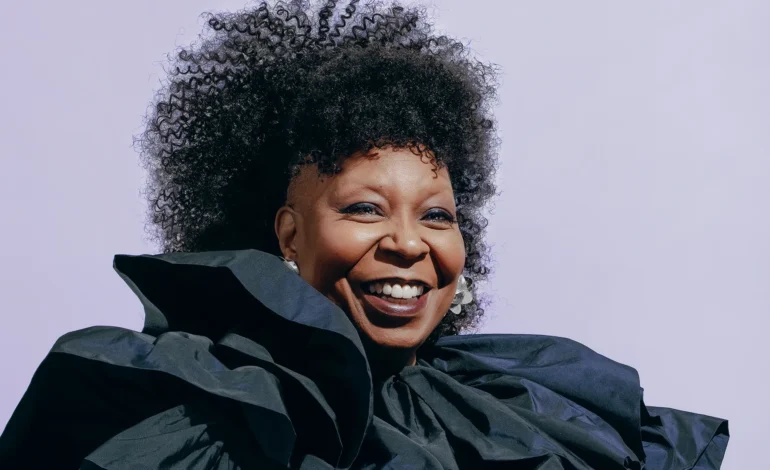

Whoopi Goldberg’s Bombshell Statement Shakes Hollywood: What Really Happened and Why Everyone Is Still Talking About It
Hollywood has seen its share of dramatic moments. Award show controversies. Public feuds between A-list celebrities. Shocking on-air outbursts that dominate the news cycle for days. But what Whoopi Goldberg did on a Sunday night — with nothing more than her name, her voice, and a decision she had clearly been sitting on for a long time — hit differently than almost anything the entertainment industry has seen in recent memory.
Within hours of her statement going public, the internet had already made up its mind. The numbers were staggering. The reaction was immediate. And the names she mentioned — dozens of them, spanning multiple decades of Hollywood power — sent a shockwave through an industry that rarely faces this kind of direct, public accountability.
If you are trying to understand what happened, why it happened, and what it means for the future of the entertainment industry, this article covers everything you need to know.
How It Started: A Sunday Night No One Expected
Sunday nights in Hollywood are usually quiet. The work week is just about to begin again. Award season buzz has either died down or not yet started. It is the kind of night when the entertainment world collectively exhales.
That is precisely why the timing of Whoopi Goldberg’s statement caught everyone off guard. There was no red carpet. No press conference. No publicist-approved prepared remarks delivered to a carefully selected media outlet. What happened instead was raw, unfiltered, and clearly deliberate.
Goldberg, one of only a handful of entertainers in history to achieve EGOT status — meaning she has won an Emmy, a Grammy, an Oscar, and a Tony — did not need a platform. She is the platform. When she speaks, people listen. And on this particular Sunday night, what she had to say was something that the entertainment industry had apparently been hoping she would keep to herself.
She did not keep it to herself.
The Statement Itself: What Whoopi Said and Why It Matters
Without a studio audience, without a script, and without the usual layer of Hollywood polish that separates celebrities from candor, Goldberg delivered what can only be described as a reckoning. She named names. Dozens of them. People in positions of power across the entertainment industry — producers, executives, directors, and personalities — who she said had used their influence in ways that crossed the line from professional to harmful.
The list was not vague. It was not the kind of carefully worded statement designed to imply things without actually saying them. Goldberg was specific. She was deliberate. And she was clearly prepared for whatever came next.
The core of her message was this: Hollywood has long operated under an unspoken system where certain people are protected because of their power, their connections, or their commercial value — regardless of how they treat others. That system, she argued, does not just hurt the individuals on the receiving end of the abuse. It corrupts the entire industry. It poisons the culture. And it will keep doing so until someone with enough standing decides to name it out loud.
Goldberg positioned herself as that person. And given her five-decade career, her unassailable status as a legend in the industry, and her long history of speaking truth regardless of the consequences, few people were in a position to dismiss her.
320 Million Views: Why the Internet Could Not Look Away
Numbers like 320 million views are almost impossible to fully comprehend. For context, that is roughly equivalent to the entire population of the United States watching something once. It is more views than most major Hollywood blockbusters generate in their entire theatrical run. It is the kind of number that tells you this moment was not just a celebrity story — it was a cultural event.
Why did so many people watch? The answer is not complicated. The public has been waiting for something like this for a long time.
Over the past several years, Hollywood has faced a growing credibility problem. Audiences increasingly feel that the entertainment industry lectures the public about values and accountability while internally protecting its own from those exact same standards. The gap between what Hollywood says and what Hollywood does has become a source of deep frustration for millions of people — fans and non-fans alike.
When someone with Goldberg’s history and credibility stands up and says publicly what many people already suspected privately, it creates an almost irresistible pull. People shared the video because it felt like confirmation of something they had long believed. Others shared it because they wanted to know if the names she mentioned were people they had admired. Still others shared it simply because it was genuinely shocking — and genuinely brave.
The spread was not just organic. It was driven by the sense that this was a moment with real consequences. That these were not just words. That something was going to change.
Who Is Whoopi Goldberg? Why Her Voice Carries This Much Weight
To understand why this moment landed as hard as it did, you need to understand who Whoopi Goldberg is — not just as a celebrity, but as a figure in American cultural history.
Born Caryn Elaine Johnson in New York City in 1955, Goldberg grew up in a housing project in Manhattan. She did not have an easy start. But she had talent, drive, and a refusal to let the entertainment industry define her on its own terms. She broke through with her one-woman Broadway show in 1984, which led directly to her Oscar-winning role in The Color Purple in 1985.
Since then, she has built a career that spans nearly every corner of the entertainment world. Movies. Television. Broadway. Stand-up comedy. She has hosted the Academy Awards multiple times. She has been a co-host on The View for nearly three decades, making her one of the longest-running and most recognized voices in daytime television.
More importantly, Goldberg has spent her entire career saying things that other people in the industry were too cautious — or too self-interested — to say. She has been wrong sometimes. She has been controversial. She has faced real consequences for speaking her mind. And she has kept speaking anyway.
That track record is a big part of why her Sunday night statement carried so much weight. This was not a celebrity trying to generate attention or stay relevant. This was someone with nothing left to prove and everything to lose, choosing to speak anyway.
Hollywood’s Reaction: Silence, Panic, and Damage Control
When the statement went live, Hollywood’s initial reaction was almost unanimously silence. The names on Goldberg’s list did not immediately respond. Their publicists went quiet. Their social media accounts, which usually post multiple times a day, went dark.
That silence spoke volumes.
In most celebrity controversies, the people involved respond within hours. They have teams of PR professionals whose entire job is to get ahead of bad press. The fact that almost no one named in Goldberg’s statement came out immediately to deny or challenge her claims was noticed immediately by media observers.
Behind the scenes, industry insiders reported frantic phone calls between agents, lawyers, and studio executives. The question was not just about reputation management. It was about legal exposure. About what Goldberg might say next. About whether other people who had been silent for years might now feel emboldened to speak as well.
The concern was not unfounded. In the hours after Goldberg’s statement, social media began filling with people — some well-known, many not — sharing their own accounts of experiencing or witnessing the kinds of behavior she had described. The statement had cracked something open. And once that crack appears, it is very hard to seal it again.
The System Goldberg Was Calling Out
To fully grasp what Goldberg was targeting with her statement, it helps to understand how power actually works in Hollywood.
The entertainment industry runs on relationships. Who you know matters as much as — and often more than — what you know or how talented you are. Decisions about who gets cast, who gets hired, who gets a second chance after a failure, and who gets quietly blacklisted are all made within a web of personal connections that most people on the outside never see.
That web has real benefits. It creates a community. It allows for collaboration and creative risk-taking. But it also has a dark side. When the same small group of people control most of the major decisions, and when those people protect each other rather than holding each other accountable, the result is a culture where abuse of power can thrive for decades without consequence.
Goldberg’s statement was a direct challenge to that culture. She was saying, in effect: the protection stops here. The silence ends now. And if the people who have benefited from this system will not speak up, then those of us who have been in it long enough to see exactly how it works will speak up for them.
It is a message that resonated far beyond Hollywood. Every industry has some version of this dynamic — where insiders protect insiders and outsiders bear the cost. That universality is part of why the story spread so far beyond entertainment media.
Public Reaction: What Everyday People Said
The public response to Goldberg’s statement was unlike anything Hollywood has seen in years. It was not divided along the usual lines of who people liked or disliked. People who had never watched The View shared the clip. People who had been critical of Goldberg in the past found themselves agreeing with her point, if not necessarily every specific claim.
On social media platforms, the comments sections told a story of a public that was simultaneously shocked and unsurprised. Many people wrote some version of: “I always suspected this but didn’t know if it was real.” Others wrote about their own experiences working in creative industries — not Hollywood specifically, but fields where similar dynamics play out at smaller scales.
What stood out most in the public reaction was the hunger for accountability. People were not just interested in the drama of celebrity names being called out. They were interested in the principle. They wanted to see a powerful system held responsible. And they saw Goldberg’s statement as a step — perhaps a significant one — toward that.
A retired teacher in Ohio described it this way in a widely shared post: “I don’t follow celebrity gossip. But this felt like more than gossip. This felt like someone finally saying what needed to be said, and doing it at real personal risk. That’s courage, whatever you think of the details.”
What This Means for the Future of Hollywood Accountability
The question everyone in Hollywood is now asking is: what comes next?
Moments like this one do not exist in isolation. They are part of a longer story — one that has been building for years. The entertainment industry has already been through significant upheaval over accountability issues. The MeToo movement reshaped conversations about power and abuse in Hollywood in ways that are still playing out. The rise of social media has given voices to people who previously had no platform. And a generation of younger entertainment professionals has grown up with very different expectations about what workplace culture should look like.
Goldberg’s statement lands in that context. It is not just a single act of courage. It is another pressure point in an ongoing push to make the entertainment industry more transparent, more fair, and more accountable to the people who work in it — not just the people who run it.
Whether it leads to formal investigations, legal actions, or industry-wide reforms remains to be seen. The people named have lawyers. The institutions involved have significant resources to resist change. History shows that these kinds of moments often produce less systemic change than people initially hope for.
But history also shows that moments like this shift the culture in ways that are harder to undo than any single legal outcome. Once enough people see something clearly, it becomes very difficult to go back to pretending they did not.
The Personal Risk Goldberg Took — And Why It Matters
It would be easy to look at Whoopi Goldberg’s stature — her EGOT status, her decades of experience, her position as one of the most recognized figures in American entertainment — and assume that she had nothing to lose by speaking out.
That assumption would be wrong.
Even at her level of celebrity, speaking this directly carries real risks. The people she named are powerful. Some of them have the resources and the motivation to respond aggressively — through legal threats, through media campaigns designed to undermine her credibility, through the kind of behind-the-scenes pressure that rarely makes the news but can quietly reshape careers.
There is also the risk of being wrong about specific details — or of being portrayed as wrong even when she is not. Public statements of this kind invite intense scrutiny. Every word gets examined. Every claim gets fact-checked, or attempted to be fact-checked. And in a media environment where the line between news and entertainment is blurry, the story can shift quickly from what she said to whether she is a reliable narrator.
Goldberg clearly understood all of this before she spoke. The deliberateness of her statement — the specificity, the timing, the lack of any apparent attempt to soften the blow — suggests someone who has thought carefully about the consequences and decided to proceed anyway.
That kind of informed courage is worth noting. It is different from impulsiveness. It is the product of experience, moral clarity, and a decision that the cost of silence is higher than the cost of speaking.
What This Says About the Changing Power Dynamics in Entertainment
One of the most important things Goldberg’s moment reveals is how the power dynamics of Hollywood are shifting — slowly, but genuinely.
Ten years ago, a statement like this would have been almost impossible to make without going through some kind of institutional gatekeeper — a network, a publication, a studio with an interest in controlling the narrative. Today, the tools for bypassing those gatekeepers are available to anyone with a phone and a platform. The audience comes directly. The story cannot be killed before it spreads.
This is genuinely new. And it is part of why moments like Goldberg’s statement land so differently than they would have in a previous era. The entertainment industry’s traditional tools for managing bad press — silence, spin, legal threats, friendly coverage in trade publications — are less effective than they used to be when the story is already in 320 million people’s feeds.
That shift in power is uncomfortable for the people who have long benefited from the old system. It is potentially transformative for the people who have not.
Final Thoughts: A Moment That Will Not Be Forgotten
Hollywood has survived scandals before. It has adapted to public outrage before. It has absorbed moments of crisis and continued operating in ways that, to outside observers, look remarkably similar to how they operated before the crisis.
But something about this moment feels different. It feels different because of who is speaking. Whoopi Goldberg is not a whistleblower with nothing to lose and everything to gain from attention. She is not a young artist trying to launch a career on controversy. She is one of the most established, respected, and accomplished people the entertainment industry has ever produced. When someone like her decides that speaking out is worth more than staying silent, it shifts the frame of the entire conversation.
It also sends a message to the next person in line — the person who has been watching from the sidelines, deciding whether it is safe to speak. When they see Goldberg take that step, the calculus changes.
What comes next is not yet clear. The legal battles may be long. The industry’s instinct toward self-protection is powerful. Change, when it comes, rarely comes as fast as the moment of revelation suggests it will.
But Sunday night happened. 320 million people watched it happen. And in an industry built on the power of stories, this is now part of the story that cannot be edited out.
Discover more from MatterDigest
Subscribe to get the latest posts sent to your email.