“This Had to Be Said’—Ted Lieu Delivers Speech That Stops Congress Cold”
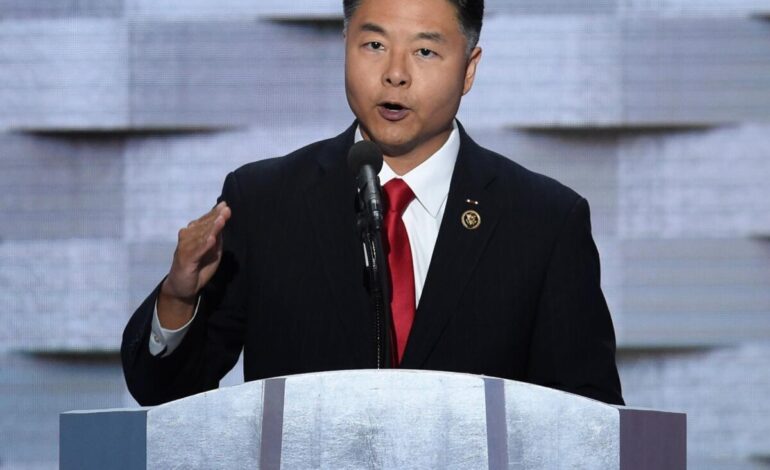

Ted Lieu’s Immigration Speech Stops Congress in Its Tracks: The Moment America Could Not Ignore
Published: April 2, 2026 | Politics & Policy | 8-Minute Read
A single speech in the United States Congress rarely changes the direction of a national debate. Most floor statements blend into the background noise of daily politics. But every now and then, a lawmaker says something that cuts through the noise and lands like a punch. That is exactly what happened when California Representative Ted Lieu stood up during a heated immigration debate and delivered what many are calling one of the most powerful speeches in recent congressional history.
If you have been searching for the full story behind Ted Lieu’s immigration floor speech, why it went viral, and what it means for the country’s ongoing immigration policy debate, you are in the right place. This article breaks it all down in plain language.
What Was the Speech About? Setting the Stage
The debate that day was not unusual, at least not at first. Congress was reviewing another round of proposed changes to immigration enforcement policy. The room was tense. The arguments on both sides had been going on for hours. Some lawmakers called for stricter border controls. Others pushed back. The exchange felt more like a shouting match than a serious policy discussion.
Then came Ted Lieu’s turn at the microphone.
Instead of raising his voice or firing off statistics, Lieu did something different. He spoke quietly. Deliberately. He looked directly at his colleagues and asked a question that no one in the room had expected. It was simple, direct, and deeply human. And before he finished speaking, the chamber had gone almost completely silent.
Political observers later described the moment as “quiet thunder” — a phrase that captured the contrast between the calm tone of his delivery and the overwhelming weight of what he was saying.
The Question That Stopped the Room
Lieu began by acknowledging the complexity of the immigration issue. He did not dismiss the concerns of those who wanted stricter enforcement. But then he shifted. He turned to face the part of the chamber where the loudest voices in favor of aggressive deportation policies were seated.
He paused. He looked at the room. Then he leaned forward and asked a question that went something like this: “When you talk about the ‘numbers,’ do you ever stop to think about who those numbers are?”
It sounds simple. But the way Lieu said it — the silence before the words, the steadiness in his voice, the weight of what those words meant — made the question land with tremendous force. The room, which had been buzzing with cross-talk and side conversations, went quiet.
He continued. He reminded the room that behind every statistic in the immigration debate is a real person. A mother. A father. A child who grew up speaking English, going to school in America, and dreaming of a future here. He noted that many of the people being discussed as “problems to be solved” had lived in the United States for decades, paid taxes, raised families, and contributed to their communities in ways that never make the news.
Speaking for the People Behind the Statistics
What made Lieu’s speech so powerful was that he did not rely on anger to make his point. He did not shout. He did not accuse. Instead, he painted a picture using language that was clear, specific, and impossible to ignore.
He pointed out that immigration policy debates in Washington often drift away from the real human consequences of the decisions being made. When lawmakers argue about “numbers” and “flows” and “enforcement mechanisms,” they can lose sight of the faces attached to those words. Lieu’s speech was a deliberate attempt to bring those faces back into the room.
He spoke about families who had built their lives in America over the course of twenty, thirty, even forty years. He described communities where immigrant neighbors are the people who run the corner grocery store, fix the cars, teach the children, and show up to help when someone is in need. He asked his colleagues to consider what it would mean to disrupt those lives — not in abstract policy terms, but in real human terms.
His voice never cracked. He never raised it above a conversational tone. But every word carried a kind of emotional weight that was difficult to ignore. Some of his colleagues on the opposite side of the aisle appeared visibly uncomfortable. Others stared at the floor. A few leaned forward as if hearing something they had not allowed themselves to think about before.
“Cruelty Is Never Strength” — The Line That Went Viral
Near the end of his remarks, Lieu said something that instantly spread across social media. He looked at the chamber and stated clearly: “Leadership is about protecting people who are vulnerable. It is not about finding easier and easier ways to punish them. Cruelty is never strength.”
Those words hit differently than most political statements. They were not partisan in the way most floor speeches are. They were not a list of policy demands or a set of talking points. They were a moral argument, made in plain language, directed at the basic values of every person in the room.
Within hours of the video clip circulating online, the phrase “cruelty is never strength” had become a trending topic. People from across the political spectrum shared it — not always in agreement with Lieu’s full position, but clearly moved by the directness and clarity of the statement.
One viewer wrote on social media: “I don’t agree with everything he says politically, but that line is true regardless of your party.” Another said: “This is what it sounds like when a politician actually means what they say.”
The clip spread quickly because it felt authentic. In an age when most political speech is carefully crafted to appeal to a base rather than persuade anyone, Lieu’s tone came across as genuinely motivated by principle.
Who Is Ted Lieu? A Brief Background
To understand why this speech resonated so deeply, it helps to know a little about Ted Lieu himself.
Ted Lieu is a Democratic congressman from California. He represents a district in the Los Angeles area and has served in the House of Representatives since 2015. Before that, he served in the California State Legislature. He is also a lieutenant colonel in the United States Air Force Reserve.
Lieu was born in Taiwan and immigrated to the United States as a child. His family settled in Cleveland, Ohio. He later attended Stanford University and Georgetown University Law School. His personal history as an immigrant gives him a perspective on immigration debates that is not purely theoretical — it is rooted in lived experience.
When he stands up to defend immigrants in Congress, he is not just doing his job as a representative. In a real sense, he is defending people whose stories look a lot like his own.
That personal dimension is a big part of why the speech carried such weight. It was not delivered from a place of detached political calculation. It came from somewhere genuine.
The Reaction in the Chamber and Online
The reaction inside the chamber was striking. When Lieu finished speaking, there was a moment of complete silence — which is unusual in a place that rarely goes quiet. Then applause began, starting slowly and growing louder. Some of his Democratic colleagues gave him a standing ovation. Even a few Republicans in the room appeared affected, sitting still with thoughtful expressions rather than immediately jumping to a rebuttal.
Outside the chamber, the reaction was even more dramatic. Within a day, video clips of the speech had millions of views across multiple platforms. News outlets from across the political spectrum covered the moment. Some praised it as a rare example of genuine moral leadership. Others used it as a flashpoint for more debate about immigration policy.
Social media users shared the clip with comments ranging from deeply emotional personal stories about their own immigrant family members to straightforward policy arguments. What nearly all of them had in common was a sense that Lieu had said something real — something that cut past the usual political theater and spoke directly to a human truth.
Why This Speech Matters for the Immigration Debate
America’s immigration debate has been going on for decades. It covers a wide range of issues: border security, deportation policy, pathways to citizenship, visa programs, asylum law, and much more. These are genuinely complicated questions with real tradeoffs.
But one of the problems with how the debate often plays out in Washington — and in the media — is that it becomes abstract. People argue about laws and systems and enforcement rates. They argue about numbers. And in doing so, they sometimes lose track of the fact that every single number represents a person with a life, a family, a story.
Lieu’s speech was a powerful reminder that policy has consequences that extend far beyond spreadsheets and debate chambers. The decisions made in Congress about immigration directly affect the lives of millions of real people — people who go to work, pay taxes, send their kids to school, and participate in American life every single day.
Whether you support stricter immigration enforcement or more open policies, Lieu’s core message — that human beings deserve to be treated as human beings — is not a partisan argument. It is a basic moral one.
That is why the speech landed so hard. And that is why it spread so fast.
What Happens Next? The Bigger Political Picture
One speech, no matter how powerful, does not rewrite immigration law. The political divide in Washington remains deep. The debate over enforcement, deportation, and reform is going to continue for years — possibly decades.
But moments like this one matter. They change the conversation, even if they do not immediately change the law. They remind people watching from home — and watching from other countries — that there are leaders in Washington who see past the political game and speak from a place of genuine conviction.
Lieu’s speech also energized a lot of people who care deeply about immigration rights. In the days that followed, advocacy groups reported spikes in donations, volunteer sign-ups, and calls to congressional offices. The moment galvanized people who might otherwise have felt that Washington was not listening.
It also put pressure on other legislators — on both sides of the aisle — to clarify where they stand. When one person speaks with that kind of moral clarity, it becomes harder for others to hide behind vague talking points. That pressure, even if subtle, is part of how political change slowly happens.
Lessons from the Speech: What Good Leadership Looks Like
Regardless of where you stand on immigration policy, Lieu’s speech offers a few lessons about what effective and ethical leadership can look like.
First, calm is often more powerful than anger. Lieu did not yell. He did not accuse. He spoke quietly and clearly. And his words hit harder than almost anything else said in that chamber that day. In a culture that often rewards loudness, this is a reminder that measured, thoughtful speech can be the most effective kind.
Second, personal experience matters. Lieu is an immigrant himself. He knows what it means to come to this country from somewhere else and build a life here. That personal connection gave his words a credibility and an emotional depth that no amount of policy briefing could provide.
Third, moral clarity cuts through noise. At a time when political communication is dominated by spin, strategy, and messaging, a straightforward moral statement — “cruelty is never strength” — stands out. People can debate the policy details endlessly. But it is much harder to argue against a basic ethical principle stated plainly.
Fourth, speaking to the humanity of the issue matters. When Lieu asked his colleagues to think about the real people behind the statistics, he was doing something that too little of our political debate does: reminding everyone in the room that the ultimate purpose of government is to serve people, not systems.
Public Response: Voices From Across America
After the speech went viral, Americans from all walks of life weighed in online and in interviews.
A high school teacher in Texas shared the clip with her students and reported that it sparked one of the most engaged class discussions she had ever seen about civic responsibility and what it means to be an American. A small business owner in Georgia — himself the son of immigrants — said the speech made him call his congressman for the first time in his adult life.
Immigration advocates posted detailed threads on social media connecting Lieu’s words to specific families they had worked with — people whose lives hang in the balance of the very policies being debated. Veterans’ groups shared the speech because of Lieu’s military background and his framing of leadership as protection rather than punishment.
Even critics acknowledged the power of the delivery. Some conservatives who disagreed with Lieu’s immigration positions said they respected the sincerity of his argument, even if they did not agree with his conclusions. That kind of cross-aisle acknowledgment is rare in today’s political climate. It says something about how clearly the speech communicated its message.
Final Thoughts: A Moment Worth Remembering
Political speeches come and go. Most are forgotten within hours. But every now and then, one sticks. One gets shared not because it went viral for the wrong reasons, but because it said something true — something people recognized as important the moment they heard it.
Ted Lieu’s speech on the floor of Congress was one of those moments. It was a reminder that there are still people in government who see their job as more than winning arguments or scoring political points. Some of them actually believe, deeply and sincerely, that the work of government is to protect people — especially the people who are most vulnerable.
Immigration will remain one of the most debated topics in American politics. The arguments will continue. The battles in Congress will go on. But moments like this one — moments when a single voice rises above the noise and speaks with genuine conviction — are part of what keeps the debate from becoming completely dehumanized.
If you watched the clip and felt something — whether it was hope, pride, sadness, or something harder to name — that reaction is worth paying attention to. Because that feeling is telling you something true about what good leadership is supposed to look like.
Cruelty is never strength. And in a moment when that principle needed to be said out loud, Ted Lieu said it.
Discover more from MatterDigest
Subscribe to get the latest posts sent to your email.