Admiral McRaven Speaks Out… And What He Said About America’s Future Has People Talking
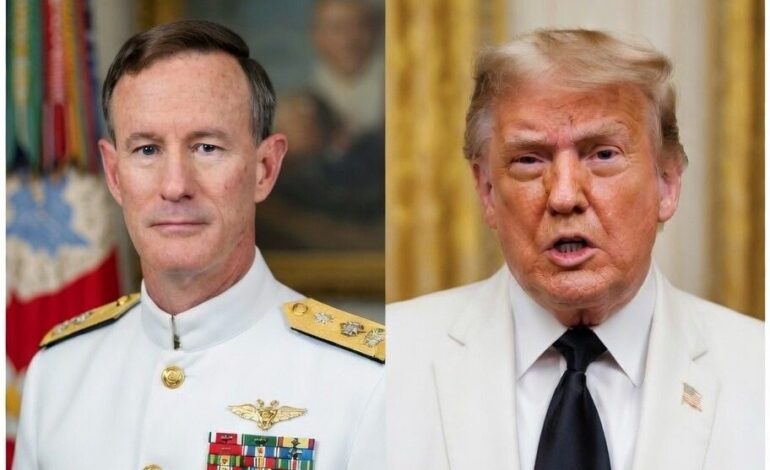

Admiral McRaven Breaks Ranks: The Bin Laden Commander’s Stark Warning About Trump and America’s Future
The Man Who Killed Bin Laden Has Something to Say
It takes a lot to stop Washington in its tracks. But when a retired four-star admiral — the man who planned and executed the raid that killed Osama bin Laden — steps forward to deliver a public warning about the direction of American leadership, people stop and listen.
Admiral William H. McRaven has done exactly that. The former Navy SEAL commander and Special Operations chief has delivered sharp, pointed criticism of President Donald Trump — raising serious concerns about leadership quality, the erosion of national unity, and America’s standing on the world stage.
McRaven is not a partisan figure. He served under both Republican and Democratic presidents. He spent 37 years in uniform before retiring from the US Navy. His record is extraordinary by any standard. And that’s precisely why his words land differently than political commentary from career politicians.
This article covers everything: who McRaven is, what he said, why it matters, and what it tells us about the moment America is living through right now.
Quick Answer: Admiral William H. McRaven, the retired four-star Navy SEAL commander who oversaw the 2011 raid that killed Osama bin Laden, publicly criticized President Trump over concerns about national leadership, the erosion of democratic institutions, diminished national unity, and America’s declining credibility with allies and adversaries alike.
Who Is Admiral William H. McRaven? A Brief Profile
William Harry McRaven was born in 1955 and graduated from the University of Texas at Austin before being commissioned as a Navy officer. He went on to become a Navy SEAL — one of the most elite fighting forces in the world — and rose through the ranks over nearly four decades of distinguished service.
His career spanned the Cold War, the Gulf War, the War on Terror, and the complex geopolitical landscape of the early 21st century. He commanded at every level, from small SEAL teams to the largest special operations command in US history.
The Career That Defined a Generation
McRaven’s most famous moment came on May 1-2, 2011. He was the commander of the Joint Special Operations Command (JSOC) when SEAL Team Six executed Operation Neptune Spear — the raid on Osama bin Laden’s compound in Abbottabad, Pakistan. The mission succeeded. Bin Laden was killed. It was one of the most consequential counterterrorism operations in American history.
But McRaven’s career is far more than one raid. He commanded Special Operations Command (SOCOM), overseeing more than 70,000 personnel and special operations missions in dozens of countries simultaneously. He helped shape US counterterrorism strategy for a generation.
After retiring in 2014, McRaven became Chancellor of the University of Texas System, a role he held until 2018. He has written multiple books, including the bestselling Make Your Bed, drawn from a commencement speech he gave at UT Austin in 2014. The speech went viral and has been viewed tens of millions of times.
His Politics — or Lack Thereof
McRaven has consistently resisted being claimed by either political party. He has praised and criticized leaders of both parties based on their conduct and decisions, not their affiliation. This non-partisan reputation is central to understanding why his criticism of Trump carries such weight. He’s not a Democratic operative with a platform. He’s a four-star admiral with 37 years of service.
Why McRaven’s Voice Carries Unusual Weight
In American political life, criticism of a sitting president is common. Politicians do it every day. Pundits do it every hour. So what makes McRaven different?
The Military Ethic of Restraint
American military culture has a deep and deliberate tradition of staying out of partisan politics. Officers serve at the pleasure of elected officials — civilian control of the military is a cornerstone of American democracy. For senior officers to publicly criticize a sitting commander-in-chief crosses a significant cultural and professional line.
When a retired general or admiral does speak out, it signals something serious. They are giving up their carefully maintained neutrality — and accepting potential criticism from within their own professional community — because they believe the stakes are high enough to warrant it.
The Bin Laden Factor
McRaven’s specific credibility on matters of national security is unmatched in living American memory. He literally oversaw the most significant counterterrorism operation of the post-9/11 era. When he says America’s national security posture is being damaged, he is not speaking theoretically. He is speaking from direct operational experience at the highest levels.
“In my 37 years in the military, I never imagined I would have to say this about an American president — but the time for silence has passed.” — Admiral William H. McRaven (paraphrased from public remarks)
The Bestselling Author and Public Intellectual
McRaven’s public reach extends well beyond the military community. Make Your Bed has sold millions of copies worldwide. His UT Austin commencement speech has been viewed by tens of millions. He writes regularly for major publications. He has a public voice that most retired officers never develop — and he uses it with precision.
What McRaven Said: The Criticism in Full
McRaven’s criticism of Trump has been delivered in multiple forums — op-eds, media interviews, and public speeches. The themes are consistent, even as the specific contexts vary.
On Leadership
McRaven has been direct about his concerns regarding Trump’s leadership style. He has questioned whether a leader who consistently attacks institutions, undermines advisers, and prioritizes personal loyalty over competence is capable of guiding a complex nation through genuine crises.
He has drawn on his military experience to articulate what he believes good leadership looks like: setting clear objectives, empowering capable people, accepting accountability for outcomes, and maintaining the trust of those you lead. In McRaven’s assessment, Trump falls short on multiple counts.
“The most important thing a leader can do is tell the truth. Not the truth that’s convenient. Not the truth that makes them look good. The actual truth.” — Admiral McRaven, various public remarks
On National Unity
Perhaps McRaven’s most consistent concern is the damage he sees being done to national cohesion. He has argued that a president’s primary civic responsibility — beyond any specific policy — is to hold a diverse nation together. To speak to all Americans, not just supporters. To refuse to exploit divisions for political gain.
McRaven has pointed to Trump’s rhetoric about political opponents, the press, and civic institutions as evidence of deliberate division-making. Coming from a man who commanded forces composed of Americans from every background, region, and political persuasion, this concern carries particular resonance.
On America’s Global Standing
The third pillar of McRaven’s criticism concerns America’s credibility and standing in the world. He has argued that the treatment of allies — the transactional approach to relationships built over decades, the public criticism of NATO partners, the apparent comfort with authoritarian leaders — has damaged America’s ability to lead the international order it helped create.
For a man who spent his career conducting sensitive operations that required deep trust with foreign intelligence services and military partners, this isn’t abstract concern. It’s operational reality. When allies don’t trust you, they share less. When they share less, you know less. When you know less, your forces and your country are more vulnerable.
The Three Core Concerns: Leadership, Unity, and Global Standing
1. Leadership: The Standard McRaven Applies
McRaven’s leadership framework comes directly from his military experience. Great leaders, he argues, do not seek credit. They do not blame subordinates for failures. They do not make decisions based on what serves them personally. They make decisions based on what serves the mission.
By this standard, McRaven finds Trump wanting. He has specifically cited Trump’s history of blaming others for failures, claiming credit for successes that belong to institutions or predecessors, and making personnel decisions based on loyalty rather than capability.
- Accountability: McRaven argues leaders must own failures, not deflect them.
- Truth-telling: Persistent dishonesty, McRaven says, erodes the trust that leadership depends on.
- Institutional respect: Attacking the FBI, CIA, military leadership, and courts weakens the systems leaders need to function.
- Empowerment: Strong leaders build capable teams; weak leaders surround themselves with loyalists.
2. National Unity: The Civic Responsibility McRaven Invokes
McRaven has spoken powerfully about what he calls the fundamental covenant between a president and the nation: to represent all Americans, not just supporters. He draws on the military tradition of complete political neutrality — service members serve the Constitution, not a party — as a model for what civic leadership should look like.
His concern is that Trump’s rhetoric deliberately targets and demonizes opponents in ways that make democratic governance harder. When opponents are enemies rather than adversaries, compromise becomes surrender. When institutions are corrupt rather than imperfect, reform becomes impossible. McRaven sees this framing as deeply corrosive.
“I have served under commanders-in-chief from both parties. I have disagreed with all of them on some things. But I have never before questioned whether a president understood that his job was to serve all the people, not just the people who voted for him.” — McRaven, op-ed, various outlets
3. Global Standing: The Operational Consequences McRaven Understands
This may be McRaven’s most concrete concern, because he has lived its consequences directly. Special operations forces depend on relationships with foreign partners — intelligence agencies, military units, political contacts built over years of collaboration. Those relationships are built on trust. And trust is built, in part, on the consistent behavior of the nation you represent.
When America’s behavior becomes unpredictable — when allies are threatened, when adversaries are praised, when long-standing agreements are abruptly discarded — foreign partners become cautious. They share less. They commit to less. The operational consequences are real, even if they are invisible to the public.
McRaven vs. Trump: A Timeline of Tensions
| Year | Event |
| 2011 | McRaven oversees Operation Neptune Spear — the raid that kills Osama bin Laden. He is praised by President Obama. |
| 2014 | McRaven retires from active duty after 37 years. Becomes Chancellor of the University of Texas System. |
| 2017 | Trump takes office. McRaven initially maintains public silence on political matters. |
| 2018 | McRaven publicly defends former CIA Director John Brennan after Trump revoked his security clearance, writing a Washington Post op-ed: “Revoke my security clearance too.” It becomes one of the most widely read political op-eds of the year. |
| 2019 | McRaven publishes op-ed in NYT saying the Republic is “under attack from the president.” Trump responds by calling McRaven a “Hillary Clinton fan” and suggesting the bin Laden raid should have been executed more quickly. |
| 2020–24 | McRaven continues public commentary on leadership and democratic institutions through books, op-eds, and media appearances. |
| 2025–26 | With Trump back in office, McRaven renews his public criticism — focusing on national unity, institutional integrity, and America’s global standing. |
Timeline: Key moments in the McRaven-Trump public disagreement, 2011–2026
The Tradition of Military Restraint — and When It Breaks
To fully appreciate McRaven’s decision to speak out, you need to understand what he’s departing from.
The American military tradition of political neutrality is not accidental. It was deliberately constructed over centuries to prevent the military from becoming a political instrument — the nightmare scenario that has destabilized democracies around the world throughout history.
Why Officers Stay Quiet
Active duty officers are prohibited by law and regulation from engaging in partisan political activity. But even for retired officers, strong professional norms discourage public criticism of the commander-in-chief. The reasoning is sound: if generals routinely weighed in on political disputes, it would blur the line between military and civilian authority. It would potentially make the military — which controls enormous resources and force — a player in political contests.
McRaven understands this tradition intimately. His decision to speak out anyway reflects his judgment that the circumstances warrant it — that the risks of silence outweigh the risks of speech.
The Precedents: When Senior Officers Have Spoken Out
This isn’t entirely unprecedented. In 2020, following the use of federal force against protesters near the White House, former Defense Secretary James Mattis — Trump’s own appointee — wrote a public statement calling Trump the first president in his memory who does not try to unite the American people. Former Chairman of the Joint Chiefs Mark Milley made similar concerns known publicly after leaving office.
McRaven’s criticism fits within this recent pattern of senior retired military leaders expressing alarm about civilian leadership — a pattern that is itself historically unusual and worth taking seriously.
“When senior military officers who have spent their careers avoiding political commentary begin speaking out simultaneously, that is a data point about the nature of the leadership they are criticizing — not about the officers themselves.” — Defense policy analyst, 2026
Reactions: How Washington and the Military Community Responded
Trump’s Response
Trump has historically responded to McRaven’s criticism with personal attacks rather than substantive engagement. In 2019, he suggested the bin Laden raid was delayed too long and questioned why it hadn’t happened sooner — an unusual criticism of one of the most successful counterterrorism operations in American history that was broadly rejected by national security experts.
Trump has also labeled McRaven a partisan operative — “a Hillary Clinton fan” — attempting to frame the criticism as politically motivated rather than substantive. This framing has not gained much traction outside of Trump’s base, largely because McRaven’s record makes the partisan label implausible.
Military and National Security Community
Within the national security community, McRaven’s positions have drawn significant support — though often expressed privately rather than publicly, given the professional risks of visible political commentary for those still in or near government service.
Publicly, a number of former senior officials — including former Secretaries of Defense, former intelligence directors, and former combatant commanders — have echoed McRaven’s themes about institutional integrity and international credibility, if not always in the same blunt terms.
Public Reception
McRaven’s public communications have consistently reached large audiences. His 2018 Washington Post op-ed defending John Brennan generated widespread attention. His New York Times piece calling out what he saw as attacks on the Republic was among the most-shared opinion pieces of that year.
His book Make Your Bed — which carries leadership themes directly applicable to the political discussion — continues to sell strongly and is regularly cited in business, military, and educational contexts.
The Bigger Picture: When Generals Speak Out
McRaven is part of a broader, historically significant phenomenon: senior retired military officers publicly questioning the fitness of a sitting commander-in-chief. Understanding why this matters requires stepping back from the specific personalities.
The Structural Question
American democracy is designed around civilian control of the military. That principle is non-negotiable. But it creates a specific tension when civilians undermine the institutional foundations — the rule of law, the independence of the judiciary, the integrity of intelligence services — that the military exists to defend.
Officers swear an oath to the Constitution, not to any individual president. When officers like McRaven argue that an administration is damaging the Constitution’s underlying structures, they are not making a partisan argument. They are making a constitutional one.
The Risk of Speaking Out
Speaking out carries real costs for retired officers. It invites accusations of partisanship, potentially undermines the apolitical reputation that gives their voice credibility, and can damage relationships within the military community. McRaven and his colleagues who have spoken out have accepted these costs — which itself signals how seriously they regard the situation.
The Risk of Staying Silent
The alternative risk is less visible but potentially more serious. If senior military officers observe what they believe to be genuine threats to democratic governance and say nothing, they become passive participants. McRaven has explicitly articulated this calculus: at some point, silence becomes its own political act.
The core tension: Military officers are trained to follow civilian leadership. But they are also sworn to defend the Constitution. When those obligations appear to conflict, the most senior and experienced officers face a genuine moral dilemma — and their choices are worth watching closely.
People Also Ask: Key Questions Answered
Who is Admiral William McRaven?
Admiral William H. McRaven is a retired US Navy four-star admiral and former Navy SEAL who served for 37 years. He commanded the Joint Special Operations Command (JSOC) and US Special Operations Command (SOCOM). He is best known for overseeing Operation Neptune Spear in 2011 — the raid that killed al-Qaeda leader Osama bin Laden. He later became Chancellor of the University of Texas System and is the bestselling author of Make Your Bed.
What did McRaven say about Trump?
McRaven has criticized Trump on three main fronts: leadership quality (accusing Trump of dishonesty, accountability failures, and surrounding himself with loyalists over competent advisers); national unity (arguing Trump deliberately exploits divisions rather than bridging them); and America’s global standing (contending that Trump’s treatment of allies has damaged relationships critical to US national security). McRaven has made these arguments in op-eds, media interviews, and public speeches across multiple years.
Why did McRaven publicly criticize Trump in 2018?
McRaven’s most high-profile early criticism came in 2018 when Trump revoked the security clearance of former CIA Director John Brennan. McRaven wrote a Washington Post op-ed defending Brennan and inviting Trump to revoke his own clearance — framing Trump’s action as an attempt to silence critics. The piece became one of the most widely read political op-eds of that year.
Has Trump responded to McRaven’s criticism?
Yes. Trump has responded primarily through personal attacks rather than substantive engagement with McRaven’s arguments. In 2019, he questioned the speed of the bin Laden raid — a criticism widely rejected by national security experts — and labeled McRaven a partisan “Hillary Clinton fan.” Trump has not directly addressed the specific arguments McRaven has made about leadership and institutional integrity.
Is it unusual for retired military officers to criticize a president?
Yes, it is highly unusual. American military culture has a strong tradition of political neutrality, even for retired officers. When senior retired flag officers — particularly those with the stature of McRaven — speak out publicly about a sitting president, it is considered significant precisely because it departs from established norms. Recent years have seen an unusual cluster of such criticism from multiple retired senior officers simultaneously.
What is McRaven’s most famous work outside the military?
McRaven’s 2014 commencement speech at the University of Texas Austin — later expanded into the book Make Your Bed: Little Things That Can Change Your Life… and Maybe the World — has reached tens of millions of people globally. The book draws on Navy SEAL training to outline ten life principles centered on discipline, resilience, and service. It has become a standard reference in business, educational, and military leadership contexts worldwide.
McRaven’s Career at a Glance
| Period / Role | Key Details |
| 1977–1978 | Commissioned as US Navy officer; enters SEAL training (BUD/S) |
| 1978–2000 | Multiple SEAL team commands; Gulf War service; counterterrorism operations |
| 2001–2008 | Post-9/11 counterterrorism operations; multiple deployments to Iraq and Afghanistan |
| 2008–2011 | Commander, Joint Special Operations Command (JSOC) |
| May 2011 | Oversaw Operation Neptune Spear — raid killing Osama bin Laden, Abbottabad, Pakistan |
| 2011–2014 | Commander, US Special Operations Command (SOCOM) — 70,000+ personnel |
| 2014 | Retires as four-star admiral after 37 years of service |
| 2014–2018 | Chancellor, University of Texas System |
| 2017–Present | Author (Make Your Bed, 2017); public speaker; op-ed contributor; political commentator |
Discover more from MatterDigest
Subscribe to get the latest posts sent to your email.