Why Cheap Aftermarket Catalytic Converters Can End Up Costing You More

When you’re looking at a used car and the seller tells you they’ve recently replaced the catalytic converter, it usually sounds like good news. It means they’ve taken care of a significant issue, and you won’t have to worry about it for a while. But if that replacement was done with a budget aftermarket part instead of an OEM or high-quality equivalent, you might be inheriting a problem that’s just waiting to surface.
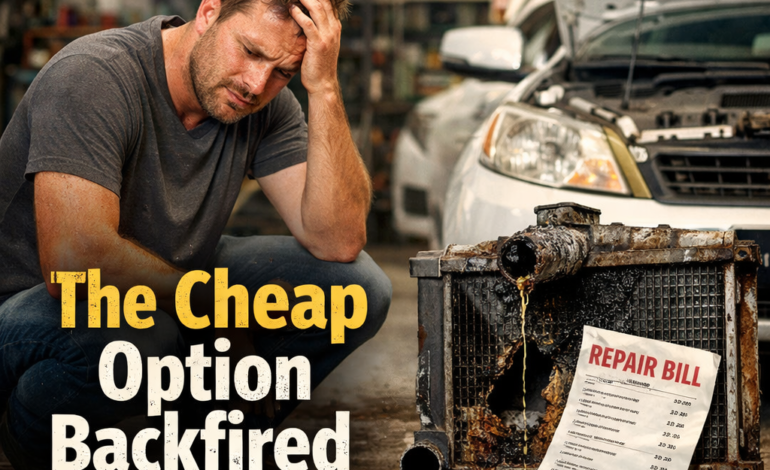
Most people assume a catalytic converter is a catalytic converter. It either works or it doesn’t. The truth is more complicated than that, and the differences between a quality part and a cheap one don’t always show up immediately. They reveal themselves slowly—through failed emissions tests, check engine lights that won’t stay off, reduced fuel efficiency, and eventually, the need for another replacement much sooner than expected.
I’m not here to scare anyone away from aftermarket parts entirely. There are good ones out there. But I’ve seen enough situations where someone thought they were getting a deal, only to spend more money fixing the same issue twice, that I think it’s worth walking through what actually happens when you go too cheap on this particular repair. This isn’t about being paranoid. It’s about understanding what you’re really buying.
The Situation
Catalytic converters are expensive. When one fails, whether due to age, contamination, or physical damage, the cost of replacing it with an OEM part can easily run into four figures depending on the vehicle. For someone trying to sell a car or keep an older vehicle on the road without breaking the bank, the temptation to go with the cheapest replacement option is completely understandable.
Aftermarket catalytic converters are marketed as direct-fit alternatives that cost a fraction of what the original equipment would. On the surface, the math makes sense. If an OEM converter costs twelve hundred dollars and an aftermarket one costs three hundred, why wouldn’t you save the nine hundred dollars? The part bolts on the same way, looks similar, and passes the initial inspection. The car starts, runs, and the check engine light goes off. Problem solved.
That’s the decision a lot of people make, and in the moment, it feels like the smart move. But the context that’s missing from that decision is what happens six months, a year, or two years down the line.
The Common Assumption
The assumption most buyers and even some mechanics make is that catalytic converters are relatively simple devices. They know it has something to do with emissions and cleaning up exhaust gases, but beyond that, the details seem technical and unimportant. If the part fits and the engine runs, it must be working properly.
This belief exists because catalytic converters don’t have moving parts. They’re not like a water pump or an alternator where you can hear or feel when something’s wrong. They sit in the exhaust system, doing their job quietly, and most people never think about them until a check engine light forces the issue. Because of that invisibility, it’s easy to treat them as interchangeable.
The other reason this belief persists is that cheap aftermarket converters do work—at first. They’re not completely non-functional. They reduce emissions enough to clear the immediate fault code and get the car through a quick test. For someone selling a vehicle, that might be all they need. For someone buying it, that initial functionality creates a false sense of security.
The Turning Point
The problem usually starts subtly. A few months after the “repair,” the check engine light comes back on. The code points to catalyst efficiency below threshold. The owner takes it to a shop, and they clear the code, thinking it might be a sensor glitch. It stays off for a week or two, then returns. This cycle repeats a few times before anyone starts questioning whether the converter itself is the issue.
In other cases, the car fails an emissions test. The visual inspection shows a converter is present, but the tailpipe readings are out of spec. The owner is confused because the part was just replaced. The testing station can’t pass the vehicle, and now the owner is facing another repair expense they didn’t budget for.
What’s happening is that the cheap aftermarket converter isn’t processing exhaust gases efficiently enough to meet the vehicle’s requirements. It might have the right exterior dimensions and bolt pattern, but the internal substrate—the part that actually does the chemical conversion—is undersized, made with lower-quality materials, or designed with less precious metal catalyst than the original.
What Most People Miss
Catalytic converters work by using precious metals—platinum, palladium, and rhodium—to facilitate chemical reactions that convert harmful gases like carbon monoxide, nitrogen oxides, and hydrocarbons into less harmful substances like carbon dioxide and water vapor. The efficiency of this process depends on several factors: the amount and quality of the catalyst material, the surface area of the substrate, the design of the internal honeycomb structure, and how well the converter is matched to the specific engine’s exhaust characteristics.
OEM converters are engineered specifically for each vehicle model. The automaker knows exactly what that engine produces in terms of exhaust volume, temperature, and chemical composition, and they design the converter to handle it efficiently over a long lifespan—often a hundred thousand miles or more.
Cheap aftermarket converters are built to a price point. To hit that low cost, manufacturers cut corners. They use less precious metal, which means fewer active catalyst sites. They use a smaller or less durable substrate. They design a single converter to fit multiple vehicle applications, which means it’s not optimized for any of them. The result is a part that technically functions but operates at the lower edge of acceptable performance.
When the converter is new, it might just barely meet the threshold. But as it ages—and catalytic converters do degrade over time—it falls below the required efficiency much faster than a quality part would. The engine computer notices this drop in performance and triggers the check engine light. In some cases, the converter can become clogged or contaminated more easily because the inferior materials don’t handle heat cycles and exhaust contaminants as well.
Consequences of Ignoring It
In the short term, driving with an underperforming catalytic converter means reduced fuel economy. When the engine’s computer detects that the exhaust isn’t being cleaned properly, it adjusts the fuel mixture to compensate, which can lead to higher fuel consumption. You might not notice it immediately, but over time, you’re paying more at the pump.
The check engine light being on also means you can’t easily tell if another issue develops. That light is your vehicle’s way of communicating problems. When it’s constantly illuminated because of the converter, you lose that diagnostic tool. A misfire, a failing oxygen sensor, or another emissions issue could be happening simultaneously, and you won’t know until something more serious breaks.
In the long term, you’re looking at another replacement. If the cheap converter fails within a year or two, you’ve now paid for two converters instead of one. Even if the second one is also cheap, you’ve spent money on labor twice, and you’ve lost time dealing with the problem repeatedly. If you eventually decide to install a quality part, you’ve essentially paid a premium by trying to save money upfront.
There’s also the emissions test issue. In states with strict emissions testing, a failing catalytic converter means your vehicle can’t be registered or legally driven. You’re forced into a repair on someone else’s timeline, often with limited options and less ability to shop around for a good price.
How to Check or Think About This Properly
If you’re buying a used car and the seller mentions a recent catalytic converter replacement, ask for documentation. Find out what brand was installed. If it’s an OEM part or a reputable aftermarket brand known for quality—names like Walker CalCat, Magnaflow, or Eastern Catalytic—that’s a good sign. If the seller doesn’t remember the brand, can’t produce a receipt, or mentions it was done at a budget muffler shop, be cautious.
You can also ask to see the emissions test results if the car was tested after the replacement. A passing test is better than no test, but it’s not a guarantee of long-term performance. What you’re really looking for is evidence that the seller or previous owner made a quality repair rather than a patch job to get the car sold.
When you’re considering the purchase, factor in the possibility that the converter might need to be replaced again in the near future. If the car is otherwise in good shape and priced fairly, you might still buy it, but adjust your offer to account for that potential expense. If the seller is firm on price and the converter is a question mark, it might be worth walking away.
For those who already own a vehicle and are facing a catalytic converter replacement, the decision is harder because you’re the one paying for it. My advice is to get quotes for both OEM and high-quality aftermarket options. Compare the warranty periods. A cheap converter might have a one-year warranty, while a better part might be warrantied for five years or fifty thousand miles. That difference tells you something about what the manufacturer expects in terms of durability.
Also consider how long you plan to keep the vehicle. If you’re driving it for another six months before trading it in, a cheap fix might be acceptable. If you’re planning to keep it for several more years, investing in a quality part will save you frustration and money.
Common Myths and Misunderstandings
Myth one: All aftermarket parts are junk. This isn’t true. There are reputable aftermarket manufacturers that produce converters meeting or exceeding OEM specifications. The issue is that the market is flooded with low-cost options that don’t meet those standards, and it’s not always easy for consumers to tell the difference.
Myth two: If the check engine light goes off, the problem is fixed. The light going off means the immediate fault code cleared, but it doesn’t mean the underlying issue is resolved. A cheap converter might clear the code temporarily, only for it to return once the engine computer completes its monitoring cycle.
Myth three: You can clean or restore a failing catalytic converter. There are additives and services marketed as converter cleaners, but they’re not effective for a converter that’s failing due to physical degradation or insufficient catalyst material. If the substrate is clogged with oil or coolant contamination, cleaning might help temporarily, but if the problem is the converter’s design or quality, no additive will fix it.
Myth four: Removing the catalytic converter improves performance. In some older vehicles, a clogged converter can restrict exhaust flow and reduce power, but simply removing it is illegal in the US and will cause the vehicle to fail emissions testing. Modern engines are also tuned to operate with a converter in place, and removing it can actually hurt performance and fuel economy because the engine’s computer will detect the missing component and adjust accordingly.
Myth five: The cheapest option is always the worst. While there’s a strong correlation between price and quality in catalytic converters, the absolute cheapest part isn’t always terrible, and the most expensive isn’t always necessary. What matters is finding a part that’s appropriately matched to your vehicle and built to a standard that will last.
When It Matters Most (And When It Doesn’t)
This issue matters most if you live in a state with emissions testing requirements. If your vehicle must pass a biennial or annual inspection to remain registered, a substandard catalytic converter will eventually cause you to fail. It also matters more on newer vehicles where the engine computer is more sensitive and the emissions standards are tighter. A cheap converter that might work acceptably on a 2005 model could fail immediately on a 2018.
It matters if you’re planning to keep the vehicle for an extended period. The cost of replacing a converter twice in three years is significantly more than installing a quality part once and not thinking about it again for the life of the vehicle.
It matters less if you’re dealing with an older, high-mileage vehicle that’s near the end of its useful life and you’re just trying to keep it running for another year. In that scenario, a budget repair might make sense because you’re not expecting long-term durability anyway.
It also matters less if you have access to a trusted mechanic who can source quality aftermarket parts and knows which brands to avoid. The problem isn’t aftermarket parts as a category; it’s the low-quality segment of that market that creates issues.
Final Takeaway
The decision about catalytic converter replacement comes down to understanding what you’re actually buying. A cheap part isn’t just a cheaper version of the same thing. It’s a fundamentally different product with different materials, different engineering, and different expected lifespan. That doesn’t mean you should never consider an aftermarket converter, but it does mean you should be skeptical of prices that seem too good to be true.
When someone tells you they saved a huge amount of money on a converter replacement, what they might actually be telling you is that they’ve deferred the real cost to whoever owns the vehicle next. If you’re that next owner, you need to recognize that reality and plan accordingly.
The best approach is to ask questions, verify what was actually installed, and adjust your expectations or your offer based on the answers you get. A quality repair is an asset. A cheap fix is a liability waiting to become your problem.
When my neighbor and I talked through all of this that evening, he understood why I’d hesitated at the seller’s comment about the cheap converter replacement. It wasn’t that the repair had been done—that was actually good—it was the way it had been done. He ended up finding a different vehicle a week later, one with a documented OEM converter replacement and maintenance records to back it up. He paid slightly more upfront, but he’s not wondering when that check engine light is going to reappear. That peace of mind is worth something, and it’s what you’re really paying for when you choose to do a repair correctly the first time.
Discover more from MatterDigest
Subscribe to get the latest posts sent to your email.