“‘Everything We Thought We Knew…’ — Pope Leo XIV’s Message Is Changing Minds Across America”
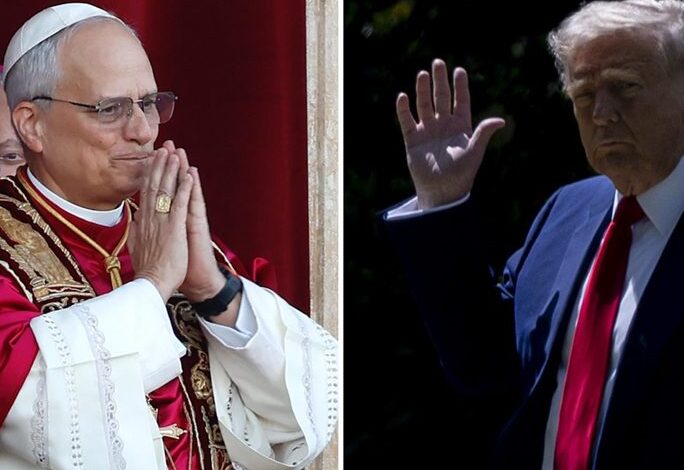

Pope Leo XIV’s Message Is Changing How Americans Think About Faith
Pope Leo XIV is drawing millions of people back to the Catholic Church — and experts say his message is landing at exactly the right moment. Across the United States, from small Midwestern towns to major coastal cities, something is shifting quietly inside churches, community halls, and living rooms. People who walked away from organized religion are walking back in.
This is not a small trend. It is one of the most talked-about religious developments of the past decade. And at the center of it is a pope whose words seem built for a generation that feels lost, divided, and unsure of where to turn.
Why Are So Many Americans Turning Back to the Catholic Church Right Now?
To understand what is happening, you have to look at the world people are living in today. Political tension is high. Social media has made it easy to argue and hard to agree. Loneliness is at record levels, even among people who seem connected online. Many Americans feel like they are drifting — from their communities, from their values, and from each other.
Against that backdrop, the Catholic Church — and Pope Leo XIV in particular — is offering something that feels rare: a steady, calm voice that does not scream, does not insult, and does not pick political sides.
Recent reporting from The New York Times found that dioceses across the United States are preparing for some of the highest numbers of new Catholic confirmations in years at this coming Easter. From Detroit to Houston, and from Des Moines to Washington, D.C., the story is the same. Churches are filling up again. The people walking through the doors are not just elderly lifelong believers. Many are young adults — people in their 20s and 30s — who say they are looking for something more than what social media or politics can offer.
Who Is Pope Leo XIV and What Makes His Message So Different?
Pope Leo XIV made history as the first American to lead the Catholic Church. That alone made headlines around the world. But the reason his influence is growing goes far deeper than his nationality.
His public style is rooted in three things: calm, clarity, and human dignity. He does not use harsh or combative language. He does not position the Church as a political weapon. Instead, he speaks about the value of every human life, the importance of treating people with respect, and the need to find meaning beyond the noise of everyday life.
In a media environment where almost every public figure seems angry about something, Pope Leo XIV comes across as something different. He is not trying to win an argument. He is trying to start a conversation.
His critics — and he does have them — often point out that this approach feels too moderate or too soft on certain issues. Some within conservative evangelical circles have been openly skeptical. Even within segments of the MAGA movement, where Leo has received surprising support among some members, there are those who would prefer a louder, more confrontational voice. But supporters say that is exactly the point. His refusal to be confrontational is what makes him stand out.
What Do Record Church Numbers Actually Tell Us About American Faith?
Numbers do not always tell the full story, but in this case, they are striking. Some parishes are reporting confirmation class sizes that have not been seen in more than a decade. Church officials describe themselves as both surprised and encouraged.
But what is driving people through the door? Church leaders, sociologists, and everyday believers point to several overlapping reasons.
First, there is what many are calling a “spiritual hunger.” People are searching for meaning in a world that often feels meaningless. They want a community. They want rituals and routines that give shape to their week. They want to believe in something bigger than themselves — and they want to do it alongside other people.
Second, the COVID-19 pandemic left a lasting mark that many people are still processing. The isolation of the pandemic years cracked something open for millions of Americans. Routines disappeared. Social connections weakened. Many people came out of that period feeling unmoored in ways they did not fully understand. For some, faith became a way to rebuild — a structure and a community they could return to.
Third, and perhaps most interestingly, younger Americans are increasingly drawn to things that feel grounded and traditional. There is a generation that grew up entirely online, surrounded by constant change, constant opinion, and constant noise. For many of them, the stability of religious tradition feels not like something old — it feels like something they never had.
How Is Pope Leo XIV’s Leadership Style Reaching People Who Left the Church?
One of the most important things about Pope Leo XIV’s message is who it seems to reach. Church officials note that many of the people returning to or joining the Catholic Church describe themselves as people who left — or people who never felt welcome before.
His emphasis on mercy, on community, and on being a place where people can belong without being judged has opened doors for those who walked away after feeling alienated or hurt. His consistent focus on human dignity — treating every person as someone worth caring about — has resonated in particular with people who felt excluded from religious spaces in the past.
His public comments on war, inequality, and global cooperation have also positioned him as a voice for something beyond individual salvation. He has urged wealthy nations and corporations to take seriously their responsibility to the most vulnerable people in the world. Critics call this political. Supporters call it moral.
What is clear is that for many people sitting in pews or watching his appearances online, his words do not feel like a lecture. They feel like an invitation.
Is This Religious Shift Connected to Broader Changes in American Society?
Religion does not exist in a bubble. It is always shaped by what is happening around it — by politics, culture, economics, and technology. So the question of whether this moment is part of something bigger is a fair one.
Several experts in religion and sociology point to a long-running change in how Americans relate to institutions. For decades, trust in major institutions — government, media, corporations, and yes, organized religion — has been declining. People became more skeptical, more individualistic, and less likely to commit to any single community or organization.
But there are signs that the pendulum is beginning to swing back. People who have spent years building their identity around political movements or online communities are finding those spaces emotionally exhausting and increasingly divisive. Some of them are looking for something less combative. Something that brings people together rather than sorting them into camps.
The Catholic Church, particularly under Leo XIV’s leadership, is positioning itself as that kind of space. Not a space that demands you agree with every position before you walk in the door. But a space that offers belonging, purpose, and community.
Whether that positioning can survive the enormous internal and external pressures the Church faces — including ongoing questions about accountability and reform — remains to be seen. But for now, many Americans appear to be giving it a chance.
Why Is This Religious Trend Especially Significant Among Younger Americans?
The story of religion in America for the past thirty years has largely been a story of decline among young people. Millennials left the Church in large numbers. Gen Z, by most surveys, started out even less attached to organized religion than the generation before them.
That context makes the current moment particularly striking. The people showing up in parishes, attending RCIA classes, and filling seats at Easter services are not all older Americans returning to childhood habits. A meaningful portion of them are young adults who are coming to faith — or returning to it — for the first time as adults.
What is drawing them? Conversations with young converts and returnees suggest a few common threads. Many say they felt like something was missing. They had careers, friendships, hobbies — but no larger sense of purpose. Others say they were tired of the way politics dominated every part of their lives and wanted a community defined by something other than who you voted for. Still others describe a search for beauty, ritual, and a sense of the sacred that they found difficult to locate anywhere else.
Pope Leo XIV’s communication style — clear, accessible, and free of jargon — makes his message easy to encounter. His appearances are widely shared on social media. His words are being discussed in places far from any church building: in comment sections, in group chats, and in private conversations between friends who would not have described themselves as religious even a year ago.
What Does This Mean for the Future of the Catholic Church in America?
No trend is permanent. Church leaders and religious scholars are careful to note that the current surge does not guarantee long-term growth. Religious affiliation is shaped by dozens of personal, cultural, and community-level factors. A congregation can swell at Easter and thin out by summer.
There are also real challenges ahead. The Catholic Church carries the weight of serious institutional failures — from abuse scandals to questions about transparency and accountability. For many Americans, those issues remain barriers. Pope Leo XIV has acknowledged them directly, which his supporters say is part of what makes him credible. But acknowledgment and resolution are different things, and the work of rebuilding trust is slow.
Still, the data from the current moment is hard to dismiss. When parishes in multiple regions of a country as large and diverse as the United States are all reporting the same thing — more people, more interest, more questions — something real is happening.
Whether this moment becomes a lasting shift or a temporary wave will depend on what the Church does with it. That means how it treats the people who are walking through its doors right now. It means whether those people find communities that match the warmth and openness of Leo’s public message. And it means whether the Church can continue to be the kind of place he describes — not just in speeches, but in practice.
Key Takeaways: Pope Leo XIV and the American Faith Revival
Pope Leo XIV, the first American pope, has sparked a noticeable rise in Catholic Church attendance and new conversions across the United States.
His message — focused on human dignity, mercy, and belonging — is resonating with people who feel divided, isolated, and spiritually hungry.
The COVID-19 pandemic played a significant role in deepening a sense of disconnection that many Americans are now trying to address, and religious community is one of the ways they are doing it.
Younger Americans, who have historically been the least religious, are showing up in meaningful numbers, drawn by a search for purpose, stability, and community outside of politics.
The long-term impact of this shift remains uncertain, but the current numbers are the strongest sign of renewed Catholic interest in the United States in more than a decade.
Discover more from MatterDigest
Subscribe to get the latest posts sent to your email.