French Senator’s Speech on Trump Goes VIRAL The Translation Is Even More Brutal
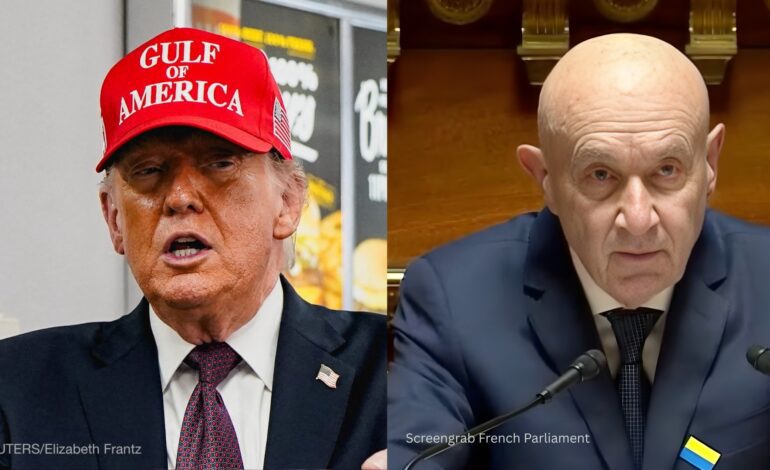

French Senator Malhuret’s Brutal Trump Speech: Full Translation & Analysis
A Turkish proverb just went viral in every language on earth. And it wasn’t shared by a comedian, a columnist, or a cable news anchor. It came from the floor of the French Senate.
Senator Claude Malhuret, speaking from the Luxembourg Palace in Paris, delivered what many observers are calling the most precise, most damning, and most quotable international critique of the Trump administration to date. In measured, methodical language, he dismantled the administration’s credibility cabinet secretary by cabinet secretary — and closed with a proverb that has since been shared millions of times online.
In this article, you’ll get the full translated text of Malhuret’s speech, context for who he is and why his words carry weight, analysis of each major claim he made, and a broader look at what this moment tells us about how the world now sees American political leadership.
Table of Contents
- 1. Who Is Claude Malhuret? Context Before the Speech
- 2. The Full Translated Speech: Every Key Line
- 3. The Turkish Proverb Heard Around the World
- 4. Fact-Checking Malhuret’s Cabinet Characterizations
- 5. The Epstein Distraction Theory Explained
- 6. Conflicts of Interest: What the Global Record Shows
- 7. Why European Leaders Are Speaking More Bluntly Now
- 8. People Also Ask: Your Questions Answered
- 9. Key Takeaways
1. Who Is Claude Malhuret? Context Before the Speech
Before we get to what he said, it matters to understand who said it.
Claude Malhuret is not a fringe voice. He is a centrist senator from the Allier department, a member of the center-right Les Indépendants group, and — before his long political career — a doctor who served as executive director of Médecins Sans Frontières (Doctors Without Borders) in the 1980s. He is a decorated public servant with decades of credibility across France’s political spectrum.
He is not a leftist firebrand. He is not running for anything. He has no obvious partisan incentive to grandstand. That’s precisely what made his speech land so hard: it came from exactly the kind of establishment, center-right figure that the political right typically dismisses as ideologically sympathetic.
A Year Prior: The Nero’s Court Comparison
Malhuret himself acknowledged that this wasn’t his first assessment of the Trump administration. He had previously compared it — on the same Senate floor — to Nero’s Court in Rome. He opened his 2025 speech by admitting he was wrong about that comparison. Not because things had improved. Because the reality turned out to be something stranger.
2. The Full Translated Speech: Every Key Line
Here is the complete translated text of Malhuret’s remarks, presented in the order delivered, with each major passage preserved as closely as possible to the original French.
On Distraction and the Epstein File
“Every time the Epstein affair resurfaces, bombs explode somewhere in the world and cause a distraction.”
This opening line is not rhetorical flourish. Malhuret is making a specific political observation: that geopolitical crises and international distractions seem to flare at moments when domestic scrutiny of the Epstein case intensifies. Whether one reads this as deliberate strategy or coincidence, the pattern he’s identifying is one that political journalists have documented repeatedly.
The Correction: Not Nero, but a Miracle
“A year ago, here in France, I compared Trump’s presidency to Nero’s Court. I was wrong. It’s the miracle court.”
He then proceeded to list cabinet appointments as evidence, each one delivered with the dry precision of a physician delivering a diagnosis.
The Cabinet Roll Call
- “An anti-vaxxer, former heroin addict as Minister of Health.”
- “A climate-skeptic Minister of Economy.”
- “An alcoholic TV host, Minister of the Armed Forces.”
- “An old Qatar agent, Minister of Justice.”
- “A groupie of Putin, Minister of National Security.”
The Proverb
“A Turkish proverb says: ‘When a clown settles in a palace, he does not become king — it is the palace that becomes a circus.’”
This line stopped the room. And it’s been shared relentlessly since.
On Corruption and Self-Enrichment
“There isn’t a single country where Trump did not take advantage of the situation to enrich himself without ever forgetting his family.”
“Any one of these conflicts of interest would have caused an immediate procedure of impeachment here. But we are not here. We are in MAGA’s America, where public business is conducted in favor of private interests.”
That last line is the thesis. Not a talking point. A verdict.
3. The Turkish Proverb Heard Around the World
Let’s pause on the proverb, because it’s doing a lot of work in a small space.
The line — “When a clown settles in a palace, he does not become king; it is the palace that becomes a circus” — is a genuine piece of Turkish folk wisdom, not a modern invention. Variations of it appear in Turkish literary and oral tradition, and Malhuret’s use of it was deliberate and precise.
What makes it so effective rhetorically is that it shifts the frame entirely. Most Trump criticism focuses on the man himself. This proverb does something more corrosive: it argues that the institution — the presidency, the Cabinet, the rule of law — is what suffers. It’s not just that a flawed person took power. It’s that the power itself has been degraded.
For political observers who worry less about personalities and more about institutional decay, that’s a far more serious charge.
4. Fact-Checking Malhuret’s Cabinet Characterizations
Malhuret made specific, pointed claims about specific individuals. Let’s look at the factual basis for each.
“An anti-vaxxer, former heroin addict as Minister of Health” — RFK Jr.
Robert F. Kennedy Jr.’s public record includes documented vaccine skepticism spanning decades and his own memoir-level disclosure of past substance struggles. His confirmation as Secretary of Health and Human Services was one of the most controversial Cabinet confirmations in recent American history, drawing opposition from health professionals and researchers across the political spectrum.
“A climate-skeptic Minister of Economy” — Scott Bessent
Treasury Secretary Scott Bessent has a complex record on climate-related economic policy. His appointment alongside an administration that withdrew from the Paris Climate Agreement and has aggressively rolled back environmental regulations gives Malhuret’s shorthand some factual grounding, though “climate-skeptic” is a characterization that would be disputed by Bessent’s own office.
“An alcoholic TV host, Minister of the Armed Forces” — Pete Hegseth
Defense Secretary Pete Hegseth’s Senate confirmation hearings were notable for, among other things, testimony addressing allegations about his personal conduct and past behavior. His background as a Fox News host rather than a military or policy professional was itself a historic appointment — no prior Defense Secretary had come from entertainment media.
“A groupie of Putin, Minister of National Security” — Tulsi Gabbard
Director of National Intelligence Tulsi Gabbard’s meetings with Syrian President Bashar al-Assad, her documented criticism of U.S. intelligence assessments, and her public statements on Russia–Ukraine have all been scrutinized extensively. Her confirmation as DNI was also highly contested.
5. The Epstein Distraction Theory: What Malhuret Is Really Saying
Malhuret’s opening line — linking global crises to Epstein file resurgences — is the most provocative claim in the speech. It’s also the most difficult to verify.
What he’s describing is a classic political pattern: when domestic scandal threatens to dominate news cycles, foreign policy crises — whether manufactured or merely amplified — provide welcome distraction. This isn’t a novel theory. Political scientists and media researchers have studied the “wag the dog” phenomenon for decades.
Malhuret isn’t claiming that bombs are being set off deliberately to distract from Epstein. He’s observing a pattern of timing and suggesting the public should notice it. That’s a different, and more defensible, claim.
6. Conflicts of Interest: What the Global Record Shows
Malhuret’s claim that Trump used international relationships for personal financial gain is among the most documented criticisms in modern American political history.
The cases most cited by watchdog organizations include:
- The Trump International Hotel in Washington, D.C., which received payments from foreign governments throughout the administration, a practice federal judges and congressional investigators flagged as potentially violating the Emoluments Clause.
- Real estate transactions and licensing deals in countries that were simultaneously subject to U.S. foreign policy decisions.
- The reported $400 million aircraft gift from Qatar — a country Malhuret specifically mentions in his characterization of the Attorney General — which raised immediate ethics and legal questions.
Malhuret’s comparison to French constitutional standards is pointed: in France’s Fifth Republic, conflicts of interest at this scale would trigger formal parliamentary procedures. The comparison exposes a gap between American and European democratic accountability norms that political scientists have increasingly studied.
7. Why European Leaders Are Speaking More Bluntly Now
Malhuret’s speech didn’t emerge from nowhere. It reflects a wider shift in how European political figures are willing to discuss the United States publicly.
For decades, the transatlantic norm was diplomatic restraint. European leaders criticized American policy — particularly during the Iraq War era — but generally stopped well short of direct attacks on American heads of state. That norm has eroded significantly since 2016 and has largely collapsed since the start of the second Trump term.
Several factors explain this shift:
- Trade tensions: New tariff regimes directly threaten European economies, making diplomatic silence politically costly for European politicians.
- Security uncertainty: Ambiguous U.S. signals on NATO commitments have forced European governments to reconsider defense dependencies they’ve held for 75 years.
- Democratic erosion concerns: European legislators increasingly see American democratic backsliding as a global contagion risk, not just an American domestic issue.
- Domestic political audience: Criticizing Trump is popular with European voters. Politicians like Malhuret lose nothing domestically by being blunt.
8. People Also Ask: Your Questions Answered
Who is Claude Malhuret and what is his political position?
Claude Malhuret is a French centrist senator and former director of Médecins Sans Frontières. He sits with the center-right Les Indépendants group in the French Senate and is known for measured, substantive political speeches rather than partisan grandstanding.
What is the Turkish proverb Malhuret quoted about Trump?
The proverb is: “When a clown settles in a palace, he does not become king — it is the palace that becomes a circus.” It is a traditional piece of Turkish folk wisdom used to argue that institutions are degraded by unworthy occupants, rather than the reverse.
What did Malhuret say about Trump and corruption?
Malhuret stated that there is no country in which Trump failed to use his political position for personal financial gain, and that any of these conflicts of interest would trigger impeachment proceedings in France. He characterized the administration as one where public responsibilities are used to serve private financial interests.
Is it common for foreign legislators to criticize U.S. presidents this directly?
Direct public criticism of American presidents by foreign legislators was historically rare due to diplomatic norms. Since 2016, and especially since 2025, that restraint has faded considerably among European politicians, who now face domestic pressure to address American policy decisions that directly affect their countries.
9. Key Takeaways: What This Speech Actually Means
- Malhuret is a credible, center-right voice — not a predictable critic. His assessment carries weight precisely because he has no ideological incentive to attack the American right.
- The Turkish proverb reframes the debate: this isn’t just about one person. It’s about institutional damage that outlasts any single presidency.
- Each cabinet characterization has a factual basis. These aren’t invented slurs — they’re compressed summaries of documented public record.
- The transatlantic diplomatic norm of restraint is over. European politicians are no longer treating criticism of American leadership as off-limits.
- The conflict-of-interest argument is comparative and specific. Malhuret doesn’t just allege wrongdoing — he measures it against a concrete constitutional standard from his own political system.
The Bigger Picture: When the World Stops Whispering
Something changed when Claude Malhuret stood up in the Luxembourg Palace and said what he said.
It wasn’t the words themselves. Politicians speak sharply all the time. What was different was the register: calm, clinical, methodical. No anger. No passion. Just a physician-turned-senator reading symptoms off a chart and delivering a diagnosis.
That tone is often more devastating than fury. Fury can be dismissed as emotion. Cool precision is harder to wave away.
The Turkish proverb will outlive the news cycle. It will be cited in dissertations about this era of American politics, quoted at debates, and repeated whenever the question arises of what happens to institutions when they are occupied by those unfit for them.
And the question Malhuret is really asking — the one underneath all the specific charges — is whether Americans themselves are watching. Whether the palace’s original occupants still recognize what it was built to be.
Discover more from MatterDigest
Subscribe to get the latest posts sent to your email.