“He Didn’t Hold Back… John Kennedy’s Words Just Sparked a Firestorm in the Senate”
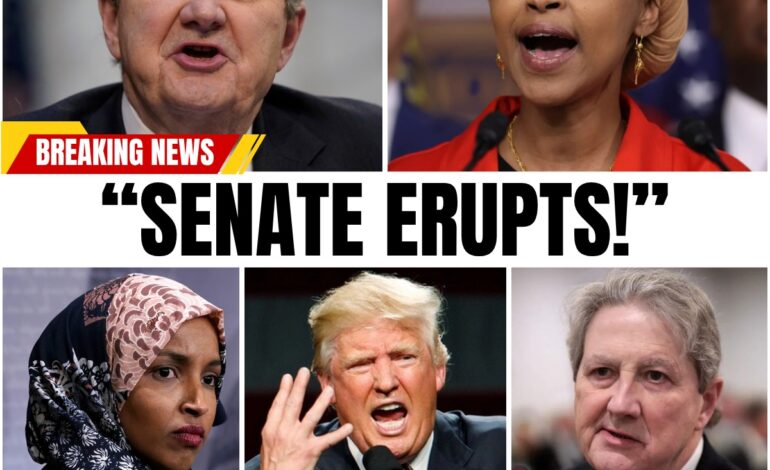

Senator John Kennedy of Louisiana delivered one of the most talked-about Senate speeches in recent memory on March 25, 2026. Kennedy did not hold back. He went straight to the heart of the most controversial issues facing the United States government and said exactly what many Americans had been thinking but few in Washington were willing to say out loud. His words spread quickly on social media, replayed by millions who felt he finally gave voice to their frustrations.
Who Is Senator John Kennedy? A Quick Background
John Kennedy is a Republican senator from Louisiana. He has served in the U.S. Senate since 2017 and is widely known for his sharp wit, plain-spoken style, and ability to cut through political spin with simple, direct language. Before entering national politics, he served as Louisiana State Treasurer for over a decade.
Kennedy has a reputation unlike most senators. He does not speak in long, complicated sentences full of political language that most people cannot understand. Instead, he talks the way a regular person might at a kitchen table. That style has made him one of the most quotable figures in the Senate — and one of the most watched on social media platforms like X (formerly Twitter), YouTube, and Facebook.
His March 2026 speech was no exception. In fact, many political observers said it was one of his most powerful performances yet. The chamber was packed. Colleagues on both sides of the aisle leaned in to listen. Some nodded. Others shook their heads. But no one looked away.
What Senator Kennedy Said: The Key Statements That Went Viral
Kennedy’s speech covered several major topics. He talked about the national debt, government spending, the border, foreign policy, and what he called the growing disconnect between Washington politicians and the American people. Every point was delivered with the kind of blunt clarity that makes people stop scrolling and pay attention.
On government spending, Kennedy was direct. He said the federal government spends money the way a teenager with a stolen credit card does — fast, reckless, and without thinking about who has to pay the bill. He pointed out that the United States national debt has now crossed a level that most Americans cannot even picture in their minds. He argued that politicians keep talking about fiscal responsibility while doing the exact opposite the moment cameras stop rolling.
He made the point that no family in America can run their household budget the way Washington runs the country’s finances. If a regular family spent more than it earned every single year for decades, it would lose everything. Yet Congress keeps doing it, he said, and then acts surprised when inflation hurts the people at the bottom of the income ladder the hardest.
On the subject of the southern border, Kennedy did not mince words either. He said the situation at the border is not complicated. A country that cannot or will not control who crosses its borders is not really a country in the full sense of the word. He said the American people have been told for years that fixing the border is hard. Kennedy pushed back on that idea. He said the problem is not that it’s hard — it’s that there hasn’t been enough political will to actually do it.
Kennedy Takes Aim at Washington Insiders and Career Politicians
One of the most powerful parts of Kennedy’s speech was when he turned his attention to the political class itself — the career politicians, consultants, lobbyists, and bureaucrats who have made Washington, D.C. their permanent home and their permanent income source.
He said many of the people making decisions for 330 million Americans have never run a business, never met a payroll, never had to choose between paying the electric bill or buying groceries. They live in a bubble, he argued, where bad decisions have no real consequences for the people making them — only for the people living outside the beltway.
Kennedy described what he called a “ruling class mentality” — a way of thinking that puts the needs of Washington insiders ahead of ordinary Americans. He said this is not a new problem, but it has gotten worse. And the reason it has gotten worse, he argued, is that voters keep electing the same kinds of people and expecting different results.
He called on Americans to pay closer attention to what their elected officials actually do — not just what they say during campaign season. He pointed out that there is often a massive gap between the promises politicians make when they want your vote and the decisions they make once they are safely seated in office.
The Senate Chamber’s Reaction to Kennedy’s Speech
Eyewitnesses in the Senate chamber described the atmosphere as tense but electric. Kennedy’s words landed hard. Some of his Republican colleagues gave him approving nods. A few even smiled at some of his more colorful lines. Democrats in the chamber were less enthusiastic, though some were seen listening closely — particularly when he made broader points about government accountability that could apply to either party.
Staff members and aides lined the walls, many of them quietly recording clips on their phones — something that is not unusual when Kennedy speaks, because they know the clips will spread. By the time Kennedy finished speaking, clips of his remarks were already being shared on social media by millions of people who had been watching the C-SPAN livestream or following the speech in real time.
Several political commentators on both left and right acknowledged that Kennedy had a point, even when they disagreed with his conclusions. His speech quickly became a trending topic on social media platforms. News outlets across the political spectrum covered it — which is something that rarely happens when a senator gives a floor speech.
Why Kennedy’s Speaking Style Works — And Why It Goes Viral
There is a reason Senator John Kennedy’s speeches spread so fast online. Most politicians speak to protect themselves. They use vague language, carefully worded statements, and safe talking points that won’t get them in trouble. Kennedy does the opposite. He says exactly what he means in the clearest way possible — and he often uses humor or colorful comparisons to make his point land even harder.
Political communication experts say this kind of direct, plain-English style is increasingly rare in Washington. At a time when most people’s trust in government and media institutions is at historic lows, a politician who sounds like a real person — not a polished PR machine — naturally attracts attention. People share his clips because they feel like he’s saying what they’ve been thinking.
Kennedy also has a gift for analogy. He does not just say that something is bad — he explains why it’s bad in a way that connects to everyday experience. When he talks about the national debt, he does not use economic jargon. He uses comparisons that any household can understand. When he talks about political hypocrisy, he does not just accuse people of being dishonest — he describes what they do and lets listeners draw their own conclusions.
This approach is powerful because it respects the audience’s intelligence. He does not talk down to people. He talks to them. And in a media environment where most political speech feels scripted and hollow, that distinction makes a real difference.
The Broader Context: Why This Speech Matters Right Now
Kennedy’s speech did not happen in a vacuum. It came at a moment of extraordinary tension in American politics. The House had just voted to impeach President Trump. The Senate was preparing for a trial that could remove a sitting president from office. The national mood was anxious, divided, and searching for clarity.
Against that backdrop, Kennedy’s speech hit differently. He was not talking about the impeachment directly — at least not in most of his remarks. He was talking about something deeper: the long-term dysfunction of American governance, the way trust has been broken between the people and their leaders, and the question of whether the system can actually fix itself.
Many Americans watching or reading about the speech came away with the same feeling: that someone in Washington finally said out loud what they had been feeling for a long time. Whether they agreed with every point Kennedy made or not, they appreciated that he was willing to say it plainly and directly without wrapping it in layers of political language designed to say nothing.
Political analysts noted that speeches like this one tend to have a long shelf life. They get shared, clipped, quoted, and referenced long after the news cycle has moved on. Kennedy’s remarks from this speech are likely to appear in campaign ads, debate clips, and political discussions for months — possibly years — to come.
Reaction From the Public and the Media
Within hours of Kennedy’s speech ending, social media was flooded with reactions. Supporters called it one of the best speeches they had ever seen on the Senate floor. They shared his quotes, made memes out of his best lines, and praised him for saying what others in Washington were too afraid to say.
Critics were not as kind. Some Democrats and progressive commentators argued that Kennedy’s style is more entertainment than substance — that his colorful language distracts from the fact that he does not always offer concrete solutions to the problems he describes so vividly. They said it is easy to stand at a podium and criticize everything while offering little in return.
Conservative media embraced the speech enthusiastically. Major right-leaning outlets ran full transcripts and video highlights. Commentators praised Kennedy for his courage and his clarity. Several called him one of the most effective communicators in the Republican Party today.
Even some outlets that are typically critical of Kennedy acknowledged that his speech was well-crafted and that it touched on real concerns shared by a large portion of the American public. Frustration with government spending, distrust of career politicians, and concerns about the direction of the country are not feelings unique to any one political side. Kennedy spoke to all of them — loudly and clearly.
What This Means for Kennedy’s Political Future
Speeches like this one tend to raise a politician’s national profile — and John Kennedy’s profile was already quite high. After this speech, speculation about his future plans grew louder. Kennedy has long been seen as a sharp and effective political voice, but some observers now wonder whether he is positioning himself for something bigger.
Whether or not Kennedy has national ambitions beyond the Senate, his ability to communicate complex political ideas in plain, relatable language makes him a valuable and influential voice in the Republican Party. At a time when the party is navigating enormous internal tensions, having a senator who can speak directly to everyday Americans without losing their attention is a genuine asset.
His Louisiana constituents have consistently re-elected him because they believe he speaks for them. His national audience — built largely through viral clips and social media — suggests that his appeal extends far beyond his home state. If Kennedy decides to pursue higher office at any point, he would bring that communication skill and that built-in audience with him.
Key Takeaways From Senator Kennedy’s Senate Speech
Senator John Kennedy’s March 2026 Senate speech was more than a political moment. It was a reminder of what political communication can look like when a person prioritizes honesty over optics and clarity over caution. In a city full of people who say everything carefully so they commit to nothing, Kennedy said what he meant — and meant what he said.
The speech was a pointed critique of government spending, political hypocrisy, border policy, and the disconnect between Washington and the rest of America. It was delivered in plain English, with vivid comparisons and sharp humor. And it resonated with millions of people who are tired of being talked at by politicians who seem more interested in keeping their jobs than doing them.
Whether you agree with Kennedy’s politics or not, his ability to cut through the noise of Washington and say something that actually reaches people is remarkable. In a political landscape that often feels like a performance with no real substance, moments like Kennedy’s speech stand out — and they remind us that plain, direct, honest communication still has real power.
The chamber may have been shaken. But for millions of Americans watching at home, it felt more like relief.
Discover more from MatterDigest
Subscribe to get the latest posts sent to your email.