What Does $890 Million of Your Tax Money Disappearing Look Like?
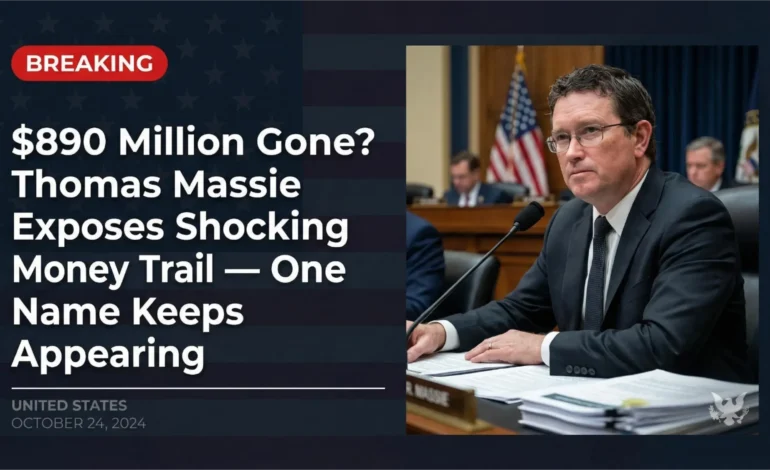

| FACT-CHECK INVESTIGATION | VIRAL MISINFORMATION |
| VERDICT: THIS STORY IS FABRICATED
A viral article claims Thomas Massie exposed a “$890 million shell company scheme” linked to a person named “Steven Miller,” who then fell silent for 1 minute and 41 seconds at a congressional hearing. No such hearing, no such FinCEN report, no such shell company, and no such silence have ever occurred.
This piece of content is a work of political fiction presented as news. Below, we break down every false claim and replace it with verified, sourced facts. |
The Viral Claim: What Was Said
In early 2026, a piece of content began spreading rapidly across social media platforms and partisan websites. It told a gripping story: Congressman Thomas Massie had cornered a government official named “Steven Miller” at a congressional hearing. According to the post, Massie revealed that $890 million in taxpayer money had been funneled through a shell company with no employees, no office, and a Cayman Islands address.
The story got more dramatic from there. It claimed this official — linked to “offshore accounts and secondary transfers” — sat in silence for exactly 1 minute and 41 seconds when confronted. It described a FinCEN (Financial Crimes Enforcement Network) report that mapped the entire scheme, named FBI criminal investigations, and called it a scandal bigger than Watergate.
It demanded your attention. It demanded your outrage. The problem? None of it is real.
Fact-Check: Claim by Claim
Let’s go through every major claim in the viral post and match it against verified public records.
| Claim | Verdict |
| Thomas Massie exposed a $890M shell company scheme | FALSE — No record of any such hearing or testimony exists in congressional archives. |
| A ‘Steven Miller’ was the official named | FALSE — No government official named Steven Miller held a Treasury or FinCEN role in this context. The name likely confuses Stephen Miller (Trump advisor, no Treasury role). |
| The official was silent for 1 min 41 sec | FALSE — No such moment appears in any verified C-SPAN footage, official transcript, or media report. |
| A FinCEN report mapped the entire scheme | FALSE — No FinCEN report matching this description has been published or cited by any credible source. |
| The FBI opened criminal investigations | FALSE — No law enforcement agency has announced or confirmed such an investigation. |
| The hearing went viral | MISLEADING — The story itself went viral, not footage of any real hearing. |
Who Are Thomas Massie and Stephen Miller, Really?
Thomas Massie: The Real Congressman
Thomas Harold Massie is a real and prominent U.S. politician. He is a Republican congressman representing Kentucky’s 4th congressional district, a seat he has held since 2012. Before entering politics, he founded a tech startup and graduated from MIT.
Massie is known for his libertarian-leaning views and willingness to break with party leadership. He has been a genuine critic of government overreach from both parties. In early 2026, he made real headlines — but for a very different hearing.
| WHAT MASSIE ACTUALLY DID IN 2026
In February 2026, Rep. Thomas Massie made national news at a House Judiciary Committee hearing focused on the DOJ’s handling of the Jeffrey Epstein files.
He confronted Attorney General Pam Bondi about the DOJ publishing survivors’ names while redacting co-conspirators. He sponsored the Epstein Files Transparency Act and called the cover-up ‘bigger than Watergate.’
Bondi called Massie a ‘failed politician’ with ‘Trump derangement syndrome.’ Massie later said he had more confidence in former AG Merrick Garland’s hearing performance than Bondi’s.
Sources: The Hill (Feb. 12, 2026), WUKY News (Feb. 12, 2026) |
Notice the difference: Massie’s real 2026 hearing was about Epstein documents and DOJ transparency. It involved Pam Bondi, not anyone named Steven Miller. It was about redacted names, not $890 million offshore transfers.
Stephen Miller: The Real White House Official
The viral story refers to a “Steven Miller” — a name that appears designed to evoke Stephen Miller, a very real and powerful figure in the Trump administration. Stephen N. Miller (note the correct spelling) serves as White House Deputy Chief of Staff for Policy since 2025. He previously served as a senior advisor during Trump’s first term from 2017 to 2021.
Stephen Miller is a political advisor, not a Treasury or FinCEN official. He has no known role managing government fund transfers of the kind described. His real-world controversies center on immigration policy, not offshore banking schemes.
In 2026, the actual news involving Stephen Miller included a House Judiciary Committee subpoena against an Arlington prosecutor over protests near Miller’s home — a very different story from the one being spread online.
Why This Story Felt Real: The Anatomy of Viral Misinformation
It Used Real Names and Real Institutions
The viral post worked because it used real elements: a real congressman (Massie), a real government agency (FinCEN), a real concern (offshore shell companies), and a name that sounds like a real official (Steven Miller / Stephen Miller). Mix real names with fake events, and many readers won’t stop to verify.
It Triggered Strong Emotions
Words like “your hard-earned tax money,” “deafening silence,” and “this level of corruption demands your outrage” are not journalistic language. They are emotional triggers designed to bypass critical thinking. Legitimate investigative journalism reports what happened. This post told you how to feel first.
The ‘1 Minute 41 Second’ Detail
Hyper-specific fake details are a well-known misinformation technique. Saying someone was silent for “1 minute and 41 seconds” sounds precise enough to be real. In reality, no official footage, C-SPAN recording, or congressional transcript supports this claim. The specificity was invented to add credibility.
It Referenced a Real Agency Doing Real Work
FinCEN — the Financial Crimes Enforcement Network — is a genuine U.S. Treasury bureau that does track suspicious financial activity, shell companies, and offshore transfers. Real FinCEN advisories about Cayman Islands vulnerabilities exist and date back to at least 2000. The agency is real. The report described in the viral story is not.
What FinCEN Actually Does
Because FinCEN is mentioned in the false story, it is worth explaining what the agency really does. This context matters.
- FinCEN enforces the Bank Secrecy Act and requires financial institutions to report suspicious transactions.
- It maintains a database of beneficial ownership information under the Corporate Transparency Act, passed by Congress in 2020.
- It issues advisories about high-risk jurisdictions, including genuine past warnings about the Cayman Islands’ counter-money laundering gaps.
- It collects Suspicious Activity Reports (SARs) from banks and other institutions.
- It does not routinely publish exposés about specific named officials or release real-time corruption maps to the public.
Shell companies and offshore financial secrecy are real problems. The United Nations estimates between $800 billion and $2 trillion is laundered through the global financial system every year. The U.S. has actually ranked first on the Tax Justice Network’s Financial Secrecy Index, above traditional havens like the Cayman Islands. These are legitimate policy concerns — but they deserve accurate reporting, not fictional dramatizations.
The Real Massie–Epstein Hearing: What Actually Happened
The viral story appears to have been loosely inspired by Massie’s real February 2026 congressional appearance. That hearing was entirely different but genuinely dramatic. Here is what actually occurred.
The Hearing
On February 12, 2026, Rep. Massie appeared before the House Judiciary Committee during a hearing about the DOJ’s handling of the Jeffrey Epstein investigation files. Attorney General Pam Bondi testified.
What Massie Actually Said
Massie presented three specific documents. The first was a mostly unredacted list of survivor names that should not have been public. The second was a file titled ‘Child Sex Trafficking’ that had named co-conspirators — including Les Wexner — redacted. The third was a fully obscured page Massie described as a single black box. He accused the DOJ of protecting co-conspirators while exposing victims.
Bondi’s Response
Bondi did not fall silent. She argued that Wexner’s name was restored within 40 minutes and appeared over 4,000 times in other documents. She also accused Massie of having ‘Trump derangement syndrome,’ called him a ‘failed politician,’ and raised unrelated issues about his voting record. Massie called it ‘bigger than Watergate.’
The Aftermath
Massie later said Bondi ‘performed worse’ than her predecessor Merrick Garland at congressional hearings. He said he had no confidence in her leadership at the DOJ. This is the real, verified story of Thomas Massie at a 2026 hearing — nothing about $890 million, nothing about shell companies, and nothing involving anyone named Steven Miller.
How to Spot Political Misinformation Like This
The viral $890 million story follows a recognizable pattern. Here is how to protect yourself from similar content.
Step 1: Check for Verifiable Specifics
Real news has verifiable details: committee names, hearing dates on the congressional calendar, C-SPAN links, official transcripts. This story had emotional details (1 min 41 sec of silence) but no verifiable evidence trail. If you cannot find the original footage or document, assume it does not exist until proven otherwise.
Step 2: Search the Named Sources Directly
The story claimed a FinCEN report proved the scheme. FinCEN publishes its advisories and reports at fincen.gov. No such report exists there. When a story cites a government document, that document should be findable at the government agency’s official website.
Step 3: Separate Emotional Language from Facts
Phrases like ‘demands your outrage’ and ‘the sound of a government official realizing…’ are editorial commentary, not journalism. Real investigative reporting describes what happened and lets readers draw conclusions. When a story tells you how to feel, slow down.
Step 4: Check Major Outlets
A $890 million government corruption scandal with a viral congressional hearing would be covered by Reuters, Associated Press, The Hill, Washington Post, and dozens of other outlets. When a sensational political story appears only on fringe or partisan websites, that is a major red flag.
Step 5: Look for the Confusion Tactic
Notice ‘Steven Miller’ versus ‘Stephen Miller.’ Creating a slightly altered name is a classic technique. If real, the story would name the correct person with their exact title and confirmed government role.
Why This Type of Content Spreads — and Why It Matters
Fabricated political content like this does real damage. It erodes trust in genuine investigations. It confuses people about what is actually happening in government. And it wastes public attention that could be directed at real accountability issues.
There are legitimate, verified concerns about government transparency, offshore financial secrecy, and congressional oversight. Thomas Massie is a real congressman doing real work on real oversight issues. FinCEN is a real agency tracking real financial crimes. Stephen Miller is a real powerful official with real policy influence.
By mixing these real elements into a fabricated story, this type of content corrupts public understanding of all of them. That is precisely what makes it dangerous.
The Real Accountability Stories You Should Know About
If the viral story sparked your interest in government accountability, here are verified news stories from 2025–2026 that deserve your attention.
- Thomas Massie’s February 2026 confrontation with AG Pam Bondi over Epstein file redactions — a real hearing with real stakes for real survivors.
- The DOJ’s ongoing release of Jeffrey Epstein investigation files and the debate over which co-conspirator names remain redacted.
- Stephen Miller’s conflicts of interest: The Project on Government Oversight documented that Miller and over a dozen Trump appointees held stock in Palantir, an ICE contractor, while overseeing immigration policy.
- The Corporate Transparency Act’s beneficial ownership database at FinCEN, which is the real, legislative tool aimed at closing shell company loopholes.
- The ongoing debate in Congress over FinCEN funding and its capacity to investigate financial crimes at scale.
Conclusion
The story of ‘$890 million disappearing through a Steven Miller shell company’ is fiction — well-constructed fiction that uses real names and real anxieties, but fiction nonetheless. No such hearing occurred. No such FinCEN report exists. No official sat silent for 1 minute and 41 seconds. The FBI has opened no investigation matching this description.
What is real: Thomas Massie is a congressman doing genuine oversight work on the Epstein files. FinCEN is a real agency fighting financial crime. Shell companies and offshore secrecy are genuine policy problems. And Stephen Miller is a powerful White House official — though his real controversies involve immigration policy and conflicts of interest, not Cayman Islands shell companies.
Real accountability requires real facts. Share this article before sharing the viral one.
| KEY TAKEAWAYS
1. The ‘$890 million Steven Miller shell company’ hearing never happened. No evidence exists in any congressional record, C-SPAN archive, or credible news outlet.
2. The story confuses real figures — Massie and Stephen Miller — with fictional events to exploit existing distrust in government.
3. Massie’s real 2026 hearing was about Epstein file redactions and DOJ transparency, not offshore banking.
4. FinCEN is a real agency. Its real advisories and reports are public at fincen.gov — and none match the story described.
5. Hyper-specific fake details (like ‘1 min 41 sec of silence’) are a known misinformation technique designed to appear credible. |
SOURCES & FURTHER READING
The Hill — Thomas Massie Slams Pam Bondi’s Defense of DOJ Epstein File Release (Feb. 12, 2026)
WUKY News — ‘Bigger Than Watergate’: Massie Demands Accountability at DOJ Hearing (Feb. 12, 2026)
Project on Government Oversight — Stephen Miller’s Financial Stake in ICE Contractor Palantir (Oct. 6, 2025)
FinCEN.gov — Official Advisories and Reports (fincen.gov)
Wikipedia — Thomas Massie (Updated March 2026)
Wikipedia — Stephen Miller (Updated March 2026)
This article is an independent fact-check produced for public information purposes.
All claims are sourced to publicly verifiable records as of March 25, 2026.
Discover more from MatterDigest
Subscribe to get the latest posts sent to your email.