TOTAL BLOCKADE: The Cuban Drama Washington is Trying to Hide

| FACT-CHECKED NEWS ANALYSIS | MARCH 15, 2026 | CUBA CRISIS |
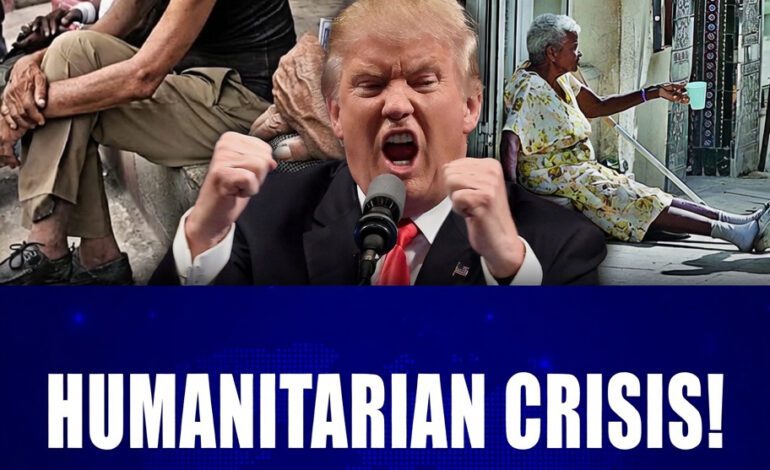
HUMANITARIAN CRISIS! Trump Orders Blockade of Oil to Cuba as Island Sinks into Chaos
| Published: March 15, 2026 | Updated: March 15, 2026 | Category: Latin America | U.S. Foreign Policy | Fact-Check |
| ⚠️ VERDICT: The headline contains a significant exaggeration. The U.S. Navy is NOT physically intercepting Russian aid ships in the traditional naval blockade sense. The real mechanism is an economic and tariff-based blockade — but the humanitarian crisis it is causing is entirely real, confirmed by the UN, Human Rights Watch, TIME, AP, and Bloomberg. This article corrects the specific false claim and reports the full factual picture. |
FAKE NEWS EXPOSED: The Specific Claim That Is False
The viral headline claims the U.S. Navy has “physically blocked” Russian aid ships from reaching Cuba. It frames this as U.S. warships intercepting and turning back vessels carrying food and medicine. That specific scenario did not happen.
Here is what is actually true — and the distinction matters enormously.
The Real Mechanism: Economic Blockade, Not Naval Interception
|
On January 29, 2026, Trump signed Executive Order 14380, which declared a national emergency and authorized tariffs on imports from any country that directly or indirectly supplies oil to Cuba. The order took effect on January 30.
This was not a navy operation. It was an economic weapon. And it worked almost immediately. Here is what happened within days:
- Mexico’s Pemex halted oil shipments to Cuba by January 27, 2026 — before the order was even signed — fearing U.S. tariff retaliation.
- Venezuela’s oil supply had already been cut off after U.S. forces intervened in Venezuela in early January 2026 and arrested President Maduro.
- Cuba’s total oil imports dropped by roughly 90% as of February 2026, according to Crisis24.
- Russia expressed its desire to send fuel — but Kremlin spokesman Dmitry Peskov declined to confirm shipments publicly, saying it was “impossible to discuss these issues publicly right now for obvious reasons.”
- A tanker called the Sea Horse, believed to carry around 200,000 barrels of Russian gasoil, was heading toward Cuba as of February 20, 2026 — but used deceptive practices including signal manipulation, according to maritime intelligence firm Windward.
What About Actual Ship Seizures?
There have been real ship seizures — but of oil tankers, not “Russian aid ships.” The Trump administration seized multiple shadow-fleet tankers, including the Venezuelan-linked, Russian-flagged Aquila II in the Indian Ocean. This was the sixth such interception. These were not food ships or medicine ships. They were oil cargo vessels.
The U.S. also sent $6 million in humanitarian food aid — rice, beans, pasta, canned tuna, and solar lamps — to Cuba through the Catholic Church and Caritas, according to the State Department. That is not the behavior of a government “blocking food and medicine.”
| 🔍 BOTTOM LINE: The claim that the Navy is “blocking Russian aid” is false as stated. The U.S. is running an economic blockade through tariff threats. Some tankers have been seized. Aid from Mexico and the U.S. itself has been allowed through. The humanitarian suffering is real; the specific naval interception of Russian aid is not. |
THE REAL NEWS: Cuba’s Humanitarian Crisis Is Genuine and Severe
Strip away the exaggeration in the viral headline, and what remains is a genuine humanitarian catastrophe unfolding 90 miles from the U.S. coast. This part of the story is not fake — it is documented by the United Nations, Human Rights Watch, the Associated Press, TIME, Bloomberg, and multiple independent journalists on the ground.
How Bad Is It? By the Numbers
| Indicator | Status (as of March 2026) |
| Oil import reduction | ~90% decline since December 2025 |
| Daily blackouts | Up to 20 hours/day outside Havana; up to 12 hrs in Havana |
| Grid collapses (2024–2025) | Five nationwide blackouts in one year (HRW) |
| Medicine availability | Only 30% of essential medicines available (July 2025, Cuban Minister of Public Health) |
| Cubans skipping meals | 7 in 10 skip at least one meal per day (Cuban Observatory of Human Rights, June–July 2025 survey) |
| Oil reserves (Jan 30, 2026) | Enough for only 15–20 days at current demand levels (Kpler data) |
| GDP decline | Cuba’s GDP fell 4% in first 9 months of 2025 alone (official data) |
| Migration since 2021 | Over 1 million people — roughly 10% of the population — have left Cuba |
What Life Looks Like on the Ground
These numbers translate into real human suffering. Here is what journalists and UN officials have reported from inside Cuba:
- Families store water in buckets during the few hours with electricity because pumps shut off during outages.
- Food rots in homes with no refrigeration. One woman told The New Humanitarian she skips meals partly because she is an asthmatic and cannot cook over coal without triggering her condition.
- Garbage has piled up throughout Havana and other cities because trash trucks lack fuel.
- Jet fuel has run out. Cuban authorities suspended refueling services for airlines. Air Canada suspended flights entirely. Other carriers rerouted through the Dominican Republic.
- Schools and universities have been closed. Bank hours are reduced. Cultural events suspended.
- The price of 30 eggs exceeded 3,000 pesos as of February 2026 — against an average monthly state salary of around 6,500 pesos (less than $13).
- On February 3, 2026, Cuba experienced its coldest temperature on record — 0°C in Matanzas Province — during one of the worst blackout periods.
- On February 4, the eastern provinces of Guantanamo, Santiago de Cuba, Holguin, and Granma suffered a total blackout. On March 4, the Antonio Guiteras Power Plant shutdown caused outages across western Cuba.
The UN’s Warning: “Collapse” Is Not Hyperbole
UN Secretary-General Antonio Guterres said he is “extremely concerned” about Cuba’s humanitarian situation, which will “worsen, or even collapse,” if the country’s oil needs are not met. This language — collapse — is rarely used by UN officials.
The UN Human Rights Office described the fuel blockade as “a serious violation of international law and a grave threat to a democratic and equitable international order.” Francisco Pichon, the senior UN official in Cuba, described a combination of “resilience, but also grief, sorrow and indignation” among the population.
HOW DID WE GET HERE? The Road to Cuba’s 2026 Energy Blockade
Cuba’s crisis did not begin in January 2026. It has been building for years. To understand the current situation, you need to know the backstory.
The Structural Roots: Decades of Dependency
Cuba has no meaningful domestic energy production. The country requires approximately 100,000 barrels of oil per day to maintain basic services, according to Crisis24. For decades, it received most of that oil from the Soviet Union. After the Soviet collapse, Venezuela filled that gap under Hugo Chavez. But that pipeline has been narrowing for years.
Between 2021 and 2025, Cuba was already suffering. Five nationwide blackouts hit in a single year. Protests erupted in 2021 and again in 2024 in Santiago de Cuba, the second largest city. The government suppressed protests, cut internet access, and deployed police in riot formation.
The Trump Factor: Maximum Pressure Returns
Donald Trump’s first term reversed the Obama-era thaw with Cuba in 2017. His second term, starting January 2025, went much further. The administration adopted a “total pressure” or “maximum pressure” strategy aimed at regime change.
- Within hours of his January 2025 inauguration, Trump reversed the previous administration’s engagement policy with Havana.
- In December 2025, the U.S. intervened in Venezuela and arrested President Maduro — cutting off Cuba’s largest oil supplier.
- The U.S. then pressured Mexico to stop its oil shipments to Cuba, threatening tariffs. Pemex halted shipments by January 27.
- On January 29, 2026, Executive Order 14380 formalized the blockade, threatening tariffs on any country selling oil to Cuba.
- The New York Times described this as “the United States’ first effective blockade of Cuba since the Cuban Missile Crisis.”
| 🗓️ TIMELINE: December 2025: U.S. seizes Venezuelan oil tankers headed to Cuba. January 27, 2026: Pemex halts Cuba shipments. January 30, 2026: Executive Order 14380 takes effect. February 4, 2026: Eastern Cuba total blackout. February 12, 2026: Mexican Navy delivers 813+ tons of food aid. February 20, 2026: Russian tanker Sea Horse heads for Cuba. March 4, 2026: Antonio Guiteras power plant shuts down; western Cuba blackouts. March 13, 2026: Diaz-Canel confirms diplomatic talks with Washington. |
WHAT IS RUSSIA ACTUALLY DOING? The Real Story Behind the Tanker Headlines
The viral headline claims Russia is sending “humanitarian aid” that the U.S. Navy is blocking. The real picture is more complicated.
Russia Has Been Cautious, Not Defiant
As of early March 2026, Russia had not publicly confirmed any humanitarian aid shipment to Cuba. Kremlin spokesman Dmitry Peskov publicly declined to say whether Russia would send oil. “It’s impossible to discuss these issues publicly right now for obvious reasons,” he told reporters. He added that Moscow did not want an “escalation with the United States over the situation.”
What actually happened was the Sea Horse incident: a tanker believed to be carrying around 200,000 barrels of Russian gasoil was detected heading toward Cuba. The ship had engaged in what maritime intelligence firm Windward called “deceptive shipping practices” — signal manipulation and offshore cargo transfers. It was not an official aid shipment. It was a shadow-fleet maneuver, testing whether the sanctions would be enforced.
Who Actually Delivered Aid?
The countries that did deliver confirmed aid to Cuba are worth noting:
- Mexico: Two Mexican Navy ships arrived in Havana on February 12, 2026, carrying 813+ tons of food — milk, rice, beans, sardines, meat, cookies, canned tuna, vegetable oil, and hygiene items. A second Mexican shipment of approximately 1,200 metric tons of food left Veracruz on February 25.
- United States: The Trump administration itself sent $6 million in humanitarian food aid through the Catholic Church and Caritas, delivered through the State Department.
- Multiple countries expressed verbal support: Brazil, Chile, Spain, China, Belarus, Iran, Vietnam, and the African Union all condemned the blockade or pledged solidarity.
- Activists announced plans for the “Nuestra America Flotilla” — a civilian aid flotilla aimed at breaking the blockade.
| ⚖️ KEY NUANCE: The U.S. allowed food aid through while blocking oil. Critics argue you cannot separate the two: without fuel, food rots without refrigeration, hospitals lose power, water pumps stop, and harvest vehicles cannot run. Blocking oil, in their view, is blocking food production — just one step removed. |
THE DIPLOMATIC TRACK: Is a Deal Being Made?
Trump’s Regime Change Goal — Stated Publicly
Trump and his team have been direct about their goal. The U.S. confirmed that regime change in Cuba is a goal “by the end of the year.” Secretary of State Marco Rubio told Congress: “We would love to see a change. There’s no doubt about the fact that it would be a great benefit to the United States if Cuba was no longer governed by an autocratic regime.”
Trump himself said: “It doesn’t have to be a humanitarian crisis. I think they probably would come to us and want to make a deal.” He later floated the idea of “a friendly takeover of Cuba.”
The Negotiations: Real or Theater?
On January 1, Trump claimed to be negotiating with “the highest people in Cuba.” Drop Site News reported there were no high-level negotiations occurring. By February 26, the Miami Herald reported the U.S. was speaking with Raul Castro’s grandson — who holds no formal senior position in the Cuban Communist Party.
Then, on March 13, 2026, Cuban First Secretary Miguel Diaz-Canel confirmed for the first time on Cuban state television that his government was engaged in diplomatic talks with the United States. Cuba agreed to release 51 political prisoners as an early concession.
Cuba’s Red Line
Cuba’s deputy foreign minister Carlos Fernandez de Cossio was clear in a CNN interview: “We’re not ready to discuss our constitutional system as we suppose the U.S. is not ready to discuss their constitutional system, their political system, their economic reality.”
Cuba has always maintained that its political system is not a bargaining chip. Whether that position holds under continued economic pressure remains the central unknown.
THE DUAL RESPONSIBILITY DEBATE: U.S. Pressure AND Cuban Mismanagement
One of the most important nuances in this story — one that viral headlines on both sides miss — is the genuine dual responsibility for Cuba’s suffering.
The Cuban Government’s Role
Armando Chaguaceda, a Cuban political scientist at the GAPAC think tank in Mexico, said bluntly: “The situation in Cuba is, first and foremost, the responsibility of the Cuban government.”
Cuba’s energy infrastructure has been left to crumble for decades. Power plants have not been modernized. Generation shortfalls in 2025 regularly exceeded 1,300 to 1,700 megawatts during peak demand. Fuel from Venezuela was already declining before U.S. intervention. Domestic crude is heavy and sulfur-rich, accelerating equipment wear. And the government — not the U.S. — jailed hundreds of protesters who dared complain about the blackouts, cut internet access, and appeared on television in military uniforms threatening those who protested.
The U.S. Role
At the same time, The New Humanitarian’s analysis is also accurate: “The US decision to block oil shipments to Cuba has added a new strain to a longer erosion of the state’s capacity to sustain everyday life, threatening to turn the country’s chronic fragility into a full-blown humanitarian collapse.”
A decades-long embargo. A 90% cut in oil supply in two months. Tariff threats against any country that helps. These are not neutral policies. They have direct, documented effects on Cuban hospitals, water pumps, food refrigeration, and the ability to harvest crops.
| ⚖️ THE HONEST VERDICT: Both things are true simultaneously. Cuba’s government has mismanaged its economy for decades, repressed its people, and made itself dependent on geopolitical patrons. The U.S. is now exploiting that dependency in a way that causes mass civilian suffering. Neither fact cancels the other. |
FREQUENTLY ASKED QUESTIONS
Q: Is the U.S. Navy physically blocking ships from reaching Cuba?
Not in the classic wartime sense. The U.S. is using economic tariff threats to prevent countries from selling oil to Cuba. The U.S. has also seized several oil tankers — not food or medicine ships — in the Caribbean and Indian Ocean. Two Mexican Navy ships carrying food arrived in Cuba unimpeded in February 2026. The New York Times described the current situation as the U.S.’s first effective blockade of Cuba since the Cuban Missile Crisis — but through economic pressure, not a naval cordon.
Q: Is Russia sending humanitarian aid to Cuba?
Russia has not confirmed official aid shipments. A commercial tanker believed to carry Russian gasoil (the Sea Horse) was heading toward Cuba in late February 2026 using deceptive shipping practices. The Kremlin publicly declined to comment on whether aid was being sent, saying Moscow wanted no escalation with the U.S. Russia has expressed sympathy and condemned the humanitarian situation.
Q: Is Cuba actually running out of food?
Food shortages are real and severe. Seven in ten Cubans skip at least one daily meal, according to a June–July 2025 survey. The fuel shortage prevents crop harvesting, food refrigeration, and food distribution. Only 30% of essential medicines were available as of mid-2025. The humanitarian situation was described as pre-collapse by the UN.
Q: Why did Cuba’s energy crisis start?
Cuba requires around 100,000 barrels of oil per day. For decades it got most of that from Venezuela. That supply declined steadily from 2016. The U.S. ouster of Venezuela’s Maduro in January 2026 cut Cuba’s largest supply. Mexico halted shipments under U.S. tariff pressure in January 2026. Russian supply is minimal and uncertain. The result is a 90% collapse in oil imports in just two months.
Q: Has the U.S. government sent any aid to Cuba?
Yes. The State Department confirmed $6 million in humanitarian food aid — rice, beans, pasta, canned tuna, and solar lamps — delivered through the Catholic Church and Caritas. This was widely underreported. The U.S. position is that it opposes the Cuban government, not the Cuban people — though critics argue the oil blockade makes that distinction meaningless in practice.
Q: Is there a path to a deal?
As of March 13, 2026, Cuba confirmed it is in diplomatic talks with the U.S. Cuba has released 51 political prisoners as an early gesture. Trump has called for a “friendly takeover.” Cuba has rejected any discussion of its political system. The gap between those positions is wide, but both sides are talking for the first time in years.
HOW THE WORLD IS RESPONDING
The Cuba crisis has triggered sharp divisions among world leaders — with geography, ideology, and economic interests all shaping the reaction.
| Country / Body | Position |
| United Nations | Secretary-General “extremely concerned”; warned of potential humanitarian collapse; UN experts called blockade “a serious violation of international law.” |
| Mexico | Sent two Navy ships with 813+ tons of food; second shipment of 1,200+ tons dispatched February 25; President Sheinbaum called for dialogue |
| Brazil (Lula) | Condemned U.S. fuel blockade; called for humanitarian help for Cubans |
| Chile (Boric) | Called blockade “criminal” and “inhumane”; authorized aid shipment |
| Chile (Kast, incoming) | Opposed aid, saying it ultimately benefits a dictatorship |
| Argentina (Milei) | Supported U.S. position; condemned Cuban government for authoritarianism |
| China | “Firmly supports Cuba in safeguarding national sovereignty”; pledged support |
| Russia | Expressed concern; called situation “escalating”; declined to confirm oil shipments |
| Spain | Expressed support for Cuba |
| African Union | Expressed support for Cuba |
| Nicaragua | Cancelled visa-free travel for Cubans, limiting escape routes — widely seen as concession to Washington |
CONCLUSION: What Is True, What Is False, and What You Should Follow
| ✅ CONFIRMED TRUE: Cuba is in a severe humanitarian crisis. Oil imports fell ~90% in two months. Cubans face 12–20 hour daily blackouts. Hospitals, water pumps, and food refrigeration are failing. 7 in 10 Cubans skip meals. The UN has warned of potential collapse. The U.S. executed an effective economic blockade through Executive Order 14380 signed January 29, 2026. The New York Times called it the first effective blockade since the Cuban Missile Crisis. |
| ❌ CONFIRMED FALSE: The U.S. Navy is NOT physically intercepting Russian humanitarian aid ships at sea. No confirmed Russian food or medicine shipments to Cuba have been blocked. The vessel in question (Sea Horse) was a commercial tanker carrying gasoil, not an aid ship. Mexico and even the U.S. itself successfully delivered food aid to Cuba. |
| ⚠️ GENUINELY CONTESTED: Whether the economic blockade violates international law. Whether blocking oil — which indirectly destroys food production and medical systems — constitutes using “hunger as a weapon.” Whether Cuba’s government or U.S. sanctions bear primary responsibility for the crisis. These are real debates with defensible positions on multiple sides. |
What You Can Do
- Follow the UN News Cuba page (news.un.org) and Human Rights Watch (hrw.org) for verified humanitarian updates.
- Read The New Humanitarian’s ground-level Cuba reporting — some of the most balanced analysis available.
- Check shipping intelligence sources like Bloomberg’s Cuba coverage for real-time tanker updates.
- Verify claims before sharing — especially those that use real crises as a backdrop for false specific claims.
- Pressure your government representatives to support humanitarian aid corridors, regardless of political position on the Cuban regime.
SOURCES AND FURTHER READING
All factual claims in this article are sourced from the following credible outlets and institutions:
- Wikipedia — ‘2026 Cuban Crisis’ (updated March 15, 2026): en.wikipedia.org/wiki/2026_Cuban_crisis
- Al Jazeera — ‘From Blackouts to Food Shortages: How US Blockade Is Crippling Life in Cuba’ (February 8, 2026)
- TIME — ‘How the U.S. Oil Blockade Is Impacting Cuba’ (February 9, 2026)
- AP (via The Hill) — ‘2 Mexican Navy Ships Laden with Humanitarian Aid Dock in Cuba’ (February 12, 2026)
- Bloomberg — ‘Cuba-Bound Tanker Carrying Russian Fuels to Test Trump Blockade’ (February 20, 2026)
- CNBC — ‘Russia Says Cuba Situation Is Escalating After Deadly Incident with U.S.-Tagged Speedboat’ (February 26, 2026)
- Human Rights Watch — ‘World Report 2026: Cuba’ (February 4, 2026): hrw.org
- UN News — ‘Humanitarian Pressures Grow as Cuba Continues to Struggle with Energy Shortages’ (February 5, 2026): news.un.org
- The New Humanitarian — ‘In Cuba, Government Mismanagement and US Oil Moves Tell in Human Suffering’ (March 3, 2026)
- Crisis24 — ‘Cuba: Steady Decline into Humanitarian Disaster’ (February 2026)
- Axios — ‘Trump: Knocked Out 42 Iranian Naval Ships and Will Take Care of Cuba’ (March 7, 2026)
| ABOUT THIS ARTICLE
This fact-checked news analysis draws on primary reporting from Al Jazeera, TIME, AP, Bloomberg, CNBC, Human Rights Watch, UN News, The New Humanitarian, Wikipedia’s 2026 Cuban Crisis article, and Crisis24. Casualty figures and data are sourced as close to primary documentation as available. Diplomatic developments are current as of March 15, 2026. All legal characterizations attributed to named institutions. This article does not constitute legal or political advice. |
Discover more from MatterDigest
Subscribe to get the latest posts sent to your email.