Michigan Rep. Karen Whitsett Leaves Democratic Party, Cites Christian Faith
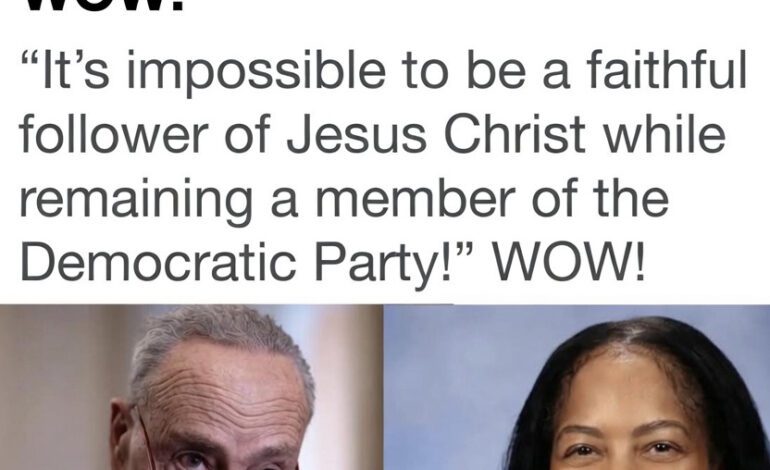

A sitting Democratic state lawmaker from Detroit just made a statement that is circulating across every corner of the internet. Michigan state Rep. Karen Whitsett announced she will not seek reelection — and will never run for public office again — because, she says, it is “impossible to be a faithful follower of Jesus Christ while remaining a member of the Democratic Party as it exists today.” The Democratic Party’s response? Two words: “Good riddance.”
What Karen Whitsett Actually Said
On March 2, 2026, Michigan state Rep. Karen Whitsett announced she will not seek reelection and will never run for office again. She described the decision as “not a political calculation — it’s a spiritual decision,” saying her Christian faith is incompatible with the Democratic Party’s positions on abortion, LGBTQ rights, and gender. She did not join the Republican Party.
Whitsett released a detailed written statement on Monday, March 2. It wasn’t vague. It wasn’t hedged. She named her party directly, named the issues directly, and named her faith as the reason.
“I will not be seeking re-election for this office, and I will not be running for any office ever again. This is not a political calculation — it’s a spiritual decision. I don’t have a heaven or hell to put anyone in. Only God does. But I do have God’s unwavering Word to stand on, and I can no longer compromise it to fit a party platform or to please people.”
— Michigan State Rep. Karen Whitsett, statement issued March 2, 2026
The centerpiece of her statement — the line that went viral — was unambiguous.
“For me, it is impossible to be a faithful follower of Jesus Christ while remaining a member of the Democratic Party as it exists today. I cannot reconcile that platform with Scripture.”
— Karen Whitsett, March 2, 2026
She also reflected on what she called years of compromise.
“I have compromised my relationship with Jesus for too long, and I’m grateful God did not give up on me — He gave me time to repent, turn, and be fully devoted to Him.”
— Karen Whitsett, March 2, 2026
She also credited a remark by Republican state Rep. Bradley Slagh as a turning point: “You’re to vote your district, but you’re not to sell your soul.” Whitsett said those words convicted her deeply. “In the end, I have to answer to God,” she said.
Who Is Karen Whitsett?
Karen Whitsett is a Democratic state representative from Detroit, Michigan, first elected to the Michigan House in 2018. She is a Black Democrat from a predominantly Democratic urban district. She became nationally known in April 2020 when she publicly thanked President Trump for promoting hydroxychloroquine as a COVID-19 treatment — a position that earned her a formal censure from her local party organization.
Whitsett has served in the Michigan House since 2019. She represents a Detroit district — a heavily Democratic area in one of the country’s most reliably Democratic cities. Her political profile has never been a tidy fit for either major party.
The first time most of the country heard her name, she was sitting in the White House. In April 2020, during the height of early COVID-19 fear, Whitsett credited President Trump with pushing access to hydroxychloroquine — a drug she said she believed helped her recover from the virus. She thanked him publicly. The backlash from her party was swift: the 13th Congressional District Democratic Party organization censured her.
That moment set a template for what was to come. Whitsett repeatedly clashed with her caucus over the following years, often crossing party lines in ways that frustrated Democratic leadership. In late 2024, she played a pivotal role in collapsing Democrats’ legislative agenda during a lame-duck session — refusing to show up for key votes, effectively denying her party a quorum and leaving several major policy items dead on the table.
By that point, she had also been stripped of access to NGP VAN — a key Democratic voter data platform — after she fundraised alongside Republican House Speaker Matt Hall.
In 2025, she lost a race for a Detroit City Council seat to a self-declared democratic socialist. That loss forced her back to the state House. It was shortly after that return that she began missing session at an extraordinary rate.
The Three Issues She Named — and What She Said About Each
Whitsett did not speak in abstractions. She named three specific policy areas she said she cannot reconcile with her reading of Scripture.
| Issue | Her Position | Her Words |
|---|---|---|
| Abortion | Describes abortion as morally incompatible with biblical truth; connects it to harm in Black communities | “We say there is no such thing as Black-on-Black crime, but in my view, abortion is exactly that. We wonder why there are no good men — too many were aborted.” |
| LGBTQ rights | Describes the “normalization of the gay lifestyle” as incompatible with Scripture | “That conviction includes… the normalization of the gay lifestyle.” She added: “I understand these are personal for many families.” |
| Gender policy | Opposes what she calls the push to “redefine gender” | “The push to redefine gender” is listed as a third issue she “cannot reconcile with Scripture.” |
She was also pointed about religious leaders she feels avoid these topics to protect donations or popularity.
“I’m not going to pretend God’s Word can be twisted by any priest, bishop, pastor, or preacher to make people feel comfortable in sin — whether that’s to keep donations coming, to avoid offending anyone, or to fit the culture.”
— Karen Whitsett, March 2, 2026
She closed with a personal declaration of allegiance: “God does not change. My faith is not moving. My allegiance is to Jesus Christ, and I’m choosing God’s business over man’s approval.”
Whitsett credited Lionheart Church — an online ministry based in Austell, Georgia — with helping shape her convictions. She and her husband attend the church virtually from Michigan.
The Democratic Party’s Response: “Good Riddance”
Michigan Democratic Party Chair Curtis Hertel did not hold back. Within hours of Whitsett’s announcement, he posted two words on X (formerly Twitter): “Good riddance.”
He expanded on that sentiment in a statement, saying Whitsett’s departure is a “net positive for her constituents and all Michiganders.” He said the party looks forward to electing “a strong Democratic candidate to represent this district, especially one who actually shows up for work.”
State Sen. Dayna Polehanki echoed the sentiment on social media, posting a one-word reply to news of Whitsett’s departure: “Word.”
The party’s reaction reflects the genuine frustration that had been building for years. Whitsett had become a persistent thorn in the Democratic caucus’s side — not just over ideological disagreements, but over what her colleagues described as a fundamental failure to perform the basic duties of her office.
It’s important to separate two distinct criticisms being made of Whitsett simultaneously: one is ideological (she drifted from the party’s values), and the other is practical (she stopped showing up for work). Democrats are making both arguments at once. Whether you accept one, neither, or both depends heavily on your own political perspective.
She Did Not Join the GOP — Here’s What She Said
One of the most searched questions following Whitsett’s announcement: Did she become a Republican? The answer is no.
Whitsett stated she will remain civically engaged and will “support leaders across party lines” who she believes are committed to improving lives and strengthening families based on her values. That is not a party switch. It is closer to a declaration of independence from partisan affiliation.
She was explicit on this point in a follow-up Facebook post, responding to critics who assumed her faith stance implied support for Donald Trump.
“Ummmm… God, Jesus Christ, the Holy Spirit, the Bible… These are not code words for MAGA. The triune God isn’t interested in a political party. I pray you don’t miss your chance to know Him better, simply because you have Trump Derangement Syndrome.”
— Karen Whitsett, Facebook post, March 7, 2026
That post drew its own wave of reaction — both from people who appreciated its candor and from critics who felt it was dismissive of legitimate political concerns.
Whitsett’s relationship with Republican figures is well-documented. In 2024, she worked alongside Republican House Minority Leader (now Speaker) Matt Hall to deny her Democratic caucus the quorum it needed to pass legislation. She also fundraised with Hall — which led to her being stripped of Democratic voter data access. Her cross-party history predates her faith announcement.
The Context No One Is Talking About: Her Attendance Record
Any complete account of this story has to include the attendance record. It is not a minor footnote.
According to a Detroit News review of Michigan House journals, Whitsett missed 69 of the 84 session days where attendance was formally recorded in 2025. That is approximately 82% of all voting days.
From September 1 through December 31, 2025, she missed every single session day — 30 consecutive session days without appearing. She also did not attend any session days in 2026 before making her announcement.
During that same absence period, her campaign fundraising account remained active. Her House campaign committee spent $11,722 in 2025. Of that amount, $6,271 — or 53% — went to reimbursements to Whitsett herself.
Whitsett defended her absences. She argued that she could better advocate for her Detroit constituents from home, using her vote as leverage rather than simply casting it at the direction of caucus leadership.
“What benefit is it for me and my constituents to drive to Lansing for a resolution, a road-naming bill, the designation of a state butterfly?”
— Karen Whitsett, to The Detroit News, 2025
Her critics — including Democrats — say that reasoning doesn’t hold up. Showing up is, at a basic level, the job. The attendance record is why Democratic Party Chair Hertel’s “Good riddance” was not simply a reaction to her faith statement. It reflected accumulated frustration that predates her announcement by many months.
Full Timeline of Key Events
- First elected to Michigan House.
Whitsett wins a seat representing a Detroit district as a Democrat. - Publicly thanks Trump for hydroxychloroquine.
She credits the drug — promoted by Trump — with helping her recover from COVID-19. She meets with Trump at the White House. - Censured by local Democratic organization.
The 13th Congressional District Democratic Party organization formally censures her for thanking Trump. - Grows closer to Republican caucus leadership.
She fundraises alongside Republican Minority Leader Matt Hall; Democrats strip her of voter data access (NGP VAN). - Helps collapse Democrats’ lame-duck session.
Whitsett refuses to appear for key votes, denying her party a quorum. Several major Democratic policy bills die. Republican Hall’s standing in the GOP rises as a result. - Loses Detroit City Council primary.
She runs for a council seat and loses to a democratic socialist candidate. Returns to the state House. - Misses 82% of session days.
Detroit News review finds she skipped 69 of 84 recorded session days. Absences from Sept. 1 through year’s end total 30 consecutive missed days. - Announces she will not seek reelection — ever.
Issues detailed statement citing Christian faith, names abortion, LGBTQ policy, and gender as irreconcilable with the Democratic platform. - Michigan Dem Party Chair posts “Good riddance.”
Curtis Hertel’s two-word response goes viral alongside Whitsett’s statement. - Whitsett responds to critics on Facebook.
Pushes back on characterizations of her faith as pro-Trump: “God, Jesus Christ, the Holy Spirit, the Bible — these are not code words for MAGA.”
The Broader Debate: Faith and Political Party Affiliation
Whitsett’s statement tapped into a genuine, long-running tension in American political life. She is not the first person — and will not be the last — to describe a growing incompatibility between traditional religious belief and a major political party’s platform.
Is This a Trend?
For decades, Black churchgoing voters have been one of the most reliably Democratic constituencies in the country. That demographic loyalty has been foundational to Democratic electoral success — particularly in Michigan, Pennsylvania, and Georgia.
But recent surveys have shown softening at the margins. Pew Research data from 2023-2024 showed that Black Protestant voters, while still overwhelmingly Democratic, expressed greater discomfort with the party’s social policy positions than in previous cycles. Black men in particular showed measurable movement toward Republican candidates in the 2024 presidential election.
Whitsett’s announcement doesn’t represent a mass exodus. One state representative leaving office is not a political earthquake. But her statement gave words to a tension that many voters feel privately — the experience of holding traditional religious beliefs while finding less and less ideological room in either major party.
What Democrats Say About This Tension
Many Democrats — including those who are personally religious — strongly dispute the framing that one cannot be a Christian and a Democrat. They point to the party’s history on poverty, healthcare access, and racial justice as deeply rooted in the Christian tradition of caring for “the least of these.”
Some progressive theologians argue that social justice — not just personal morality — is central to biblical teaching. They contend Whitsett is applying a narrow, conservative hermeneutic and equating one interpretation of Scripture with the only valid one.
What Conservatives and Religious Right Critics Say
Conservatives and many evangelical and traditional Catholic voices argue the opposite: that the Democratic Party’s embrace of abortion rights up to and including late pregnancy, transgender policies affecting children, and mandates on religious institutions represents a genuine break with religious freedom and biblical ethics.
Whitsett’s statement aligns with this view. She is explicit that this is not a political calculation but a theological one — and she acknowledges that reasonable people disagree. “I understand these are personal for many families,” she said about the issues she named.
Whitsett’s announcement reflects a real tension that millions of Americans navigate. People of sincere faith are found in every corner of the political spectrum. Whether her specific conclusion — that the Democratic Party is incompatible with Christianity — is correct is a theological and political question on which Americans deeply disagree. This article presents the facts of what she said and the context around it. The question of who is right is one for readers to weigh.
Frequently Asked Questions
Why is Karen Whitsett leaving the Democratic Party?
Whitsett says she can no longer reconcile her Christian faith with the Democratic Party’s platform. She specifically cited abortion, LGBTQ rights, and gender policy as issues she believes conflict with Scripture. She described the decision as “spiritual, not political.”
Did Karen Whitsett join the Republican Party?
No. Whitsett has not registered as a Republican. She said she will remain civically engaged and will support candidates across party lines. On Facebook, she explicitly stated that her faith stance is not an endorsement of Trump or the MAGA movement.
What did the Michigan Democratic Party say about her departure?
Michigan Democratic Party Chair Curtis Hertel responded with two words on social media: “Good riddance.” He later expanded his statement to say her departure is a “net positive” and that Democrats look forward to replacing her with someone who “actually shows up for work.”
Who is Karen Whitsett?
Karen Whitsett is a Democratic state representative from Detroit, first elected in 2018. She became nationally known in April 2020 for publicly thanking President Trump regarding hydroxychloroquine during the COVID-19 pandemic — a stance that earned her a censure from local party leadership. She has a long history of clashing with her Democratic caucus.
Does Whitsett have a record of missing legislative sessions?
Yes. According to The Detroit News, Whitsett missed approximately 82% of recorded session days in 2025 — 69 of 84 days. She missed all 30 session days between September 1 and December 31, and did not attend any session in 2026 before announcing her departure.
When does Whitsett’s current term end?
Whitsett’s current term expires on January 1, 2027. She has not indicated a desire to resign early. Michigan Democratic Party Chair Hertel has acknowledged that a recall effort is unlikely to succeed given the timeline.
Is Whitsett’s story part of a bigger political shift?
It’s one data point in a larger conversation. Black churchgoing voters remain the most reliably Democratic demographic in the country, but recent surveys show growing friction between traditional religious values and Democratic Party social policy. Whitsett’s case is unusual in its bluntness — most politicians don’t say things this directly.
Key Takeaways
- Michigan state Rep. Karen Whitsett announced on March 2, 2026 that she will not seek reelection and will never run for public office again.
- She described her decision as “a spiritual decision, not a political calculation.”
- She said it is “impossible to be a faithful follower of Jesus Christ” and remain a member of today’s Democratic Party — citing abortion, LGBTQ rights, and gender policy as her reasons.
- Michigan Democratic Party Chair Curtis Hertel’s response was blunt: “Good riddance.”
- Whitsett did not join the Republican Party. She explicitly stated her faith position is not endorsement of Trump or MAGA.
- The announcement comes after Whitsett missed approximately 82% of legislative session days in 2025, which has been a separate and ongoing controversy.
- Her story reflects a genuine and widespread tension between traditional religious belief and the policy positions of major political parties — a debate with no easy resolution.
- Whitsett’s current term runs through January 1, 2027. She has not resigned early.
Stay informed on Michigan politics and the intersection of faith and public policy.
Sources & Further Reading
- WDIV ClickOnDetroit — Whitsett won’t run again due to Christian faith (March 3, 2026)
- The Detroit News — Whitsett won’t seek reelection; six-month absence (March 2, 2026)
- Michigan Advance — Whitsett not seeking reelection, citing spiritual reasons (March 2, 2026)
- Blavity — Michigan State Rep. Leaving Democratic Party Over Christianity (March 2026)
- The Daily Signal — Whitsett: “Impossible” to be faithful follower of Jesus and a Democrat (March 6, 2026)
Discover more from MatterDigest
Subscribe to get the latest posts sent to your email.