SAVE Act Stalls: Thune Says Votes Aren’t There as Trump Pushes Filibuster Change

What Just Happened: The Key Standoff Explained {#what-happened}
Quick Answer:
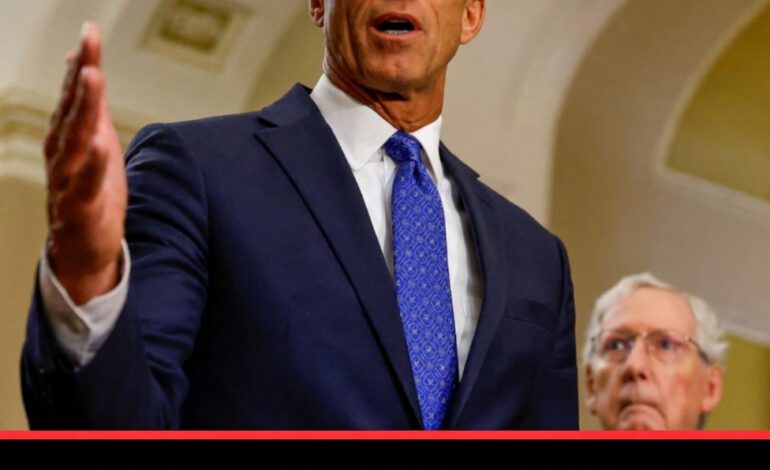
Senate Majority Leader John Thune (R-SD) told Republican senators on March 11, 2026, that they do not have enough votes to pass the SAVE Act using a talking filibuster strategy. President Trump has called the bill his “No. 1 priority” and threatened to withhold his signature on all other legislation until it passes.
This is one of the most public disputes between a Republican Senate leader and a sitting Republican president in years. And it’s playing out in real time.
Thune didn’t mince words after a tense closed-door Senate Republican lunch. “The votes aren’t there, one, to nuke the filibuster, and the votes aren’t there for a talking filibuster,” he told reporters Tuesday. “It’s just a reality. I’m the person who has to deliver, sometimes, the not-so-good news that the math doesn’t add up.”
The confrontation puts Thune in an uncomfortable position. He wants to support the president’s agenda. But he also leads a Senate that operates under rules requiring 60 votes to advance most legislation — and Republicans hold only 53 seats.
What Is the SAVE Act?
The Safeguard American Voter Eligibility (SAVE) Act is a Republican-sponsored federal election reform bill. The House passed a version of it in early 2026.
Here’s what the bill would do:
- Require proof of U.S. citizenship to register to vote in federal elections (documents like a birth certificate, passport, or naturalization papers — not just a driver’s license)
- Require photo ID to cast a ballot
- Ban mail-in voting in federal elections (Trump has pushed for this addition, going beyond the original House version)
- Mandate in-person voter registration for federal elections
- Direct states to remove noncitizens from their voter rolls — and notify affected individuals only when they show up to vote on Election Day, according to Senate Democrats
Supporters say the bill closes a gap in current law that allows noncitizens to accidentally or deliberately register to vote. They point to poll data showing strong public support for voter ID measures. A Center Square poll found that 70% of voters support requiring voter ID at polling places.
Critics — including every Senate Democrat — say the requirement for citizenship documents goes too far. They argue millions of eligible U.S. citizens don’t have easy access to a passport or birth certificate, particularly low-income voters, elderly voters, and people in rural areas. Senate Minority Leader Chuck Schumer called it “Jim Crow 2.0” and said Democrats will block the bill “under any circumstances.”
Alaska Sen. Lisa Murkowski, a Republican centrist, announced she does not support the legislation, citing the Constitution’s provision giving states authority over election administration. “One-size-fits-all mandates from Washington, D.C., seldom work in places like Alaska,” she said.
What Is the Filibuster — and What Is a Talking Filibuster?
Direct Answer:
The filibuster is a Senate rule that requires 60 votes to end debate and advance most legislation to a final vote. Since Republicans hold only 53 seats, they need at least 7 Democrats to break any Democratic filibuster. A talking filibuster (or “standing filibuster”) would require senators to be physically present on the Senate floor and actively speaking to maintain the filibuster — rather than simply objecting procedurally.
The modern filibuster is largely invisible. A senator simply signals opposition and the bill needs 60 votes to proceed. No speech required, no marathon sessions. Bills just quietly die.
The talking filibuster would change that. Under this approach, Democrats who want to block the bill would have to physically hold the Senate floor — debating, speaking, and offering amendments — for days or even weeks. In theory, they’d eventually tire or run out of things to say, and the bill could pass with a simple majority.
In practice, it’s far more complicated. And that’s Thune’s central argument.
Why the Talking Filibuster Isn’t the Magic Solution Some Think
Thune and his staff conducted extensive research into historical precedent. They could not find a single piece of legislation in U.S. history that passed over a talking filibuster without cloture — the formal 60-vote vote to end debate — eventually being invoked.
“What people don’t realize, I think, is that’s unlimited debate but it’s also unlimited amendments,” Thune said. Under current Senate rules, a talking filibuster would also allow Democrats to offer unlimited amendments — potentially tying up Senate floor time for months.
ABC News reported that Thune warned the process could become “monthslong” and eat up the entire Senate calendar with no guaranteed result.
Sen. Mike Lee (R-UT), who leads the push for the bill in the Senate, disputes this interpretation. He argues the talking filibuster is the original, legitimate filibuster and that senators should be willing to fight for it. “Remember, the talking filibuster is best understood as the filibuster,” Lee said.
The Nuclear Option
Separately, some Republicans have pushed to simply “nuke” the filibuster entirely — eliminating it for legislation just as it was eliminated for judicial and executive nominations in 2013 and 2017. This would let the majority pass bills with just 51 votes.
Thune was even more blunt about that. “There aren’t anywhere close to the votes, not even close, to nuking the filibuster,” he said. “So that idea is something, although it continues to be put out there, doesn’t have a future.”
Why Thune Says the Votes Aren’t There
The math is simple — and stubborn.
Republicans hold 53 Senate seats. To advance the SAVE Act under current rules, they need 60 votes — meaning at least 7 Democrats must cross the aisle. That’s not happening. Schumer has said Democrats will block the bill “under any circumstances.”
To use a talking filibuster strategy without changing the rules, Republicans would need to be able to sustain the floor fight — voting down potentially dozens or hundreds of Democratic amendments over weeks. That requires near-total Republican unity. Several Republicans have already signaled reluctance.
Sen. Lisa Murkowski (R-AK) opposes the bill itself. Other moderate Republicans have expressed reservations about the talking filibuster strategy, worried it would paralyze the Senate for months and prevent action on other priorities — funding the Department of Homeland Security, a housing affordability bill, a farm bill, cryptocurrency legislation.
There’s also a long-game concern. If Republicans change the filibuster now, Democrats can use that same weapon when they eventually retake the Senate majority. Sen. Ron Johnson (R-WI) actually embraces that logic — he argued Republicans should move first because Democrats will eliminate the filibuster anyway when they win back power. Most of his colleagues aren’t convinced.
“Our time in the Senate is a finite resource,” Thune said. “We need to use it wisely and well to get as much done as we can.”
Why Trump Is Pushing So Hard
President Trump has been unusually forceful on this issue — even by his standards.
On Sunday, March 9, he posted on Truth Social that he would “not sign other Bills until this is passed,” calling the SAVE Act something that “supersedes everything else” and “MUST GO TO THE FRONT OF THE LINE.”
On Monday at an issues conference with House Republicans in Florida, he called the bill his “No. 1 priority” and warned: “It will guarantee the midterms. If you don’t get it, big trouble.”
He also promoted using “the Filibuster, or Talking Filibuster” to pass what he described as an “88% issue with ALL VOTERS.”
Trump appears to view the SAVE Act as both a substantive policy win and a 2026 midterm mobilizer. Getting it passed — or at least forcing Democrats to visibly block it — would give Republicans a sharp political message heading into the November elections.
He has also increased pressure on Thune indirectly. The White House has reportedly withheld Trump’s endorsement in the Texas Senate Republican primary between incumbent Sen. John Cornyn and Texas Attorney General Ken Paxton. Thune and Senate GOP leadership have urged Trump to back Cornyn. Thune acknowledged concern about that potential link: “That’s probably not a linkage that is in anybody’s best interest.”
The White House later clarified that Trump’s threat to withhold his signature does not apply to any potential DHS funding resolution — a critical carve-out given that parts of the Department of Homeland Security have been shut down since February 14 amid a funding fight over Immigration and Customs Enforcement.
Who Opposes the SAVE Act and Why
Opposition comes from two directions.
Democrats: Universal Opposition
Every Senate Democrat has signaled they will block the bill. Schumer argues the proof-of-citizenship requirement isn’t about preventing fraud — it’s about suppressing votes from communities less likely to have passports or birth certificates readily available.
He also raised a specific concern about the bill’s direction to remove noncitizens from voter rolls: under the bill’s language, affected voters would only be notified they’d been removed when they showed up at a polling place on Election Day — too late to fix any error.
Democrats have pledged to filibuster the bill and hold the floor as long as it takes.
Some Republicans: Procedural and Constitutional Concerns
Sen. Murkowski is the most visible Republican dissenter. She argues the Constitution gives states, not the federal government, authority over election rules, and that a federal mandate doesn’t fit Alaska’s unique conditions.
Rep. Jared Golden (D-ME) — one of four House Democrats who voted for an earlier, narrower version — drew a distinction between the original bill and the expanded version: “One requires that you prove your citizenship to register to vote. The other one is like, IDs at the ballot box. It’s not an insignificant difference.”
Trump has also pushed to add provisions banning all mail-in ballots, restricting transgender athletes in women’s sports, and banning gender-affirming care for minors — expansions that complicate the bill’s already narrow path.
What Other Options Exist for Republicans?
Thune and Republican leaders have examined every available procedural option. Here’s where each stands:
| Option | What It Would Require | Current Status |
|---|---|---|
| Standard cloture vote | 60 senators to advance | Not achievable — Republicans have 53 seats |
| Talking filibuster | Near-total GOP unity; weeks on floor | Insufficient GOP support |
| Nuclear option (eliminate filibuster) | 51 votes to change Senate rules | “Not anywhere close” to votes, per Thune |
| Budget reconciliation | Bill must have direct budget impact; 51 votes | CBS News reports Thune called this “very, very difficult” |
| Standalone floor vote (messaging) | Majority vote to proceed; bill will fail | Thune says he will bring bill to floor as messaging vote |
The most likely outcome, based on Thune’s own words: the Senate holds a vote on the SAVE Act as a messaging bill. It will fail on a procedural vote, with every Democrat (and possibly a few Republicans) blocking it. Republicans then use that vote as a campaign issue in November, arguing Democrats voted to allow noncitizen voting.
“I can guarantee the debate. I can guarantee a vote. I just can’t guarantee an outcome,” Thune said.
What the Standoff Means for the Broader Senate Agenda
The fight over the SAVE Act isn’t happening in a vacuum. It’s consuming Senate floor time and political energy that Republicans need for other priorities.
Among the items competing for attention:
- DHS funding — Parts of the Department of Homeland Security remain shut down since February 14. A funding deal is urgently needed.
- Housing affordability bill — A bipartisan housing bill has already passed the Senate and awaits final resolution.
- Farm bill — Agriculture funding expires and has been repeatedly extended without a full reauthorization.
- Cryptocurrency legislation — A bipartisan crypto regulatory framework has been in the works for over a year.
- Nominations — The Senate must confirm executive branch and judicial nominees.
If Trump follows through on his threat not to sign other legislation until the SAVE Act passes, it could create genuine gridlock across all of these areas. However, the White House has already carved out an exception for DHS funding, and legal experts note that if the president neither signs nor vetoes a bill within 10 days while Congress is in session, it automatically becomes law.
Whether Trump would veto legislation rather than simply not sign it — which would require a two-thirds majority in both chambers to override — remains unclear.
FAQ: People Also Ask
What is the SAVE Act? The Safeguard American Voter Eligibility Act would require people to provide documentary proof of U.S. citizenship — such as a birth certificate or passport — to register to vote in federal elections. It would also require photo ID to cast a ballot and mandate in-person voter registration. Trump has pushed to add mail-in voting restrictions and other provisions.
Why can’t Republicans just pass the SAVE Act? Republicans hold 53 Senate seats. Under current rules, most legislation requires 60 votes to advance past a filibuster. Democrats have unanimously opposed the SAVE Act, and Republicans don’t have enough votes — or enough GOP unity — to force the bill through using alternative procedural strategies.
What is a talking filibuster? A talking filibuster requires senators who want to block a bill to physically be on the Senate floor and actively speaking. In theory, they would eventually exhaust themselves and the bill could pass. In practice, under current Senate rules, a talking filibuster also opens unlimited amendment opportunities for the minority — potentially locking up the Senate floor for months with no guaranteed result.
What is the nuclear option? “Nuking the filibuster” means changing Senate rules with a simple majority (51 votes) to eliminate the 60-vote requirement for legislation. It was already done for judicial nominations (2013) and executive nominations (2017). Thune says there are “nowhere close” to enough votes to do this for legislation.
Why does Trump want the SAVE Act so badly? Trump has called it his “No. 1 priority” and argued it would help Republicans keep control of Congress in the 2026 midterms. He has framed it as an election integrity issue, arguing the bill closes loopholes that could allow noncitizens to vote.
What do Democrats say about the SAVE Act? Senate Democrats have unanimously opposed it. Minority Leader Schumer calls it “Jim Crow 2.0,” arguing the citizenship document requirement would disenfranchise millions of eligible voters who lack easy access to passports or birth certificates. Democrats have pledged to filibuster the bill indefinitely.
What happens if Trump refuses to sign other bills? If Trump neither signs nor vetoes a bill within 10 days (excluding Sundays) while Congress is in session, the bill automatically becomes law without his signature. If Trump actively vetoed legislation, it would require a two-thirds majority in both chambers to override — a high bar Republicans would struggle to clear without Democratic help.
Will the SAVE Act ever pass? As of March 2026, the bill is almost certain to fail its Senate procedural vote. Thune has indicated he will bring it to a floor vote as a messaging exercise ahead of the midterms rather than a genuine legislative path. Whether a compromise version could attract 60 votes is not currently being discussed.
Key Takeaways and What to Watch
Here’s where the situation stands as of March 12, 2026:
- Thune has clearly and publicly rejected both filibuster reform options — the nuclear option and the talking filibuster — saying neither has the votes within his own caucus.
- The SAVE Act will get a Senate floor vote as a messaging bill, not as realistic legislation. Thune promises the debate and the vote — not passage.
- Trump’s threat to withhold his signature on other legislation has a legal ceiling. Bills become law automatically after 10 days if unsigned. Active vetoes would require veto-proof majorities.
- The Texas Senate primary has become an unexpected pressure point, with Trump withholding an endorsement of incumbent Sen. Cornyn in what some see as leverage over the filibuster fight.
- Democrats are unified in opposition and have vowed to filibuster indefinitely, calling the bill a voter suppression measure.
- Several Republican senators have reservations, most visibly Sen. Murkowski, limiting how far leadership can push.
What to watch next:
- The timing of the Senate floor vote Thune has promised
- Whether the DHS funding dispute gets resolved separately
- Trump’s next move if the SAVE Act fails procedurally — does he issue a veto threat on other legislation or back down?
- The Texas Senate primary endorsement decision and whether it tracks with the filibuster standoff
- Any movement toward a narrower version of the bill that might attract bipartisan support
Sources:
- The Hill: GOP leader John Thune quashes Donald Trump push to reform filibuster for SAVE Act (March 11, 2026)
- ABC News: Thune says no to filibuster changes even after Trump’s threats about SAVE America Act (March 10, 2026)
- CBS News: Thune stands firm on SAVE America Act as Trump threatens legislative blockade (March 10, 2026)
- CNBC: Senate Leader Thune throws cold water on filibuster change in push for voter-ID bill (February 10, 2026)
- Democracy Docket: Thune schedules doomed SAVE America Act vote, dashing MAGA hopes for filibuster fight (March 11, 2026)
- The Center Square: Trump makes SAVE America Act ultimatum (March 9, 2026)
Discover more from MatterDigest
Subscribe to get the latest posts sent to your email.