She Just Needed $200, What Police Found Took a Year to Uncover!!
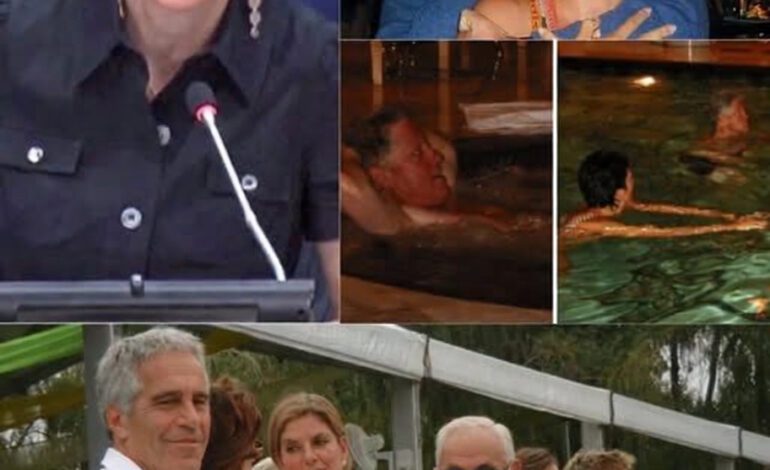

The Epstein Investigation: A Complete Record of Institutional Failure
Introduction: Why This Record Matters
The Jeffrey Epstein case is not a single event. It is a 30-year documented record of a wealthy man committing serious crimes against young girls — and of the government failing, at multiple levels and across multiple administrations, to stop him.
This article is not about conspiracy theories. It does not speculate about client lists, secret murders, or unconfirmed networks. Instead, it documents what is provably, factually, publicly established — in court records, DOJ reports, congressional testimony, and verified investigative journalism.
By the end of this article you will understand: who did what, when, what they knew, and why the outcome went the way it did. Every claim is sourced.
Primary sources used: DOJ Office of Professional Responsibility Report (2020), NPR timeline, PBS NewsHour timeline, Miami Herald Perversion of Justice (2018), Just Security institutional timeline (2025–2026), Wikipedia (Epstein, Epstein Files, Alexander Acosta), Britannica Epstein Files, and Congress.gov legislative records.
How the Investigation Began: Palm Beach, 2005
In March 2005, the Palm Beach Police Department received a complaint. A parent reported that her 14-year-old stepdaughter had been taken to a wealthy man’s mansion on El Brillo Way in Palm Beach, Florida. She had been paid to perform a massage. The encounter did not end there.
Detectives began an undercover investigation. They interviewed multiple young women. The pattern that emerged was consistent and disturbing: personal assistants recruited teenagers — many of them high school students — who were told they would be paid for massages. Those encounters repeatedly escalated into sexual contact.
What Investigators Found
Over a 13-month investigation, Palm Beach police identified 36 girls between the ages of 14 and 17 with similar accounts. The Palm Beach police chief later summarized it plainly:
“This was 50-something ‘shes’ and one ‘he’ — and the ‘shes’ all basically told the same story.” — Palm Beach Police Chief Michael Reiter, as quoted in the Miami Herald
In May 2006, investigators signed off on a probable cause affidavit. They wanted to charge Epstein with multiple counts of unlawful sexual activity with a minor — serious felonies that would carry significant prison time.
The First Failure: State Attorney Barry Krischer
Instead of proceeding with the felony charges police had assembled, State Attorney Barry Krischer took the unusual step of sending the case to a grand jury. The grand jury returned a single charge: solicitation of prostitution.
DOCUMENTED FAILURE #1:
Palm Beach police leadership publicly accused Krischer of giving Epstein special treatment. That charge — solicitation of prostitution — was far below what the evidence supported. It described a predator’s victims as prostitutes rather than as the underage girls they were.
Source: PBS NewsHour Epstein Timeline, February 2026; NPR Epstein Timeline, July 2025
The FBI Enters — and a Pattern Begins
Following the grand jury’s reduced charge, the Palm Beach police chief and lead detective took an unusual step. They referred the case directly to the nearby FBI office. They stated openly that the single charge did not reflect ‘the totality of Epstein’s conduct.’
The FBI began its own investigation. Federal prosecutors would eventually build a case so strong that one lead prosecutor described Epstein as ‘an extremely high flight risk and a continued danger to the community.’
For a moment, it looked like justice might follow.
The Federal Case: 60 Charges That Were Never Filed
By May 2007, federal prosecutors in the Southern District of Florida had done extensive work. An assistant U.S. attorney drafted a federal indictment outlining 60 criminal counts against Epstein and two of his employees. The charges included enticement of minors and sex trafficking.
The draft described Epstein in stark terms. Prosecutors had evidence. They had victims. They had a case.
“Federal Bureau of Investigation (FBI) investigation resulted in a 53-page indictment in June 2007.” — Wikipedia, Jeffrey Epstein / Alexander Acosta, sourced to Miami Herald reporting
The Negotiations Begin
Then Epstein’s lawyers arrived. His legal team was formidable: it included Jay Lefkowitz, Kenneth Starr (former Independent Counsel who investigated President Clinton), and Alan Dershowitz (prominent Harvard law professor).
From July 2007 through most of 2008, these attorneys negotiated with U.S. Attorney Alexander Acosta. Acosta was the top federal prosecutor in South Florida. The negotiations produced what would become one of the most criticized plea agreements in modern American legal history.
What Acosta Agreed To
The Non-Prosecution Agreement (NPA) signed in 2008 contained terms that critics and victims’ attorneys have called extraordinary in their leniency:
- Epstein would plead guilty to two state-level charges — not federal charges. Solicitation of prostitution and procurement of a minor for prostitution.
- Epstein would receive an 18-month sentence in county jail — not federal prison.
- Epstein and four named co-conspirators — plus any unnamed ‘potential co-conspirators’ — would receive full immunity from all federal criminal charges.
- The deal would be kept secret from Epstein’s victims, in direct violation of the Crime Victims’ Rights Act of 2004.
- The 60-count federal indictment would be sealed.
DOCUMENTED FAILURE #2:
The Miami Herald later published an email from Epstein attorney Lefkowitz to Acosta, written after a private breakfast meeting: ‘Thank you for the commitment you made to me… you assured me that your office would not contact any of the identified individuals, potential witnesses or potential civil claimants.’ Acosta had promised in private to keep the deal hidden from victims.
Source: Miami Herald, ‘Perversion of Justice,’ November 28, 2018; DOJ OPR Report, November 2020; Alexander Acosta Wikipedia entry
The Sentence Itself — And What Happened During It
On June 30, 2008, Epstein pleaded guilty. He received 18 months. But even that sentence was not what it appeared.
Epstein was housed not in state prison but in a private wing of the Palm Beach County Stockade. Then — after just 3.5 months — he was placed on a work release program. He was allowed to leave jail for up to 12 hours a day, six days a week.
DOCUMENTED FAILURE #3:
This work release arrangement violated the Palm Beach County Sheriff’s own policies, which required a maximum remaining sentence of 10 months and explicitly made sex offenders ineligible for the privilege. Epstein did not meet either requirement. He effectively served his sentence in his personal office.
He was released after 13 months. The federal investigation was closed. The 60-count indictment was sealed. And the names of his co-conspirators remained hidden from the public and from victims.
Source: NPR, ‘Jeffrey Epstein: Timeline That Led to Sex-Trafficking Charges,’ July 2025; Wikipedia, Jeffrey Epstein
2009–2018: The Decade No Institution Acted
After Epstein’s release in July 2009, he returned to his life largely unchanged. He continued to travel internationally. He maintained homes in Palm Beach, Manhattan, New Mexico, Paris, and a private island in the U.S. Virgin Islands.
Meanwhile, a steady stream of civil lawsuits was being filed by his victims. Those lawsuits slowly chipped away at the secrecy surrounding the 2008 deal.
The ‘Black Book’ and Alfredo Rodriguez
In 2009, Epstein’s former house manager Alfredo Rodriguez was arrested. Rodriguez had taken Epstein’s personal address book — a document later known simply as ‘the black book’ — and attempted to sell it. He was convicted of obstruction of justice and sentenced to 18 months in prison.
The black book, later obtained by investigators and journalists, contained thousands of names, phone numbers, and contact details for people connected to Epstein. Its significance would only become clear years later.
Source: Epstein Investigation Timeline, epsteininvestigation.org, February 2026
Florida AG Pam Bondi: Eight Years of Inaction
From 2011 to 2019, Pam Bondi served as Florida’s Attorney General — the state’s top law enforcement officer. During all eight of those years, Epstein’s victims and their lawyers were actively pursuing lawsuits in Florida courts, challenging the legality of the 2008 plea deal.
Those lawsuits argued — correctly, as a federal judge later confirmed — that victims had been illegally kept in the dark about the NPA. The lawsuits were a matter of public record. The evidence was available. The state AG had both the authority and the legal basis to act.
DOCUMENTED FAILURE #4:
Bondi’s office took no action. There was no state investigation into Epstein. No challenge to the NPA. No effort to pursue charges that could have been filed under Florida law. Bloomberg Opinion later described this as ‘failing Epstein’s victims for years.’
Source: Bloomberg Opinion, ‘Bondi Has Been Failing Epstein’s Victims for Years,’ July 27, 2025
The Crime Victims’ Rights Act Ruling
In February 2019, a federal judge issued a landmark ruling. The decision found that the DOJ’s decision to keep the 2008 plea deal secret from victims — as promised in Acosta’s private meeting with Epstein’s attorneys — was a violation of the Crime Victims’ Rights Act of 2004.
This had been the law’s first major test in a high-profile case. The judge concluded that victims should have been notified and given the opportunity to object. They were not.
COURT FINDING:
The concealment of the NPA from victims was a violation of federal law. This ruling did not undo the plea deal — but it confirmed that prosecutors had broken the law in how they handled it.
Source: Alexander Acosta Wikipedia entry; NPR Epstein Timeline
The Miami Herald Changes Everything
On November 28, 2018, the Miami Herald published a landmark investigative series. Reporter Julie K. Brown’s ‘Perversion of Justice’ documented in meticulous detail how Epstein had escaped serious prosecution, the scope of his abuse, and the role of Acosta in the plea deal.
The series prompted immediate national attention. Congress called for Acosta’s resignation. The SDNY, which had been watching, moved to reopen its own investigation. Acosta resigned as Secretary of Labor in July 2019.
“Our investigation was assisted by some excellent investigative journalism.” — SDNY U.S. Attorney Geoffrey Berman, acknowledging the Miami Herald’s role in reopening the federal case
Source: NPR Epstein Timeline; Wikipedia, Jeffrey Epstein
The 2019 Arrest, the Death, and the Failed Trial
On July 6, 2019, federal agents from the FBI-NYPD Crimes Against Children Task Force arrested Jeffrey Epstein at Teterboro Airport in New Jersey as he returned from France on his private jet.
He was charged by the Southern District of New York with two counts: sex trafficking of minors and conspiracy to commit sex trafficking, for conduct between 2002 and 2005. On July 18, 2019, a federal judge denied bail, calling Epstein ‘an extreme flight risk’ given his private jets, foreign passports, and vast financial resources.
The First Injury in His Cell
On July 23, 2019 — just 17 days after his arrest — Epstein was found semi-conscious in his cell at the Metropolitan Correctional Center in Manhattan with marks on his neck. He claimed he had been attacked by his cellmate. Investigators were skeptical.
Following this incident, he should have been placed on suicide watch. Protocols required monitoring. Staff were told to check on him.
August 10, 2019: Epstein Found Dead
On August 10, 2019, Jeffrey Epstein was found dead in his cell at the MCC. The New York City Medical Examiner ruled his death a suicide by hanging.
The Bureau of Prisons investigation revealed systematic failures at the facility that night:
- Epstein had been removed from suicide watch before the standard monitoring period elapsed.
- Two guards assigned to check on him falsified log entries, claiming they had made rounds they had not.
- A security camera on his cell tier malfunctioned.
- He had been left alone for hours in violation of protocol.
DOCUMENTED FAILURE #5:
Two MCC guards — Tova Noel and Michael Thomas — were later charged with falsifying prison records. The charges were eventually dropped when they agreed to participate in a deferred prosecution program. No one was convicted for the failures that preceded Epstein’s death.
His death ended the federal prosecution before any trial. No evidence was presented in a public courtroom. No verdict was reached. The co-conspirators named in the 2008 NPA remained unindicted.
Source: Just Security Institutional Failures Timeline, August 2025; Wikipedia, Jeffrey Epstein; Britannica, Epstein Files
The Maxwell Conviction and the Banks’ Accountability
Ghislaine Maxwell: The Only Conviction
On July 2, 2020, FBI agents arrested Ghislaine Maxwell at her home in Bradford, New Hampshire. Maxwell had been Epstein’s close associate, social companion, and alleged recruiter for over two decades.
On December 29, 2021, after a trial in the Southern District of New York, a jury found Maxwell guilty on five counts. These included conspiracy to entice minors to travel to engage in illegal sex acts, transporting a minor for illegal sex acts, and sex trafficking of a minor.
On June 28, 2022, Maxwell was sentenced to 20 years in federal prison.
SIGNIFICANCE:
Maxwell is the only person convicted of any crime directly connected to Epstein’s trafficking operation. Four named co-conspirators immunized in the 2008 NPA have never been charged. No other associate of Epstein has faced criminal trial.
Source: U.S. v. Maxwell, SDNY, December 2021; Wikipedia, Epstein Files
JPMorgan and Deutsche Bank: Institutional Accountability
In the years after Epstein’s death, two major banks faced civil lawsuits alleging they had enabled Epstein’s operations by maintaining him as a client despite knowing about his criminal record and the suspicious nature of his financial transactions.
- JPMorgan Chase settled for $290 million with Epstein’s victims.
- Deutsche Bank settled for $75 million with Epstein’s victims.
These settlements represented the largest financial accountability for any institution that facilitated Epstein’s access to resources. JPMorgan had kept Epstein as a client until 2013 — five years after his 2008 sex offender conviction.
Source: Wikipedia, Jeffrey Epstein; multiple financial reporting sources, 2023–2024
The Epstein Files Era: Transparency Promised, Accountability Delayed
After Epstein’s death and Maxwell’s conviction, public pressure mounted for full transparency about the investigation, the 2008 deal, and the identities of the co-conspirators immunized under it.
January 2025: The Files Are Moved
Shortly after the inauguration of President Trump in January 2025, the SDNY’s Epstein case files were ordered transferred to DOJ headquarters in Washington, D.C. The SDNY had traditionally maintained fierce independence from political pressure.
ALLEGATION (Rep. Jamie Raskin, D-MD):
Survivors who had been actively cooperating with federal investigators reported that the investigation into co-conspirators ‘inexplicably ceased’ after this transfer. Critics accused the administration of moving from a prosecutorial track to a political management track.
Source: GovFacts.org, ‘The Epstein Files: Why the Government Can’t Just Release Them,’ December 2025
February 2025: Bondi’s Public Promises
Attorney General Bondi made a series of public statements about the Epstein files that set expectations the DOJ would later fail to meet:
- February 2025 (television interview): Claimed a ‘client list’ was ‘sitting on her desk.’
- March 1, 2025 (Mark Levin interview): ‘Certainly, nothing can be withheld on that.’
- March 3, 2025 (Sean Hannity): ‘A truckload of evidence arrived…’
Source: Congress.gov, H.Res.577, 119th Congress, citing Bondi’s television statements
July 7, 2025: The DOJ Memo
On July 7, 2025, the DOJ released a memo concluding its review. The memo stated:
- There is no ‘client list.’
- Epstein died by suicide — there is no evidence of murder.
- No further disclosure of Epstein files would be ‘appropriate or warranted.’
- No charges would be pursued against uncharged third parties.
DOCUMENTED CONTRADICTION:
The July 2025 memo directly contradicted Bondi’s own on-air statements from February and March 2025 about a ‘client list’ and a ‘truckload of evidence.’ The memo produced bipartisan congressional outrage — rare in the 2025 political environment.
‘On July 7, 2025, the Department of Justice announced that it would not pursue charges against uncharged third parties, and further declared that no further disclosure would be appropriate or warranted in the Epstein case. Whereas this announcement directly contradicts the assurances made by prior administration officials.’ — H.Res.577, 119th Congress
Source: Congress.gov H.Res.577; Britannica Epstein Files
November 2025: The Epstein Files Transparency Act
Congress passed the Epstein Files Transparency Act with bipartisan support. President Trump signed it into law. The Act required the DOJ to release all Epstein-related documents in a searchable, unredacted format by December 19, 2025.
The DOJ missed the deadline by more than six weeks.
When documents were released, the handling drew immediate criticism:
- Names of alleged co-conspirators were redacted throughout.
- Names of victims were inadvertently exposed in multiple document releases.
- Critics noted that less than 2% of estimated relevant material had been made accessible.
DOCUMENTED FAILURE #6:
The document releases reversed the protection priorities survivors had fought for. The people who had been victimized had their names exposed. The people alleged to have participated in crimes had their names protected. This was not a clerical error — it was a pattern.
Source: Britannica Epstein Files; GovFacts.org, December 2025
February 11, 2026: The Congressional Hearing
On February 11, 2026, Attorney General Bondi appeared before the House Judiciary Committee. Epstein survivors were present in the hearing room.
The record of that hearing includes the following documented moments:
- Every survivor present raised their hand when asked if they had not been invited to meet with the DOJ.
- Bondi refused to turn around and face the survivors seated behind her.
- Bondi apologized for what Epstein did to survivors — but declined to apologize for the DOJ’s handling of the case.
- Jerry Nadler confirmed on the record: zero Epstein co-conspirators have been indicted under Bondi’s DOJ.
“Something I like to bring the public’s focus back to is that this isn’t about politics. This is about a crime. We’re victims of the crime of sex trafficking.” — Liz Stein, Epstein survivor, CNN, February 15, 2026
Source: House Judiciary Committee Democrats press release, February 12, 2026; PBS NewsHour, February 11, 2026
Complete Documented Timeline: 1996 to 2026
Every confirmed event, the institution responsible, and its documented outcome:
| Date | Event | Institution Responsible | Outcome / Failure |
| 1996 | Maria Farmer reports Epstein assault to FBI and NYPD | FBI (NYC Field Office) | No investigation opened — case ignored for nearly a decade |
| March 2005 | Palm Beach Police open investigation after parent complaint about 14-year-old | Palm Beach Police Dept. | Probe begins; investigators identify 36 underage victims |
| May 2006 | Palm Beach police file probable cause affidavit for multiple felony charges | PBPD / State Attorney Barry Krischer | Krischer sends case to grand jury; single prostitution charge returned — investigators publicly accuse him of special treatment |
| July 2006 | Grand jury indicts Epstein on single solicitation count; FBI begins parallel probe | Florida State / FBI | Charge widely considered far too lenient for documented crimes |
| May 2007 | Federal prosecutors draft 60-count indictment; DOJ memo describes Epstein as ‘a continued danger’ | USAO-SDFL / FBI | Indictment sealed; never presented to a judge |
| Jul–Sep 2007 | Epstein’s lawyers (Dershowitz, Starr, Lefkowitz, others) negotiate with U.S. Attorney Alex Acosta | USAO-SDFL (Acosta) | Deal secretly negotiated; victims excluded from process in violation of federal law |
| June 30, 2008 | Epstein pleads guilty to 2 state charges; NPA signed granting immunity to Epstein + co-conspirators | USAO-SDFL / FL State Court | 13-month sentence; daily work release; 60-count federal case buried |
| July 2008 | Epstein placed in county stockade; work release granted in violation of sheriff’s own policies | Palm Beach County Sheriff | Epstein leaves jail 12 hours/day, 6 days/week; goes to personal office |
| 2008–2019 | Victims file CVRA lawsuit; federal judge later rules NPA was illegally concealed from them | DOJ / Federal Courts | Victims denied right to object; ruling does not undo the deal |
| 2009 | Epstein’s house manager tries to sell the ‘black book’; arrested for obstruction | FBI | Book later becomes key evidence; house manager sentenced to 18 months |
| 2011–2019 | Pam Bondi serves as Florida AG; victims’ lawsuits challenge 2008 NPA in FL courts | FL Attorney General’s Office | Bondi takes no state-level investigative or legal action |
| Nov. 2018 | Miami Herald publishes ‘Perversion of Justice’ investigation by Julie K. Brown | Miami Herald | National outrage; SDNY reopens investigation; Acosta resigns as Labor Secretary in 2019 |
| July 6, 2019 | Epstein arrested at Teterboro Airport on return from France; charged by SDNY | SDNY / FBI-NYPD Task Force | Indicted on 2 counts: sex trafficking + conspiracy; bail denied |
| Aug. 10, 2019 | Epstein found dead at Metropolitan Correctional Center, Manhattan | Federal Bureau of Prisons | Ruled suicide by hanging; multiple safeguards failed; guards falsified logs |
| July 2020 | Ghislaine Maxwell arrested in New Hampshire | FBI | Charged with sex trafficking of minors and related offenses |
| Dec. 29, 2021 | Maxwell convicted on 5 counts including sex trafficking of a minor | Federal jury (SDNY) | Sentenced to 20 years — only Epstein co-conspirator convicted |
| 2021–2024 | Banks JPMorgan ($290M) and Deutsche Bank ($75M) settle civil suits with Epstein victims | Civil courts | Largest institutional accountability for enabling Epstein’s access to funds |
| Jan. 2025 | SDNY Epstein co-conspirator case files transferred to DOJ Main Justice, Washington | DOJ under Bondi | Active investigation into co-conspirators ‘inexplicably ceased’ (Rep. Raskin) |
| May 29, 2025 | Maria Farmer files suit against U.S. government (FBI/DOJ) for ignoring her 1996 report | U.S. District Court, D.C. | Ongoing; no ruling yet |
| July 7, 2025 | DOJ/FBI memo released: no ‘client list,’ no murder evidence, no further disclosure warranted | Bondi DOJ / FBI | Contradicts Bondi’s own Feb. 2025 on-air claims; bipartisan outcry |
| Nov. 2025 | Epstein Files Transparency Act signed into law; Dec. 19 disclosure deadline set | Congress / Trump | Deadline missed by 6+ weeks; victim names exposed; co-conspirator names redacted |
| Feb. 11, 2026 | Bondi testifies before House Judiciary Committee; refuses to apologize to survivors | House Judiciary Cmte. | Zero co-conspirators indicted; every survivor raised hand saying they had not been met with by DOJ |
* Compiled from DOJ OPR Report (2020), NPR, PBS, Miami Herald, Just Security, Wikipedia, Britannica, and Congress.gov records.
Institutional Failure Scorecard: Who Failed and How
A summary of every institution’s documented failure in the Epstein case:
| Institution | Key Failure | When | Consequence |
| FBI (New York) | Ignored Maria Farmer’s 1996 formal abuse report | 1996 | Epstein abused victims for nearly a decade without federal scrutiny |
| Palm Beach Police | Referred case to state attorney after thorough investigation | 2005–2006 | Case handled correctly at local level; failure passed upward |
| State Attorney Krischer | Returned single prostitution charge to grand jury instead of felony sex crimes | 2006 | Investigators publicly accused him of giving Epstein special treatment |
| USAO-SDFL (Acosta) | Negotiated 53-page federal case down to state misdemeanor-level plea; violated CVRA | 2007–2008 | 60+ federal charges buried; co-conspirators immunized; victims excluded |
| Palm Beach County Sheriff | Granted work release in violation of own policies for sex offenders | 2008 | Epstein served sentence largely outside custody |
| FL AG Bondi (state) | Failed to challenge NPA or pursue state investigation while victims filed lawsuits | 2011–2019 | State-level accountability window closed without action |
| Federal Bureau of Prisons | Multiple safeguards failed night Epstein died; guards falsified logs | Aug. 2019 | Death ended federal prosecution before any trial; no accountability verdict |
| DOJ under Bondi (federal) | Closed SDNY co-conspirator probe; missed disclosure deadline; redacted co-conspirator names while exposing victim names | 2025–2026 | Zero co-conspirators charged; survivors re-traumatized by file mishandling |
* Each failure is documented in primary sources listed in the Sources section below.
Frequently Asked Questions
What was the Non-Prosecution Agreement (NPA)?
The NPA was a secret agreement signed in 2008 between U.S. Attorney Alexander Acosta’s office and Epstein’s legal team. It allowed Epstein to plead guilty to two state-level prostitution charges instead of facing 60 federal counts. It granted immunity to Epstein and named and unnamed co-conspirators. A federal judge later found that keeping it secret from victims violated the Crime Victims’ Rights Act of 2004.
Why wasn’t Epstein charged sooner?
The documented record shows multiple institutional failures: the FBI ignored Maria Farmer’s 1996 report; Florida’s state attorney filed a drastically reduced charge in 2006; federal prosecutors then negotiated the 60-count case down to a state misdemeanor-level plea behind closed doors. Each institution either lacked the will, faced interference, or allowed Epstein’s wealth and elite connections to reduce the accountability he faced.
Who were the co-conspirators immunized in 2008?
Four named co-conspirators were immunized in the 2008 NPA. Their identities were not publicly confirmed in the NPA. The deal also covered unnamed ‘potential co-conspirators.’ As of March 2026, no co-conspirator from the 2008 deal has been indicted. Their names remain redacted in the Epstein file releases.
Was Epstein murdered?
The official ruling from the New York City Medical Examiner is suicide by hanging. The July 2025 DOJ/FBI review memo confirmed there is no evidence of murder. Multiple safeguards did fail the night of his death, and two guards were charged with falsifying records — but no criminal conspiracy has been established in the public record.
What happened to Alex Acosta?
Acosta was confirmed as Secretary of Labor in 2017. After the Miami Herald’s 2018 investigation, his role in the 2008 plea deal drew renewed scrutiny. He resigned in July 2019, days after Epstein’s arrest. The DOJ’s Office of Professional Responsibility investigated him; the report was released in November 2020 and found professional misconduct but no criminal violation. In March 2025, Acosta joined the board of Newsmax, chairing its audit committee.
How many victims did Epstein have?
The FBI identified at least 35 to 36 girls from the 2002–2005 period in Florida alone. Estimates across his full period of abuse — from the mid-1980s through the 2000s — are higher. The Epstein Victims’ Compensation Program, funded by his estate, paid out over $121 million to claimants. The DOJ has cited over 250 confirmed victims.
What have the Epstein file releases shown?
Over 207,000 documents have been released through 12 DOJ data sets as of early 2026, supplemented by releases under the Epstein Files Transparency Act. The files include FBI reports, flight logs, financial records, photographs, and correspondence. Key findings include: documentation of the FBI’s failure to act on early reports, evidence of Epstein’s extensive travel network, and emails confirming his relationships with academics and institutions. FBI investigators found between 15 and 20 images of child sexual abuse material downloaded from the internet on Epstein’s devices, but investigators determined none were produced by Epstein.
Source: Wikipedia, Epstein Files; epsteininvestigation.org; Wikipedia, Jeffrey Epstein (2026 update)
Why This Case Matters for Accountability and the Law
The Epstein case is studied by legal scholars, criminal justice reformers, and accountability journalists not because it is unique — but because it is a documented case study in how wealth and elite social connections can, across multiple institutions and multiple decades, deflect serious criminal accountability.
The failures are not the result of a single corrupt individual. They span a local state attorney, a federal U.S. attorney, a county sheriff, an entire Bureau of Prisons facility, an FBI field office, a state attorney general, and multiple successive federal DOJ administrations.
The Structural Problem: Institutional Deference to Wealth
The DOJ’s own lead prosecutor on the 2007 federal case, Marie Villafaña, put it directly in her statement following the OPR report:
“That injustice, I believe, was the result of deep, implicit institutional biases that prevented me and the FBI agents who worked diligently on this case from holding Mr. Epstein accountable for his crimes… By not considering those implicit biases based on gender and socioeconomic status, OPR lost an opportunity to make recommendations for institutional changes that could prevent results like this one from occurring in the future.” — Marie Villafaña, lead USAO-SDFL prosecutor, public statement, 2020
Villafaña had drafted the 60-count indictment. Her statement is not speculation. It is the assessment of the prosecutor who built the federal case — and watched it be traded away.
The Victims’ Perspective
Survivors of Epstein’s crimes have spent decades navigating not just trauma, but an institutional gauntlet that repeatedly re-victimized them: prosecutors who cut deals without telling them; a sheriff who let their abuser leave jail daily; an attorney general who presided over eight years of state inaction; and a document release process that exposed their names while protecting alleged perpetrators.
Jena-Lisa Jones, a survivor, said after the OPR report: “I honestly don’t think that anybody will take responsibility in any sense, in any shape or form in the way that they actually should as adults.”
Source: Just Security, Timeline of Law Enforcement Failures, August 2025
Conclusion: The Documented Record
The Epstein case is not unresolved because the facts are unknown. The facts are extensively documented. It is unresolved because the institutions tasked with accountability — at local, state, and federal levels, across Republican and Democratic administrations — chose, at critical moments, paths that prioritized other interests over justice for dozens of underage victims.
Here is what the public record confirms, as of March 2026:
- Maria Farmer reported Epstein’s crimes to the FBI in 1996. No investigation was opened.
- Palm Beach Police identified 36 underage victims in 2005. The state attorney reduced the charges.
- Federal prosecutors built a 60-count case in 2007. It was negotiated to two state charges in a secret deal.
- The 2008 NPA was found by a federal court to have illegally concealed from victims, violating federal law.
- Epstein served 13 months with daily work release, in violation of the sheriff’s own policies.
- Florida AG Pam Bondi took no action during 8 years of victim lawsuits challenging the deal.
- Epstein was arrested by SDNY in 2019 — 14 years after the initial investigation.
- He died in federal custody before trial, amid documented safeguard failures.
- Only one person — Ghislaine Maxwell — has been convicted of participating in his crimes.
- JPMorgan ($290M) and Deutsche Bank ($75M) settled civil suits for enabling his finances.
- The SDNY co-conspirator investigation was closed by the DOJ in July 2025 with no indictments.
- As of March 2026, zero co-conspirators have been criminally charged. Survivors have not been met with by the DOJ.
The survivors’ pursuit of accountability is ongoing. This record will continue to be updated as documented facts emerge. Every claim in this article is sourced to a primary or verified secondary source listed below.
Sources
- DOJ Office of Professional Responsibility Report — Resolution of 2006–2008 Federal Criminal Investigation of Jeffrey Epstein (November 2020)
- Miami Herald — ‘Perversion of Justice’ investigative series by Julie K. Brown (November 28, 2018)
- NPR — ‘Jeffrey Epstein: Timeline That Led to Sex-Trafficking Charges’ (Updated July 25, 2025)
- PBS NewsHour — ‘A Timeline of the Jeffrey Epstein Investigation’ (Updated February 6, 2026)
- Just Security — ‘Timeline of Jeffrey Epstein–Ghislaine Maxwell Law Enforcement Failures’ (Updated March 2026)
- Just Security — ‘FBI Stand Down Directive to NYPD on Jeffrey Epstein Investigations’ (March 2026)
- Wikipedia — Jeffrey Epstein article (March 2026 version, with citations)
- Wikipedia — Epstein Files article (March 2026 version)
- Wikipedia — Alexander Acosta article (March 2026 version)
- Britannica — ‘The Epstein Files: A Timeline’ (Updated July 31, 2025)
- gov — H.Res.577 (119th Congress): Demanding Release of All Federal Epstein Documents
- gov — S.Res.325 (119th Congress): Sense of the Senate on Epstein Transparency
- org — ‘The Epstein Files: Why the Government Can’t Just Release Them’ (December 2025)
- org — ‘Epstein Investigation Timeline: Complete Chronology 2005–2026’ (February 2026)
- Bloomberg Opinion — ‘Bondi Has Been Failing Epstein’s Victims for Years’ (July 27, 2025)
- House Judiciary Committee Democrats — Press Release, February 12, 2026
Editorial Note
This report contains documented facts about sexual abuse crimes against minors. If you or someone you know has experienced sexual exploitation or human trafficking, contact the National Human Trafficking Hotline: 1-888-373-7888 (24/7, confidential). RAINN National Sexual Assault Hotline: 1-800-656-4673.
Discover more from MatterDigest
Subscribe to get the latest posts sent to your email.