Serial Killer Cleophus Cooksey Jr. Sentenced to Death — The Chilling Case That Shocked an Entire Community
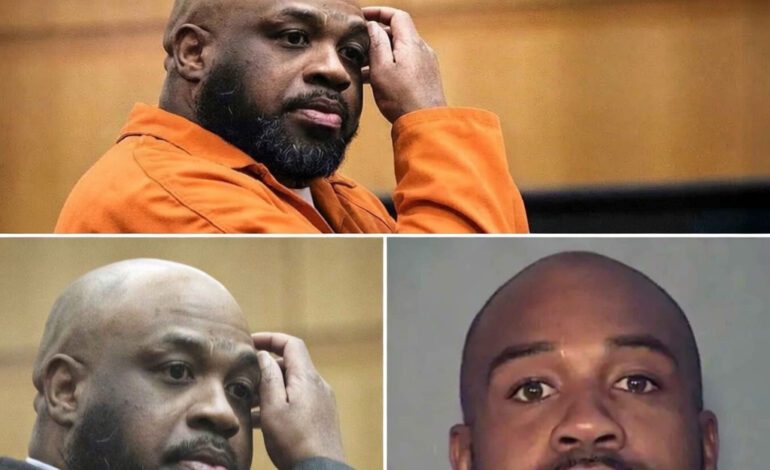

Eight Murders in 21 Days, Ballistic Breakthroughs, a Civil Rights Family Legacy, and What Actually Happened at Trial
| FACT-CHECK VERDICT: REAL AND FULLY VERIFIED. Cleophus Cooksey Jr., 43, was sentenced to death on December 18, 2025 in Maricopa County Superior Court, Phoenix, Arizona. Convicted September 25, 2025 of eight first-degree murders in a three-week 2017 killing spree. He received death sentences for six of the eight murders. The jury deadlocked on the other two (his mother and stepfather). He also received 9+ years for non-capital charges. He maintains his innocence and has appealed. The headline accurately reflects real, verified events. |
Introduction: The Case That Took Eight Years to Reach Justice
Twenty-one days. Eight lives. One suspect. It took investigators several weeks to realize what Phoenix was dealing with in late 2017 — and then nearly eight years for the justice system to fully adjudicate the case.
On December 18, 2025, a Maricopa County jury sentenced Cleophus Emmanuel Cooksey Jr., 43, to death for six of the eight murders he committed during a terrifying three-week killing spree across Phoenix and Glendale, Arizona. The verdict came at the end of a seven-month trial — one of the longest and most complex in recent Arizona court history.
This article covers everything: the victims, the crimes, the forensic evidence that cracked the case, the seven-month trial, the verdict, and what happens next.
|
Who Is Cleophus Cooksey Jr.? Background and Early Life
An Unusual Family History
Cleophus Emmanuel Cooksey Jr. was born in 1982 and grew up in the Phoenix metro area. He is the grandson of Roy L. Cooksey — a prominent Tucson civil rights leader — a connection that drew significant media attention during the trial.
Cooksey described himself as an aspiring musician. He had relationships within his community and personally knew several of his eventual victims. That familiarity made the crimes even harder for those who knew him to process. In a January 2020 handwritten letter to a judge, he urged the trial to proceed so he could prove what he called “false accusations” against him. “I am a music artist,” he wrote.
A Prior Criminal Record
Cooksey was not a first-time offender when the 2017 spree began. He had been convicted of manslaughter and armed robbery in 2001. That prior record became relevant during the sentencing phase of his 2025 trial.
The 2017 Killing Spree: Eight Murders in Twenty-One Days
It Started with Two Men in a Parking Lot
On the evening of November 27, 2017, Parker Smith, 21, and Andrew Remillard, 27, were found fatally shot while sitting in a vehicle in a Phoenix parking lot. No obvious motive. No eyewitnesses. The case appeared isolated.
Five days later, on December 2, security guard Salim Richards, 31, was shot to death while walking to his girlfriend’s apartment in Phoenix. Again — seemingly random, no direct witnesses. Police were investigating each as a separate homicide across a sprawling metro area of five million people.
The Spree Escalates Across Two Cities
Over the next two weeks, the killings continued. Latorrie Beckford, 29, was shot and killed at an apartment complex in Glendale. Days later, Kristopher Cameron, 21, was killed at another Glendale complex — arriving, police said, to complete a drug transaction with Cooksey.
Then came the crime that particularly chilled investigators. On December 15, Maria Villanueva, 43, parked her car at an apartment complex. Surveillance cameras recorded an unknown man approaching her — and then driving away in her car with her in the front passenger seat. The next morning, her body was found in a Phoenix alley. She had been shot to death. She was partially unclothed. Cooksey’s DNA was found on her body.
The Final Crime: His Own Mother and Stepfather
On December 17, Phoenix police responded to a shots-fired call at a central Phoenix apartment. They found Cooksey at the door. He told officers he had cut his hand and was the only person home. An officer noticed a large amount of blood. When the officer tried to detain him, Cooksey threatened to slit the officer’s throat.
After police subdued Cooksey, they discovered the bodies of his mother, Rene Cooksey, 56, and her husband, Edward Nunn, 54, behind the front door. Both had been shot to death at close range. Cooksey was wearing a gold necklace at the time of his arrest — one that would later be identified as belonging to victim Salim Richards.
All Eight Victims: Complete Record
| Date | Victim & Event |
| Nov. 27, 2017 | Parker Smith, 21 — shot in a parked vehicle in a Phoenix parking lot |
| Nov. 27, 2017 | Andrew Remillard, 27 — shot in same vehicle alongside Smith |
| Dec. 2, 2017 | Salim Richards, 31 — security guard; shot while walking to girlfriend’s apartment |
| Dec. 5, 2017 | Latorrie Beckford, 29 — shot at apartment complex in Glendale |
| Dec. 15, 2017 | Kristopher Cameron, 21 — shot at Glendale complex; arrived for drug transaction |
| Dec. 15-16, 2017 | Maria Villanueva, 43 — abducted, sexually assaulted, shot; found in Phoenix alley |
| Dec. 17, 2017 | Rene Cooksey, 56 — his mother; shot at close range in her Phoenix apartment |
| Dec. 17, 2017 | Edward Nunn, 54 — his stepfather; shot at close range in the same apartment |
How Police Cracked the Case: Ballistics, DNA, and GPS
Advanced Ballistic Technology: The Crucial Breakthrough
Phoenix police publicly credited advanced ballistic technology with being the key tool that connected the murders. The system digitally analyzes the unique marks a gun’s firing pin and barrel leave on bullet casings — creating a digital fingerprint that can be compared across thousands of different crime scenes simultaneously.
In a city the size of Phoenix, where hundreds of shootings occur annually, this automated cross-referencing is critical. Casings from multiple crime scenes — in different parts of Phoenix and in Glendale — were matched to the same two 9-millimeter firearms. This was the thread that transformed a series of apparently unrelated homicides into a connected case.
The Web of Physical Evidence
Ballistics opened the case. But the physical evidence found at Cooksey’s arrest sealed it:
- Salim Richards’ gun was found on the sofa in Cooksey’s mother’s apartment — the same weapon linked to the killings of Beckford, Cameron, and Villanueva.
- The keys to Maria Villanueva’s vehicle were found in the same apartment.
- Cooksey was wearing Richards’ distinctive gold necklace when police arrested him.
- Cooksey’s DNA was recovered from Maria Villanueva’s body.
- GPS data placed Cooksey at or near multiple crime scenes.
- Surveillance cameras captured an individual matching Cooksey’s description with Villanueva before her death.
| Note on Motive: Authorities stated they never definitively established a single, overarching motive for all eight murders. Prosecutors argued Cooksey targeted victims opportunistically — when they were vulnerable. Some victims knew him personally; others were strangers. The cases involving his mother and stepfather appeared to involve a domestic dimension. The others remain unexplained beyond opportunism. |
A Ninth Suspected Murder — Never Charged
Police also suspected Cooksey in a ninth killing: the December 2017 shooting death of Jesus Real in Avondale — the brother of Cooksey’s ex-girlfriend, Liliana Vasquez. Prosecutors ultimately declined to charge him in that case.
Three women — Desaree Coronado (23) and sisters Griselda and Liliana Vasquez (ages 24 and 26) — were subsequently arrested on charges of hindering prosecution and tampering with physical evidence in connection with Real’s death. Coronado also faced a false reporting charge.
The Seven-Month Trial: What Happened in Court
Years of Pandemic Delays — Then Seven Months in Court
Cooksey’s trial was repeatedly postponed, largely due to the COVID-19 pandemic. In January 2020 — three years before the trial began — a frustrated Cooksey wrote to a judge urging the case forward so he could clear his name.
The trial finally opened on May 5, 2025 and ran for seven months — one of the longest criminal proceedings in recent Arizona history. Three Maricopa County prosecutors — Josh Maxwell, Chris Sammons, and James Baumann — presented the state’s case. Defense attorney Robert Reinhardt led Cooksey’s defense.
The Prosecution’s Case
Prosecutors built their case on five pillars: ballistic matching across crime scenes, DNA evidence linking Cooksey to Villanueva, GPS tracking data, physical items recovered at arrest (Richards’ gun, Villanueva’s keys, Richards’ necklace worn by Cooksey), and Cooksey’s own conduct at the time of arrest — including his threat against the officer and his false claim that he was alone in the apartment.
They argued Cooksey targeted victims when they were at their most vulnerable — some he knew, some he did not.
The Defense’s Case
Defense attorney Reinhardt challenged the forensic evidence as unreliable, argued that no clear motive connected all the killings, and noted the absence of eyewitnesses to most of the murders. Cooksey himself maintained his innocence and did not testify. When the guilty verdicts were read, he looked down at the defense table.
Verdict: September 25, 2025
The jury returned its verdict on September 25, 2025. Cooksey was found guilty on all 14 counts: eight counts of first-degree murder, two counts of kidnapping, one count of attempted sexual assault, and three counts of armed robbery.
Sentencing: December 18, 2025
Almost three months later, the jury returned to deliberate on punishment. Death sentences were handed down for six of the eight murders. The jury deadlocked on punishment for the murders of Rene Cooksey and Edward Nunn. Maricopa County Attorney Rachel Mitchell announced she was weighing a sentencing retrial on those two counts or allowing a judge to impose life sentences. In addition to the six death sentences, Cooksey received more than nine years in prison for the non-capital charges.
| Detail | Information |
| Verdict Date | September 25, 2025 |
| Sentencing Date | December 18, 2025 |
| Court | Maricopa County Superior Court, Phoenix, Arizona |
| Judge | Judge Mark Brain |
| Total Convictions | 14 counts |
| Murder Convictions | 8 counts of first-degree murder |
| Other Convictions | 2 kidnapping, 1 attempted sexual assault, 3 armed robbery |
| Death Sentences | Six (for the murders of Smith, Remillard, Richards, Beckford, Cameron, Villanueva) |
| Jury Deadlock | Two counts — Rene Cooksey (mother) and Edward Nunn (stepfather) |
| Additional Sentence | 9+ years for non-capital charges |
| Execution Method | Lethal injection (standard in Arizona) |
| Appeal Status | Filed; pending Arizona Supreme Court review |
| Prosecution Team | Josh Maxwell, Chris Sammons, James Baumann (MCAO) |
| Defense Attorney | Robert Reinhardt |
Official Reactions: Prosecutors and Victims’ Families
Maricopa County Attorney Rachel Mitchell
Rachel Mitchell did not mince words. She called the case a definitive argument for capital punishment and labeled Cooksey a “serial killer” in the official MCAO press release. She said: “It takes a special kind of evil to prey upon the vulnerable and needlessly take the lives of eight innocent people. Death is the only just punishment for him, and we will do everything in our power to see it carried through.”
Victims’ Families Respond
Adriana Rodriguez, the daughter of victim Maria Villanueva, had feared this day would never arrive. She spoke to media after both the September guilty verdict and the December sentencing. Her mother’s abduction, assault, and murder had left a wound that the guilty verdict began — but only began — to close.
Anthia Wint, the mother of Latorrie Beckford, had first spoken publicly in 2018 when Cooksey was arrested. She told CBS News then that the arrest gave her some closure — but nothing could restore her son. “He had the will for life and I can’t imagine that he’s not here anymore. Each and every day is very hard.”
One of Cooksey’s own relatives — identified in reports as a man named Hampton — stood outside the courthouse and expressed both grief and revulsion. “I thought maybe he had a little heart. But he doesn’t have any heart at all,” Hampton said. “He’s a monster.”
Context: The Third Serial Shooting in Phoenix in Three Years
Phoenix Shaken Three Times
The Cooksey case was metro Phoenix’s third major serial shooting investigation in a three-year period. In 2015, 11 shootings struck vehicles on Phoenix freeways over two weeks. No one was seriously injured; charges against the lone suspect were eventually dismissed. From mid-2015 to July 2016, nine people were killed in what became known as the Serial Street Shooter case. Bus driver Aaron Juan Saucedo was arrested in 2017 and still awaits trial, now scheduled for December 2026.
The Cooksey case was the deadliest of the three and produced the first death sentence. It became a case study in how advanced forensic technology can stitch together seemingly unconnected crimes across a large metropolitan area.
What the Ballistic Technology Means for Future Cases
Phoenix police’s public acknowledgment that ballistic matching technology was the breakthrough tool in the Cooksey case drew attention from law enforcement agencies across the country. The technology — which creates digital case links from bullet and casing evidence automatically — had been used in other cities, but the Cooksey conviction made the case for its widespread adoption more compellingly than most.
For investigators and prosecutors, the lesson is significant: in an era of no-witness urban gun violence, microscopic evidence from the bullets themselves can do what human witnesses cannot.
People Also Ask: Key Questions Answered
How many people did Cleophus Cooksey Jr. kill?
He was convicted of murdering eight people in a three-week span: November 27 to December 17, 2017. Police also suspected him in a ninth killing (Jesus Real) but prosecutors did not charge him in that case.
What was Cooksey’s motive?
Prosecutors never established a single overarching motive. They argued he targeted victims opportunistically when they were vulnerable. Some victims knew him; others were strangers. The murders of his mother and stepfather appeared to have a personal dimension. The other cases remain unexplained beyond opportunism.
Why did the jury deadlock on two of the murders?
The jury could not unanimously agree on the death penalty for the murders of Rene Cooksey, 56 (his mother), and Edward Nunn, 54 (his stepfather). The Maricopa County Attorney was considering whether to seek a sentencing retrial on those two counts or accept life sentences imposed by a judge.
How did police connect the murders?
Advanced ballistic technology matched bullet casings across multiple crime scenes to two 9-millimeter firearms. DNA linked Cooksey to victim Maria Villanueva. GPS data placed him near crime scenes. At arrest: he wore Richards’ necklace, Richards’ gun was on the sofa, and Villanueva’s car keys were in the apartment.
Is Cooksey related to civil rights leader Roy L. Cooksey?
Yes. According to Wikipedia and multiple news reports citing court proceedings, Cleophus Cooksey Jr. is the grandson of Roy L. Cooksey, a prominent Tucson civil rights leader. This received attention during the trial but had no legal bearing on the case.
Has he appealed?
Yes. His defense team filed an appeal immediately after sentencing. In Arizona, all death penalty convictions are automatically appealed to the Arizona Supreme Court. The process typically takes years.
What happens next?
Two proceedings remain unresolved: the Maricopa County Attorney must decide whether to retry sentencing for the two deadlocked murder counts (mother and stepfather) or accept life sentences. Separately, the mandatory death penalty appeal is underway before the Arizona Supreme Court.
Key Takeaways: The Complete Summary
- Cleophus Cooksey Jr., 43, was sentenced to death on December 18, 2025 in Maricopa County Superior Court, Phoenix, Arizona. Fully verified.
- He was convicted on September 25, 2025 of eight counts of first-degree murder for a killing spree across metro Phoenix and Glendale in November-December 2017.
- Victims: Parker Smith (21), Andrew Remillard (27), Salim Richards (31), Latorrie Beckford (29), Kristopher Cameron (21), Maria Villanueva (43), Rene Cooksey (56, his mother), and Edward Nunn (54, his stepfather).
- Death sentences for six murders. Jury deadlocked on punishment for his mother’s and stepfather’s murders.
- Also received 9+ years in prison for armed robbery, kidnapping, and attempted sexual assault.
- Advanced ballistic technology was the breakthrough that linked separate crime scenes to a single shooter.
- Physical evidence at arrest included Richards’ necklace on Cooksey’s body, Richards’ gun on the sofa, and Villanueva’s car keys — all in the same location.
- Cooksey has maintained his innocence throughout. He has filed an appeal.
- He is the grandson of Tucson civil rights leader Roy L. Cooksey. He had a prior conviction for manslaughter and armed robbery from 2001.
- The trial lasted seven months — delayed for years by the pandemic. It was the third major serial shooting case in metro Phoenix in three years and the first to result in death sentences.
Sources and Further Reading
All facts are drawn from verified, primary reporting and official sources:
- Associated Press / U.S. News — Arizona man sentenced to death in 2017 serial killings (December 18, 2025)
- CBS News — Serial killer gets death sentence for string of murders in Phoenix area in 2017 (December 19, 2025)
- FOX 10 Phoenix — Cleophus Cooksey Jr.: Convicted Arizona serial killer sentenced to death (December 18-19, 2025)
- AZFamily / 3TV Phoenix — Jury gives death sentence to convicted Phoenix serial killer (December 18, 2025)
- KTAR News — Cleophus Cooksey Jr. sentenced to death for 2017 metro Phoenix killing spree (December 18, 2025)
- 12News Phoenix — Arizona jury sentences convicted serial killer Cleophus Cooksey to death (December 18, 2025)
- com — Arizona Serial Killer Gets Death Sentence for String of Murders in 2017 (December 19, 2025)
- Wikipedia — Cleophus Cooksey Jr. (updated February 2026)
- Maricopa County Attorney’s Office — Official press release on sentencing (December 18, 2025)
Editorial Note
This article provides the most complete, accurate, and verified account of the Cleophus Cooksey Jr. case available. All facts are sourced to official court records, the Maricopa County Attorney’s Office press release, and reporting from the Associated Press, CBS News, FOX 10 Phoenix, and other credible organizations. Readers seeking primary documents may consult Maricopa County Superior Court records directly.
— End of Article —
Last verified: March 8, 2026
Discover more from MatterDigest
Subscribe to get the latest posts sent to your email.