Pam Bondi’s Justice Department Pushes Controversial Rule
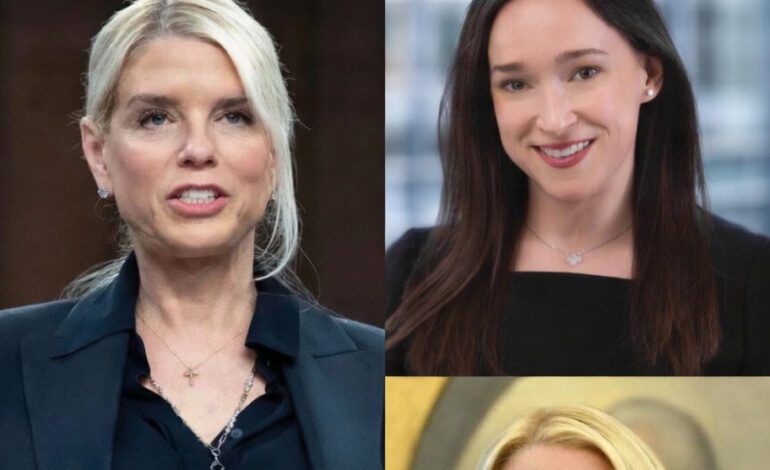

The DOJ’s Proposed Rule to Limit State Bar Ethics Investigations: What It Says, What It Does, and Why It Matters
Status: VERIFIED — Real, ongoing federal regulatory development. All facts sourced from official Federal Register filings, named legal experts, and established news organizations.
|
What Just Happened: The Rule That Sparked a Legal Firestorm
Attorney general Pam Bondi signed a proposed rule on March 5, 2026, that would fundamentally change how ethics complaints against Justice Department lawyers are handled. The rule was published in the Federal Register on March 5 and opens a 30-day public comment period before it can be finalized.
Under current law, state bar associations — the licensing bodies that govern all attorneys — maintain independent authority to investigate ethics complaints against any licensed lawyer, including federal government lawyers. That independence has been a cornerstone of legal accountability for over a century.
The proposed rule would insert the DOJ between a complainant and the state bar. Before any state bar investigation could proceed against a current or former DOJ lawyer, the Attorney General would have the right to review the complaint first — and ask the state bar to pause its own investigation while that review is underway.
Critics across the legal profession immediately raised alarm. Supporters say it is a necessary defense against a politicized bar complaint process. Both arguments have substance. This article examines what the rule actually says, the genuine concerns it raises, the DOJ’s stated rationale, and the legal and institutional questions that will shape what happens next.
What the Proposed Rule Actually Says
Before assessing the rule, it is worth establishing precisely what it does and does not do. Both critics and supporters have at times described the proposal in terms that go further than the text.
What the Rule Does
- Establishes that when a bar complaint is filed against a current or former DOJ lawyer, the Attorney General has the right to review the complaint first.
- Requires DOJ to notify the relevant state bar and the affected lawyer that it intends to conduct a review.
- Allows the DOJ to request that state bar disciplinary proceedings be suspended while its review is ongoing.
- Prohibits the affected DOJ lawyer from cooperating with state bar investigative steps until the DOJ review is completed.
- Applies to current and former DOJ lawyers — meaning the rule would cover officials who have left the department.
- States that if DOJ finds no ethical violation, it will inform the state bar — which effectively signals to the bar that the department considers the matter closed.
What the Rule Does Not Do
- It does not give the DOJ the authority to permanently shut down a state bar investigation. State bars can ultimately proceed.
- It does not require state bars to defer to DOJ findings. State bar authorities are not compelled to accept DOJ conclusions.
- It does not eliminate existing DOJ Office of Professional Responsibility oversight — though critics note that office has seen significant attrition.
The Critical Ambiguity: No Time Limit
The most significant concern raised by legal experts is not what the rule explicitly allows — it is what it fails to limit. The proposed regulation contains no time deadline for DOJ to complete its review.
This absence is not an oversight. Critics argue it is the rule’s most consequential feature. Without a time limit, the DOJ could open a review of a bar complaint and simply never close it — indefinitely suspending any independent investigation without ever reaching a formal conclusion. Lauren Stiller Rikleen, executive director of Lawyers Defending American Democracy, told Bloomberg Law: without time limitations in the proposal, the Justice Department could run out the clock on investigations instead of actually pursuing them.
The Enforcement Provision
The proposed rule includes language that legal experts have described as a veiled threat. It states that should state bar disciplinary authorities refuse the Attorney General’s request to suspend their investigation, the Department shall take appropriate action to enforce this regulation or to prevent the bar disciplinary authorities from interfering with the Attorney General’s review.
The rule does not specify what those appropriate actions would be. Reuters contacted the DOJ for clarification on what actions it could hypothetically take against state bars that refused to comply. The department did not answer that specific question.
Why Now? The Context Behind the Proposal
The proposed rule did not emerge in a vacuum. Understanding why the DOJ proposed it requires knowing what has happened to DOJ officials over the past year.
The Complaints Against Senior DOJ Officials
Over the course of 2025 and early 2026, legal watchdog groups, law professors, and former judges filed multiple state bar ethics complaints against senior DOJ officials. The complaints alleged various forms of professional misconduct — most involving actions taken in connection with Trump administration policy enforcement.
Key complaints include:
- Against Attorney General Pam Bondi: More than 70 lawyers and former judges, including two Florida Supreme Court justices, asked the Florida Bar to investigate Bondi for allegedly pressuring DOJ lawyers to violate their ethical obligations, citing the unlawful deportation of Kilmar Abrego Garcia as a specific example. The Florida Bar rejected the complaint, ruling it does not investigate sitting federal constitutional officers while in office.
- Against Deputy Attorney General Todd Blanche: The Legal Accountability Center filed a complaint with the New York Attorney Grievance Committee alleging multiple ethics violations.
- Against Pardon Attorney Ed Martin: Bar complaints filed in connection with his conduct in office.
- Against Lindsey Halligan: A former prosecutor who brought criminal charges against Trump adversaries James Comey and Letitia James. Those charges were later thrown out of court.
- Against Jeffrey Clark: A DOJ official in Trump’s first administration who is fighting to retain his law license in DC after the DC Bar found he attempted to give dishonest legal advice related to overturning the 2020 election results. The proposed rule, by covering former officials, would potentially apply to Clark’s situation.
The DOJ’s Own Stated Rationale
The proposed rule is not without a stated legal and institutional rationale. The DOJ’s Federal Register notice makes several specific arguments:
First, it argues that most state bars already voluntarily defer to DOJ’s Office of Professional Responsibility before opening their own investigations — so the rule is simply formalizing existing practice. The notice states that OPR has jurisdiction to review allegations of misconduct made against Department attorneys that relate to the attorneys’ exercise of their authority to investigate, litigate, or provide legal advice.
Second, the DOJ argues that bar complaints have been weaponized by political activists to chill zealous legal advocacy by government lawyers. The notice states: This unprecedented weaponization of the State bar complaint process risks chilling the zealous advocacy by Department attorneys on behalf of the United States, its agencies, and its officers. That chilling effect, in turn, would interfere with the broad statutory authority of the Attorney General to manage and supervise Department attorneys.
Third, DOJ Deputy Attorney General Todd Blanche had publicly telegraphed this move months earlier, announcing at the Federalist Society’s National Lawyers Convention in November 2025 that the department would change its approach to bar complaints against DOJ attorneys. The proposed rule is not a sudden reversal — it was planned and signaled in advance.
What Legal Experts Are Saying: Both Sides
The legal profession’s reaction to the proposed rule has been swift and largely critical — but the specific concerns vary, and some defense of the rule’s logic exists within legal circles. Here is a genuinely balanced account of what experts have said.
Critical Voices
| It is inconsistent with all precedents. The way that the DC Bar disciplines lawyers is an independent process that happens in the DC Court of Appeals.
Hilary Gerzhoy, Chair, DC Bar Rules of Professional Conduct Review Committee — Bloomberg Law, March 5, 2026 |
| This is about DOJ interfering with the states’ licensing authority of lawyers for the political benefit of this administration. This is going to have a chilling effect on appropriate complaints about DOJ attorney misconduct.
Kevin Owen, Partner at Gilbert Employment Law, representing DOJ whistleblowers — Bloomberg Law, March 5, 2026 |
| To ensure that this proposal will never provide appropriate discipline of its own lawyers, it offers no timelines under which a state could follow up if the Department of Justice does not complete its review.
Lawyers Defending American Democracy, statement to Democracy Docket, March 5, 2026 |
| The DOJ can’t avoid an investigation into allegations of clear ethical violations, like lying to or misleading judges and failing to follow court orders, if state bars want to pursue them.
Joyce White Vance, former US Attorney, Obama administration — Front Page Detectives, March 5, 2026 |
The DOJ’s Defense and Its Supporters
The DOJ’s position is not without defenders, and the argument for the rule’s legal basis is worth taking seriously.
A DOJ spokesperson told the Daily Caller News Foundation: if the Department takes too long, or the state bar authority has reason to believe in a particular case that they shouldn’t wait, the rule does not compel them to suspend. This suggests the DOJ is framing the rule as a request mechanism, not a mandate.
Legal scholars sympathetic to the DOJ’s position have noted that state bar complaints filed against government lawyers in their official capacity do raise genuine questions about federalism — specifically, whether state licensing bodies should have broad authority over lawyers acting under federal authority in their official federal roles. This is a real legal debate, not a frivolous one.
The Heritage Foundation’s Federalist Society wing, before which Blanche previewed this move in November 2025, has argued that coordinating bar oversight through OPR is consistent with the Supremacy Clause and federal supervisory authority over government lawyers — a constitutional argument that will likely be tested in court if the rule is finalized.
The Bigger Picture: How DOJ Lawyer Accountability Actually Works
To assess the rule’s implications fairly, it helps to understand the existing landscape of attorney accountability mechanisms — and what has been happening to those mechanisms.
The Office of Professional Responsibility: Created After Watergate
The DOJ’s Office of Professional Responsibility was established in 1975, directly in the aftermath of Watergate, to provide internal oversight of DOJ lawyer conduct. For decades it served as the primary mechanism for holding department attorneys accountable for misconduct in their official duties.
Critics of the proposed rule note that OPR has suffered significant staffing attrition under the current administration. Career officials have departed. Above the Law reported in March 2026 that the people now in charge of the DOJ are, in their assessment, not meaningfully operating the internal oversight function that OPR was created for. A DOJ that proposes to take over external oversight while its internal oversight capacity is depleted faces a credibility problem in making the self-policing argument.
State Bar Authority: The Last Independent Check
State bars are the licensing authorities for all lawyers, including federal government lawyers. This independence is significant. A lawyer who violates ethical rules can face suspension or disbarment — consequences that follow them regardless of whether their employer disciplines them. For government lawyers, state bar discipline is one of the few accountability mechanisms that operates genuinely independently of the executive branch.
The proposed rule would insert the executive branch — specifically the Attorney General — as a gatekeeper between bar complaints and independent investigations. This is the core of critics’ objections: not that DOJ review is inherently inappropriate, but that DOJ review without time limits, combined with depleted internal oversight, effectively eliminates the accountability function.
What Has Already Happened to Other Oversight Mechanisms
Several independent accountability structures have been affected in the current administration. The DOJ Office of Inspector General has seen limitations on its access to certain departmental records. Career attorneys who raised concerns about specific cases have faced termination or forced resignation. Above the Law noted: criminal accountability is a non-starter between sovereign immunity and the inevitable blanket pardons Trump will issue. The Department has declared war on judges invoking contempt powers. And Justice already gutted its internal disciplinary resources.
Whether this characterization is fair depends significantly on one’s political priors. What is verifiable is that multiple accountability mechanisms have changed simultaneously — and the proposed rule represents another change in the same direction.
Key People and Entities in This Story
| Person / Entity | Role and Relevance |
| Pam Bondi, Attorney General | Signed and submitted the proposed rule on March 5, 2026. Subject of ethics complaints in Florida over alleged pressure on DOJ lawyers. Florida Bar declined to investigate her as a sitting federal constitutional officer. |
| Todd Blanche, Deputy AG | Telegraphed the rule change at the Federalist Society convention in November 2025. Subject of ethics complaint filed with New York Attorney Grievance Committee by the Legal Accountability Center. |
| Jeffrey Clark, Former DOJ official | Fighting disbarment in DC after the DC Bar found he gave dishonest legal advice related to 2020 election. The rule’s coverage of former officials would apply to his situation. |
| Lindsey Halligan, Former prosecutor | Brought charges against Comey and James that were thrown out of court. Facing state bar complaint. |
| Ed Martin, Pardon Attorney | Subject of bar complaints related to conduct in office. |
| Lawyers Defending American Democracy | Non-partisan watchdog group that filed Florida Bar complaint against Bondi. Issued statement criticizing the proposed rule. |
| Legal Accountability Center | Bipartisan watchdog. Filed complaint against Blanche in New York. |
| DOJ Office of Professional Responsibility | Internal oversight body created after Watergate. Critics note significant staffing attrition under current administration. |
| State Bar Associations | Independent licensing bodies. The proposed rule would ask them to defer to DOJ review before proceeding with their own ethics investigations. |
What Happens Next: The 30-Day Comment Period and Beyond
The proposed rule is not law yet. It has been submitted to the Federal Register and a 30-day public comment period runs from March 6, 2026. During this period, any member of the public, legal professional, bar association, or advocacy group can submit written comments.
The Notice-and-Comment Process
Under the Administrative Procedure Act, federal agencies must publish proposed regulations, allow public comment, and respond to substantive comments before finalizing a rule. This process typically takes several months from the close of the comment period to finalization — meaning the rule would not take effect before May 2026 at the earliest, and likely later.
State bar associations, legal professional organizations, and civil liberties groups are expected to submit extensive comments in opposition. The DOJ will be required to respond to those comments in a final rule publication, explaining its reasoning for accepting or rejecting specific objections.
Legal Challenges
Multiple legal experts have suggested the rule will face immediate legal challenge if finalized. The core constitutional arguments likely to be raised include:
- Federalism / Tenth Amendment: State bar associations regulate the legal profession under state authority. The proposed rule arguably commandeers state regulatory processes — an area where federal authority has constitutional limits.
- First Amendment: Bar complaints are protected speech. A rule that chills bar complaints by implying DOJ retaliation against complaining parties may face First Amendment challenge.
- Separation of Powers: The rule effectively gives the executive branch oversight over the oversight process — raising questions about whether it is consistent with constitutional limits on executive self-dealing.
- APA procedural challenges: Opponents may argue the rule exceeds DOJ’s statutory authority under the Administrative Procedure Act.
Congressional Response
The House Oversight Committee voted on March 5, 2026 — the same day the rule was submitted — to subpoena Attorney General Bondi over the government’s handling of records connected to the Epstein investigation. Whether Congress will separately scrutinize the proposed ethics rule is unclear, but it now joins a crowded docket of oversight disputes between the legislative and executive branches.
Common Questions About the DOJ Ethics Rule
Does This Rule Mean DOJ Lawyers Can Never Be Disciplined?
No. The rule does not eliminate state bar authority to discipline DOJ lawyers. It inserts a DOJ review step before state bars can proceed. Critics’ core concern is that without time limits, this review step can effectively become indefinite — meaning accountability is delayed rather than formally eliminated. The distinction between indefinite delay and elimination may be more theoretical than practical.
Is Bar Discipline Actually Being Weaponized, As the DOJ Claims?
This is a genuinely contested question that depends significantly on how you assess the underlying complaints. The DOJ argues that legal activist groups are filing bar complaints as political harassment tools against lawyers doing their jobs. Critics respond that the complaints were filed because DOJ lawyers have engaged in documented misconduct — lying to courts, defying court orders, and participating in legally questionable deportations — and that the existence of meritorious complaints is not weaponization.
What is verifiable: multiple complaints have been filed. Most have not resulted in discipline, in part because bars have raised procedural hurdles (like the Florida Bar’s stance on investigating sitting federal officers). The question of whether this represents weaponization or accountability depends on whether the underlying conduct alleged was actually improper — which the bar investigations were designed to assess.
What Is the Office of Professional Responsibility, and Is It Still Functioning?
OPR was established in 1975 to provide internal DOJ oversight of lawyer conduct. It has jurisdiction over ethics allegations related to DOJ lawyers’ official functions. The proposed rule would route complaints to OPR first. Critics note that OPR has experienced significant attrition of career officials under the current administration and that routing complaints to a weakened internal office while blocking external independent investigation undermines the accountability rationale the DOJ claims.
What Does This Mean for the Jeffrey Clark Disbarment Case?
Jeffrey Clark, a DOJ official in Trump’s first term, is fighting to retain his law license in DC after the DC Bar found he attempted to provide dishonest legal advice related to 2020 election certification. The proposed rule applies to former DOJ officials — meaning Clark could potentially benefit from the new process if it were applied retroactively or to ongoing proceedings. Legal experts say it is unclear whether the rule would affect Clark’s specific case, which is already at an advanced stage.
Can State Bars Simply Ignore the DOJ’s Request to Pause?
Yes — with potential consequences. The rule does not legally compel state bars to suspend their investigations. However, the enforcement provision — which says the DOJ will take appropriate action if bars refuse — creates a deterrent effect. What appropriate action means is undefined. Bars that proceed despite DOJ objection could face federal litigation, regulatory conflict, or other pressure whose specific form the rule deliberately leaves open.
Key Takeaways
- The proposed rule is real and was signed by Attorney General Pam Bondi on March 5, 2026. It is not finalized — a 30-day public comment period began March 6, 2026.
- The rule would authorize the DOJ to review bar ethics complaints against current and former DOJ lawyers before state bars can proceed, and to request that state bar investigations be paused during that review.
- Critically, the rule contains no time limit for DOJ to complete its review — a gap that legal experts say could enable indefinite delay of independent oversight.
- The DOJ’s stated rationale focuses on protecting government lawyers from politically motivated bar complaints and formalizing what it says is already common practice.
- Critics — including named legal experts, watchdog groups, and former US attorneys from both parties — argue the rule effectively makes DOJ the gatekeeper of its own accountability at a time when internal oversight capacity has been significantly reduced.
- The rule will face public comment, likely legal challenge, and potential congressional scrutiny before and if it takes effect. Its constitutional validity is genuinely contested and will likely be tested in court.
- The underlying story is about a real tension in American law: who oversees the lawyers who represent the government, and whether any oversight mechanism remains genuinely independent of the executive branch it is supposed to check.
Verified Sources
- Federal Register Notice: DOJ Proposed Rule on State Bar Ethics Investigations, March 5, 2026. Official primary source.
- Bloomberg Law / Reuters: Trump DOJ Pushes to Sideline State Bar Ethics Investigations, March 5, 2026. Named legal expert quotes, official statements.
- Democracy Docket: DOJ Attempts to Evade State Ethics Oversight of Its Attorneys, March 5, 2026.
- Above the Law: DOJ Proposes Rule Blocking State Bars from Investigating Ethical Violations by Government Lawyers, March 6, 2026.
- Daily Record (Reuters wire): Trump DOJ Aims to Limit Ethics Probes Into Its Lawyers, March 5, 2026.
- Front Page Detectives: Bondi Demands Right to Take Over State Bar Investigations, March 5, 2026. Joyce White Vance quote sourced here.
- co: What Ethics Complaints Have Been Filed Against Pam Bondi — documented complaint history and outcomes.
- com / National Law Journal: Proposed Rule Would Enable Bondi to Halt State Ethics Investigations of DOJ Lawyers, March 4, 2026.
About This Article: This piece is a factual news analysis of a real, verified regulatory development — the DOJ’s proposed Federal Register rule on state bar ethics investigations, signed March 5, 2026. All facts are sourced from official government filings, named legal experts, and established news organizations. The article presents both the DOJ’s stated rationale and critics’ concerns with equal rigor. It does not advocate for a specific political position. Readers are encouraged to review the Federal Register notice directly and to submit public comments during the 30-day comment period if they wish to participate in the regulatory process. Published: March 6, 2026.
Discover more from MatterDigest
Subscribe to get the latest posts sent to your email.