NYPD on Alert at Sensitive Locations After US and Israel Strike Iran: What New Yorkers Need to Know

Quick Answer: Why Is the NYPD on Alert After the Iran Strikes?
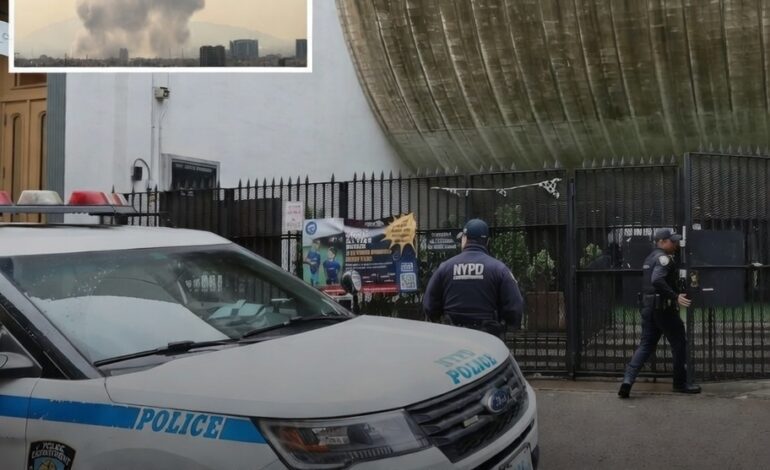
Following the US-Israel joint military operation against Iran on February 28, 2026, the NYPD activated its standard protocol for major international security events. As a precaution — not in response to any specific threat — the department is enhancing patrols at diplomatic missions, synagogues, mosques, Iranian and Jewish cultural centers, and other sensitive locations across New York City. No specific or credible threats to NYC have been identified.
1. Introduction: New York City Wakes Up to a Changed World
New Yorkers woke up on Saturday, February 28, 2026 to extraordinary news. The United States and Israel had launched a massive coordinated military strike on Iran overnight — the largest Western military action in the Middle East since 2003. And within hours, the city that is consistently ranked as America’s top terrorist target was on heightened alert.
The NYPD moved quickly. By mid-morning, the department had activated its standard elevated security protocol, deploying additional officers and heavy weapons teams to the city’s most sensitive locations. Synagogues. Mosques. Israeli and Iranian diplomatic missions. Cultural centers. Landmarks.
No specific threat had been made. No plot had been uncovered. This was not a crisis — it was precaution. But precaution in New York City looks very different from anywhere else. The NYPD’s counterterrorism division is one of the most sophisticated municipal law enforcement operations on Earth. And on a day when America went to war with Iran, it was not taking any chances.
This article explains exactly what the NYPD is doing, which sites are affected, why New York City matters so much in this context, and what New Yorkers can do to stay safe.
2. What the NYPD Is Actually Doing: The Full Statement
“The NYPD is closely monitoring events in Iran and the Middle East and coordinating with our federal and international partners. As is our protocol and out of an abundance of caution, we will be enhancing patrols to sensitive locations throughout the city, including diplomatic, cultural, religious, and other relevant sites. As always, we remind the public to remain vigilant and notify the NYPD of suspicious activity by calling 1-888-NYC-SAFE or 911.”
— NYPD official statement posted to social media, February 28, 2026
Unpacking the Statement
Three phrases in that statement deserve close attention. First: ‘as is our protocol.’ The NYPD is not improvising. Elevating security at sensitive locations during major international security events is a standing procedure — one the department has executed many times before.
Second: ‘out of an abundance of caution.’ This is the department’s explicit way of saying no credible threat exists. When the NYPD knows of a specific threat, it does not use this phrase. The enhanced security is precautionary, not reactive.
Third: ‘coordinating with our federal and international partners.’ This means the NYPD is in active communication with the FBI, Department of Homeland Security, the State Department, and likely foreign intelligence services — all monitoring the threat environment in real time.
What John Chell, Former NYPD Chief, Explained
Former NYPD Chief of Department John Chell provided valuable detail about exactly what enhanced patrols look like in practice. According to Chell, the NYPD deploys two types of security presence at high-value targets during elevated alert periods:
- Directed patrols: A police team drives by the location at regular, scheduled intervals — often multiple times per hour. The vehicle may or may not be marked. Frequency depends on assessed risk level.
- Fixed patrols: Officers remain stationed at the location for an extended period. This is reserved for the highest-value targets where a static visible presence is deemed necessary.
Chell also confirmed that during events like these, the NYPD typically sends heavy weapons teams — units equipped with long rifles and tactical gear — to specific categories of locations. These include consulates and embassies, high-profile synagogues and mosques, and Iranian, Muslim, and Jewish cultural centers across the five boroughs.
3. Which Sites Are on Alert? A Detailed Breakdown
The NYPD has not released a specific list of protected locations — doing so would be a security vulnerability. However, based on the department’s statement and expert commentary, the sites receiving enhanced security fall into several clear categories.
| Site Category | Why at Risk | Security Measure |
| Synagogues & Jewish Centers | Potential Iranian or proxy retaliation against Jewish community | Directed patrols; heavy weapons teams at high-profile locations |
| Mosques & Iranian Cultural Centers | Risk of anti-Muslim backlash; Iranian diaspora community safety | Fixed and roving patrols; community liaison officers |
| Israeli & US Diplomatic Missions | Primary symbolic targets for retaliatory attacks | Fixed security posts; heavy weapons teams; NYPD counterterrorism |
| Times Square & Major Landmarks | High-visibility, high-crowd soft targets | Increased uniformed presence; counterterrorism units |
| Critical Infrastructure | Utilities, transit, communications hubs | Coordinated monitoring with federal partners |
The Jewish Community: A Primary Focus
New York City is home to the largest Jewish population outside of Israel — approximately 1.1 million people. In the context of an American-Israeli military strike on Iran, Jewish institutions become elevated targets for potential retaliation or copycat attacks by individuals motivated by antisemitic or anti-Israel ideology.
The NYPD’s heightened security around synagogues and Jewish community centers is not new — the department maintains ongoing security relationships with these institutions. But an event of this magnitude triggers an immediate escalation of that coverage.
The Iranian and Muslim Community: Safety and Backlash Prevention
There is a second, less-discussed dimension to the NYPD’s alert: protecting New York’s Iranian and Muslim communities from potential backlash violence. Iranian Americans and Muslim New Yorkers have historically faced increased harassment and hate crimes following major US military actions in the Middle East. The NYPD’s protective posture covers both directions of potential threat.
Diplomatic Missions: The Highest-Value Symbolic Targets
New York City hosts more foreign diplomatic missions than any other city in the world — more than 100 consulates, plus the United Nations headquarters. During a period of active US military operations abroad, these missions become both symbolic and physical targets. The Israeli consulate, US Mission to the UN, and Iranian diplomatic facilities (Iran technically has a UN mission in New York) all receive elevated attention.
4. Jurisdiction-by-Jurisdiction Response Table
| Jurisdiction | Action Taken | Threat Status |
| NYPD – New York City | Enhanced patrols at diplomatic missions, cultural institutions, synagogues, mosques, Iranian and Jewish cultural centers; heavy weapons teams deployed to high-value targets | No specific or credible threats at this time |
| NY State Police – Statewide | Increased presence at religious, cultural, and diplomatic sites statewide; coordinating with federal partners | No credible threats; Gov. Hochul: ‘top priority is keeping New Yorkers safe’ |
| Suffolk County, Long Island | Increased patrols at government buildings, religious institutions, and critical infrastructure | No credible threats; monitoring underway |
| New Jersey State Police | Monitoring situation; increased patrols at houses of worship and sensitive sites | No known credible threats to the Garden State |
| Federal (DHS / FBI) | Coordinating with NYPD and state police; monitoring homeland threat environment | No specific credible threats to the homeland at this time |
The coordinated nature of the response — from city to county to state to federal level — reflects the standard multi-tiered security architecture that activates during major international events. Each level of government has its own protocols, but all feed into a shared intelligence and coordination picture.
5. Why New York City? Understanding the City’s Unique Threat Profile
America’s Most Targeted City
New York City has been identified as the top terrorist target in the United States for decades. The reasons are both symbolic and practical. The city is home to Wall Street, the UN headquarters, and the largest Jewish population outside Israel. It houses more foreign consulates than any city on Earth. And it remains the most recognizable American city in the world — making an attack on New York a globally impactful statement.
Since September 11, 2001, the NYPD estimates the city has disrupted more than 100 terrorist plots against it. That record of prevention is not accidental — it reflects a massive, ongoing investment in intelligence, surveillance, and rapid response capability.
Iran’s History of Targeting Jewish and Israeli Institutions
The specific threat landscape during this alert is shaped by Iran’s history of sponsoring attacks on Jewish and Israeli targets globally. The 1994 bombing of the AMIA Jewish community center in Buenos Aires — which killed 85 people and injured more than 300 — remains one of the deadliest attacks on a Jewish institution outside of wartime. It was widely attributed to Iran and Hezbollah.
More recently, Iran-linked operatives have been convicted in the United States for plotting attacks on Israeli and Saudi targets. In 2022, a plot to assassinate former US National Security Advisor John Bolton — allegedly directed by Iranian intelligence — was disrupted by the FBI. The threat from Iranian-sponsored or Iranian-inspired actors against American and Jewish targets is not theoretical. It has a documented history.
The Lone Wolf Dimension
Beyond state-sponsored operations, security experts also watch for so-called lone wolf attacks — individuals inspired by events but not directly coordinated by any foreign government. A major US-Israel military strike on Iran creates a new wave of radicalizing content online, potentially inspiring individuals with no formal terrorist ties to act independently. The NYPD’s enhanced visibility serves a deterrent function against this threat category as well.
6. How the NYPD Conducts Sensitive Site Security: An Insider Look
The Intelligence Foundation
The NYPD does not wait for threats to materialize before acting. Its Intelligence Bureau — widely considered one of the most sophisticated local law enforcement intelligence operations in the world — maintains ongoing situational awareness across an enormous range of threat vectors. During a major geopolitical event, that bureau goes into heightened analysis mode, reviewing communications intercepts (in coordination with federal agencies), social media activity, and threat reporting from partners around the globe.
Counterterrorism Division: The Physical Response
The NYPD’s Counterterrorism Division handles the physical deployment of security assets during elevated alert periods. This division maintains specialized units including:
- Critical Response Command (CRC): Heavily armed officers equipped with long rifles, body armor, and tactical vehicles, deployed to the city’s most sensitive locations
- Hercules Teams: High-visibility, heavily armed rapid response units that appear without warning at different locations — creating an unpredictable security presence that complicates attack planning
- Sensors: Radiation detection equipment carried by patrol officers, designed to detect radiological materials that could be used in a dirty bomb attack
- Domain Awareness System (DAS): A network of thousands of cameras and license plate readers across the city, monitored in real time from the Lower Manhattan Security Coordination Center
Federal Integration: NYPD Works Alongside FBI and DHS
During elevated alert periods, the NYPD’s Joint Terrorism Task Force (JTTF) — which operates alongside FBI and DHS agents — increases its tempo of operations. The JTTF has authority to conduct investigations, execute warrants, and share intelligence across federal and local lines. Federal law enforcement sources told CBS News on February 28, 2026 that there are no specific credible threats to the homeland at this time — but the monitoring infrastructure was in full operational mode.
7. What Happened in Iran: The Context Behind the NYPD Alert
Operation Roaring Lion: The Strike That Changed Everything
To understand why the NYPD activated its security protocols, you need to understand what happened in Iran. On February 28, 2026, the United States and Israel launched a massive coordinated military operation — named Operation Roaring Lion by Israel — targeting Iran’s nuclear infrastructure, ballistic missile production facilities, and senior leadership including Supreme Leader Ayatollah Ali Khamenei.
President Trump announced ‘major combat operations in Iran’ via social media video. Prime Minister Netanyahu followed within minutes, describing the operation as a joint, broad, and powerful strike aimed at eliminating existential threats to the State of Israel.
The Scale of the Strike
- The Israeli Air Force deployed approximately 200 fighter jets and struck more than 500 military targets in western and central Iran
- US military forces struck separately in coordination with Israeli strikes
- Seven missiles confirmed to have struck the district housing the Supreme Leader’s compound in Tehran
- Iran’s Red Crescent reported at least 201 people killed and 747 wounded — the first official Iranian casualty figure
- Iran closed its airspace and began firing ballistic missiles at Israel and at US military bases across the Gulf within hours
Why This Directly Creates Risk in New York
Iran’s pattern of behavior following major military setbacks includes activating overseas networks — both state-sponsored operatives and inspired proxies — to conduct retaliatory attacks on American, Israeli, and Jewish targets abroad. The scale of the February 28 strikes is unprecedented. The security community’s assessment is that the potential for Iran to attempt a retaliatory action on American soil — or to inspire one — is elevated compared to any previous point in recent memory.
8. New York Reactions: Governor, Borough Officials, Protests, and More
Governor Kathy Hochul
“While there are no credible threats at this time, our top priority is keeping New Yorkers safe.”
— New York Governor Kathy Hochul, February 28, 2026
Hochul announced that New York State Police were increasing their presence at religious, cultural, and diplomatic sites statewide. She said she was working closely with Attorney General Davenport, the acting State Police Superintendent, and the director of the State Office of Homeland Security and Preparedness.
Suffolk County, Long Island
Suffolk County Executive Ed Romaine announced that county police were increasing patrols and checks at government buildings, religious institutions, and critical infrastructure. He added that there are currently no credible threats in the area but that officers are monitoring the situation and in communication with law enforcement partners.
New Jersey
Acting New Jersey State Police Superintendent Jeanne Hengemuhle confirmed that New Jersey police are actively monitoring the situation and working with federal, state, county, and local partners to ensure the safety of New Jersey’s places of worship. New Jersey is home to significant Jewish, Muslim, and Iranian-American communities — all of which are relevant to the heightened security posture.
Congressional Reaction: Demanding Answers
New York’s congressional delegation reacted with a mix of support and demands for transparency. One senior New York lawmaker stated they had asked Secretary Rubio to be straight with Congress about the objectives of these strikes and what comes next — acknowledging that Iran must never be allowed to attain a nuclear weapon while warning against another endless and costly war in the Middle East.
Protests Planned in New York City
A protest was organized for Saturday afternoon at Times Square by The People’s Forum, which called the strikes an ‘unprovoked, illegal bombing campaign on Iran.’ The NYPD was expected to maintain a significant presence at the demonstration — both to protect the right to protest and to monitor the security environment around the large gathering.
9. Historical Precedent: When Has the NYPD Done This Before?
This is not the first time the NYPD has activated elevated security protocols following a major international event. The pattern is well established:
- September 11, 2001: The foundational event that reshaped the NYPD’s entire approach to counterterrorism. The department built its current intelligence and counterterrorism infrastructure specifically in response to 9/11.
- 2011 Osama bin Laden Killing: The NYPD immediately elevated security at Jewish sites and the UN following the announcement of bin Laden’s death, anticipating potential retaliation.
- 2020 Qasem Soleimani Assassination: The NYPD activated heightened security at Jewish institutions, Israeli diplomatic sites, and other sensitive locations following the US killing of Iran’s top general — the most directly analogous prior event to today’s action.
- October 7, 2023 Hamas Attack on Israel: The NYPD deployed additional security to Jewish institutions across the city within hours of the attack, in response to both the risk of inspired violence and actual threats that emerged in the following days.
- 2024 Israel-Iran Exchange: When Israel and Iran directly exchanged strikes in April and October 2024, the NYPD again elevated its security posture at sensitive locations.
The February 28, 2026 activation is consistent with all of these precedents — and given the scale of today’s operation, arguably the most significant activation since 2001.
10. What New Yorkers Should Do Right Now
Stay Calm — There Is No Specific Threat
The most important thing for New Yorkers to understand is that the NYPD has not identified any specific threat to the city. The enhanced security is precautionary. Life in New York City continues normally. Subways are running. Businesses are open. You do not need to shelter in place, avoid public spaces, or change your daily routine.
Stay Vigilant and Report Suspicious Activity
The NYPD specifically asks New Yorkers to remain vigilant and report anything that seems out of the ordinary. Here is how to do that:
- Call 1-888-NYC-SAFE to report non-emergency suspicious activity
- Call 911 for any immediate threat or emergency
- Use the NYPD app to submit tips with photos or video
- If you see something near a religious institution or diplomatic site that seems wrong, call it in — even if you’re not sure it matters
If You Attend Religious Services or Cultural Events Today
The NYPD’s enhanced security is specifically focused on religious and cultural sites. If you plan to attend synagogue, mosque, or any Iranian or Jewish cultural event today, here is what to expect and what to do:
- You may see uniformed officers or marked police vehicles near your institution — this is intentional and precautionary
- Be aware of your surroundings when entering and exiting
- If your institution has a security coordinator or liaison, check with them for any specific guidance
- Report any unfamiliar vehicles parked for extended periods near the entrance
Monitor Trusted News Sources
The threat environment can change quickly. Stay connected to reliable, real-time sources:
- NYPD official X/Twitter account (@NYPDnews) — first source for NYPD security updates
- NYC Emergency Management (@NotifyNYC) — official city emergency alerts
- NY1 and local broadcast news — continuous local coverage
- CBS News and ABC7 New York — both have reporters on this story
11. Federal Law Enforcement: The DHS and FBI Role
No Specific Homeland Threat — But Full Monitoring Active
Federal law enforcement sources told CBS News on February 28, 2026 that there are no specific credible threats to the homeland at this time. This statement — coming from sources within the FBI and DHS — is the most authoritative available assessment of the current threat level inside the United States.
However, ‘no specific threat’ does not mean ‘no monitoring.’ The full machinery of the federal counterterrorism apparatus is in active mode:
- The FBI’s Joint Terrorism Task Forces in New York and across the country are running at elevated tempo
- DHS’s Office of Intelligence and Analysis is monitoring social media, threat streams, and suspicious activity reports
- The National Counterterrorism Center is in continuous coordination with foreign intelligence partners
- US embassies in the region have already closed or issued shelter-in-place orders — the US Embassy in Bahrain announced closure on Sunday, March 1, after Iranian missile strikes
The Difference Between ‘No Credible Threat’ and ‘Safe’
Security officials are careful with their language. ‘No specific credible threat’ means authorities have not identified a specific plot, a specific target, or specific individuals planning an attack. It does not mean zero risk exists. The elevated security posture is the practical response to that residual risk — maintaining visibility and deterrence even in the absence of a known active plot.
12. Frequently Asked Questions (FAQ)
Is New York City safe right now after the Iran strikes?
Yes. Federal and local law enforcement have confirmed there are no specific or credible threats to New York City at this time. The NYPD’s enhanced security is precautionary — a standard response to major international security events, not a reaction to any known plot. New Yorkers can go about their daily lives normally.
Which specific locations are being protected by the NYPD?
The NYPD has not released a specific list, as doing so could compromise security operations. However, former NYPD officials have confirmed that enhanced coverage focuses on: high-profile synagogues and Jewish cultural centers, mosques and Islamic cultural institutions, Iranian community centers, Israeli and US diplomatic missions, and major public landmarks including Times Square.
Why does an attack on Iran trigger security alerts in New York?
Iran has a documented history of sponsoring or inspiring retaliatory attacks on American, Israeli, and Jewish targets overseas following major military setbacks. New York City — as the most prominent US city, home to the largest Jewish population outside Israel and to the UN headquarters — is a logical high-profile target. The security alert is a precautionary measure based on this historical pattern.
What is the NYPD’s Counterterrorism Division and what does it do?
The NYPD Counterterrorism Division is a specialized unit that protects New York City from terrorist threats. Its units include the Critical Response Command (heavily armed officers at sensitive sites), Hercules Teams (high-visibility tactical units that appear unpredictably at locations), radiation detection patrols, and the Domain Awareness System — a network of thousands of cameras and sensors monitored in real time. It works alongside the FBI’s Joint Terrorism Task Force.
What should I do if I see something suspicious near a synagogue or mosque?
Call 1-888-NYC-SAFE (non-emergency) or 911 (immediate threat). Do not approach or confront the person or vehicle. Move away from the location if you feel unsafe and call from a safe distance. The NYPD specifically asks New Yorkers to report anything suspicious without attempting to intervene personally.
Are there protests planned in New York City today?
Yes. The People’s Forum organized a protest in Times Square on the afternoon of February 28, 2026, opposing the US-Israel strikes on Iran. The NYPD was expected to maintain a presence at the demonstration. New Yorkers exercising their right to protest should expect a visible police presence and should follow all lawful police directions.
Has the NYPD done this before after Iran-related events?
Yes. Following the 2020 killing of Iranian General Qasem Soleimani, the NYPD elevated security at Jewish institutions and Israeli diplomatic sites. Similar protocols were activated during the Israel-Iran direct strikes in April and October 2024. The February 28, 2026 activation is consistent with that historical pattern — but given the unprecedented scale of today’s operation, it represents the most significant activation since 9/11.
What is New York Governor Hochul doing?
Governor Hochul announced that New York State Police are increasing their presence at religious, cultural, and diplomatic sites statewide. She is coordinating with the state Attorney General, the acting State Police Superintendent, and the Director of the State Office of Homeland Security and Preparedness. She has emphasized that there are no credible threats at this time but that protecting New Yorkers is the top priority.
13. Key Takeaways
- The NYPD activated its standard elevated security protocol on February 28, 2026, following the US-Israel joint strike on Iran — increasing patrols at diplomatic, cultural, religious, and other sensitive sites across New York City
- There are no specific or credible threats to New York City — this is a precautionary measure, not a response to any known plot
- The NYPD is deploying directed and fixed patrols, heavy weapons teams, and counterterrorism units to high-value targets including synagogues, mosques, consulates, and cultural centers
- New York State Police, Suffolk County Police, and New Jersey State Police are all implementing similar enhanced security postures
- Federal law enforcement (FBI, DHS) has confirmed no specific homeland threats but is in full monitoring mode
- New York City is identified as America’s top terrorist target — its security posture during international events reflects the most sophisticated municipal counterterrorism apparatus in the US
- Iran has a documented history of sponsoring retaliatory attacks on Jewish and Israeli targets globally; the scale of February 28’s operation elevates that risk environment
- New Yorkers should remain calm, continue their daily routines, and report suspicious activity to 1-888-NYC-SAFE or 911
- A protest was planned at Times Square on February 28; the NYPD will maintain a presence at the demonstration
About This Article
This article was written and fact-checked using primary reporting from CBS New York, ABC7 New York, Gothamist, PIX11, CBS News national live blog, and the Times of Israel live blog — all published February 28, 2026. NYPD statement sourced from the department’s official social media post. Expert commentary from former NYPD Chief of Department John Chell sourced via CBS News.
Sources: NYPD (@NYPDnews) on X | CBS New York | ABC7 New York (WABC) | Gothamist | PIX11 | CBS News Live Blog | Times of Israel Live Blog | Wikipedia: 2026 Israeli-United States Strikes on Iran
Discover more from MatterDigest
Subscribe to get the latest posts sent to your email.