Stalkers Found Guilty: Anti-ICE Influencers Convicted for Livestreaming Federal Agent’s Home Address
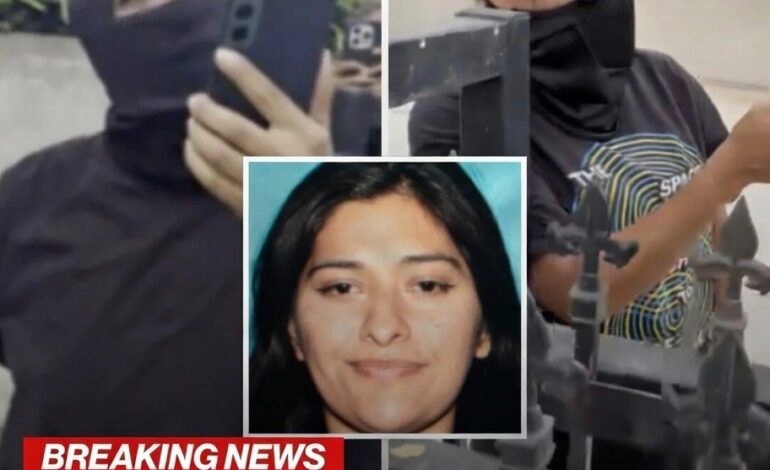

Quick Answer: What Happened in the ICE Agent Stalking Case?
On August 28, 2025, Cynthia Raygoza and Ashleigh Brown followed ICE agent Rogelio Reyes Huitzilin from his Los Angeles field office to his Baldwin Park home, livestreaming the pursuit on Instagram and shouting his address to neighbors. On February 27, 2026, a federal jury found both women guilty of stalking. Each faces up to five years in federal prison. Sentencing is set for June 8, 2026.
1. Introduction: When Protest Becomes a Crime
It started as a livestream. Two women in masks, trailing a government vehicle through Los Angeles traffic. An Instagram feed rolling. Followers watching in real time. Directions given out loud.
But the driver they were following was not headed to an immigration raid. He was going home to his wife and kids for a family surprise. What followed — masked activists showing up on his residential street, shouting his profession to neighbors, broadcasting his address online — would end up in federal court.
On February 27, 2026, a Los Angeles federal jury delivered its verdict: guilty. The case of Cynthia Raygoza and Ashleigh Brown is now the first successful federal stalking prosecution of anti-ICE protesters who confronted a federal agent at their private home. It raises urgent questions about the limits of political protest, federal law enforcement authority, and the weaponization of social media as a tool of intimidation.
This article covers everything — from what happened that day in Baldwin Park to what it means for protest tactics, legal strategy, and the future of immigration enforcement in America.
2. The Incident: What Happened on August 28, 2025
Following the Agent from Work
On August 28, 2025, Cynthia Raygoza, Ashleigh Brown, and Sandra Carmona Samane left downtown Los Angeles and began following a vehicle they believed belonged to an ICE agent departing the agency’s LA field office.
This tactic — following ICE and Border Patrol agents to immigration enforcement operations to document and potentially obstruct them — had become increasingly common in Los Angeles, a sanctuary city with an activist community deeply opposed to the Trump administration’s aggressive deportation campaign.
But this day was different. The agent they tailed was not heading to an enforcement operation. He was Rogelio Reyes Huitzilin, an ICE deportation officer, and he was driving home to Baldwin Park in the San Gabriel Valley.
The Livestream: Going Public in Real Time
As they followed Huitzilin’s vehicle through Los Angeles traffic and onto residential streets, the women livestreamed the entire pursuit on Instagram. According to prosecutors, they broadcast on three accounts: ice_out_of_la, defendmesoamericanculture, and corn_maiden_design.
On the live feed, they provided turn-by-turn directions as they followed him, narrating the route and encouraging followers to share the stream. They discussed the possibility that the vehicle might be headed to an immigration enforcement operation — but pressed on regardless.
Arriving at His Home
When Huitzilin’s vehicle turned into his residential neighborhood, the three women followed. They pulled up near his home, stepped out wearing masks, and began confronting the scene.
Their words, captured on the Instagram livestream and played for the jury, included:
- “Your neighbor is ICE!”
- “La migra lives here”
- “ICE lives on your street and you should know”
Huitzilin, realizing what was happening, exited his own vehicle and held up his phone to film the women back. According to court testimony, he had been planning a family surprise — meeting his wife and two young children who were also arriving home.
The Confrontation
The encounter lasted roughly 90 minutes. Huitzilin’s wife and two young children witnessed the entire incident. During the heated exchange, Raygoza called Huitzilin a racial slur — specifically calling him a racial traitor in Spanish — and also used a gay slur against him.
After the confrontation, the women posted Huitzilin’s home address online on Instagram with the message: “Come on down.” This effectively doxxed a federal law enforcement officer — broadcasting his private residence to thousands of online followers.
“Come on down.”
— Message posted on Instagram with ICE agent’s home address, August 28, 2025
3. Who Are the Defendants? Cynthia Raygoza and Ashleigh Brown
Cynthia Raygoza
Raygoza, 38, is a Riverside, California resident. She operated the Instagram account corn_maiden_design, through which she had developed a following around anti-ICE activism and Mesoamerican cultural themes. Prosecutors described her as one of the primary instigators during the Baldwin Park confrontation — captured on video shouting racial and homophobic slurs at the agent and leading chants to alert neighbors.
Raygoza became a fugitive briefly after initial charges were filed, with law enforcement searching for her before she was eventually located and brought to trial.
Ashleigh Brown
Brown, 38, is from Aurora, Colorado, a suburb of Denver. She traveled to Los Angeles and was already known to federal prosecutors before this incident. Brown faced a separate federal charge of assaulting a federal officer in an unrelated case. On the day of the Baldwin Park incident, she participated in following the agent and in the confrontation at his home.
Brown’s attorneys argued throughout the trial that her actions were constitutionally protected political speech — protest activity that, while aggressive, did not meet the legal threshold for stalking.
4. Who Is the Victim? ICE Agent Rogelio Reyes Huitzilin
The agent at the center of this case — identified in court by name as Rogelio Reyes Huitzilin — is an ICE deportation officer assigned to the agency’s Los Angeles field office. His identity had been kept anonymous in most news coverage prior to the trial, standard practice for protecting federal law enforcement officers who face targeting.
In court, Huitzilin testified about what it felt like to discover he was being followed and then to have his family confronted at his home. He described arriving to find the women on his street while his wife and young children were also present. According to testimony, the experience was frightening and deeply disruptive to his family’s sense of safety.
His name being called out publicly on a livestream, and his home address being posted online, represents exactly the kind of threat federal law has sought to address through doxxing statutes — though the jury ultimately acquitted on those counts.
Suggested visual: Photo of Baldwin Park, CA neighborhood street to illustrate the residential setting of the confrontation.
5. The Charges Explained: Stalking vs. Doxxing Under Federal Law
What Is Federal Stalking?
Federal Stalking (18 U.S.C. § 2261A) — Definition
Federal stalking law makes it a crime to engage in a course of conduct that places a person in reasonable fear of death or serious bodily injury, or causes substantial emotional distress. Unlike many state laws, federal stalking does not always require repeated contacts over time — a single sustained course of conduct can qualify if it meets other elements.
The defense in this case seized on the traditional understanding of stalking as requiring a pattern of repeated behavior over time. Attorney Nitin Nihalani argued at trial that the women only interacted with the agent on one day, during an incident that lasted 90 minutes — not the pattern of behavior stalking typically requires. The jury disagreed.
What Is Doxxing? The Federal Statute
The second charge — which both women were acquitted of — involved a conspiracy to publicly disclose the personal information of a federal employee. Under federal law (18 U.S.C. § 119), it is illegal to publicly post a federal agent’s home address when done with the intent to threaten or facilitate violence against that person.
Prosecutors argued the women’s Instagram post saying ‘Come on down’ alongside the agent’s address constituted exactly this — a public call to action that placed him and his family in danger. The jury was not convinced beyond a reasonable doubt on this count, however, returning not guilty verdicts for all three defendants on the conspiracy charge.
Why Did the Charges Differ?
The split verdict reveals something interesting about how the jury weighed the evidence. They found the physical act of following, confronting, and shouting at the agent at his home to be criminal stalking. But they were not convinced that the Instagram posting of his address met the higher bar required to prove a conspiracy to doxx a federal agent. The distinction is legally significant — and will likely be the subject of the expected appeal.
6. The Trial: What Jurors Heard
The Prosecution’s Case
Prosecutors, led by US Attorney Bill Essayli’s office, centered their case on the Instagram livestream footage itself. Jurors watched the video — which showed the women following the vehicle, narrating directions in real time, confronting Huitzilin outside his home, and broadcasting his address to followers.
The prosecution also called Huitzilin to testify about the impact on him and his family. They argued that the deliberate, organized, and publicized nature of the pursuit — combined with the mask-wearing and the livestreaming to a large audience — constituted a course of conduct designed to place a federal officer in fear for his safety and the safety of his family.
The Defense’s Argument: Free Speech and Protest Rights
Defense attorneys made a two-part argument. First, they contended the actions were constitutionally protected political speech. The women were protesting ICE — a legitimate political activity. Shouting in public, even aggressively, is generally protected under the First Amendment. Second, they argued the single 90-minute incident did not legally constitute stalking, which traditionally requires a pattern of repeated conduct.
“That’s not stalking. This case is far from over.”
— Defense attorney, following the guilty verdict — vowing appeal
A third defense attorney, Robert Bernstein (representing the acquitted Samane), put it bluntly after the verdict: “Free speech still exists in this country. The federal government cannot criminalize political speech protesting ICE activities.”
The Split Verdict and Deliberation
Jurors deliberated for roughly nine hours before reaching their verdict on a Friday evening. The gallery included supporters of the defendants, some of whom were reportedly in tears as Judge Stephen V. Wilson read the verdicts aloud. The split — guilty on stalking, not guilty on doxxing — suggests the jury carefully parsed the legal definitions and applied them selectively to the facts.
7. The Verdict: A Split Decision
On February 27, 2026, the jury returned the following findings:
| Defendant | Verdict: Stalking | Verdict: Doxxing Conspiracy | Sentencing Date |
| Cynthia Raygoza, 38 (Riverside, CA) | GUILTY | NOT GUILTY | June 8, 2026 |
| Ashleigh Brown, 38 (Aurora, CO) | GUILTY | NOT GUILTY | June 8, 2026 |
| Sandra Carmona Samane, 25 (Panorama City, CA) | NOT GUILTY | NOT GUILTY | N/A — Acquitted |
The verdicts carry significant legal weight. Both Raygoza and Brown now face a statutory maximum of five years in federal prison. Their sentencing hearing is scheduled for June 8, 2026. The actual sentence is likely to be determined by federal sentencing guidelines, the judge’s discretion, and any mitigating or aggravating factors presented at the sentencing hearing.
8. Key Reactions: Prosecution, Defense, and Advocates
US Attorney Bill Essayli
“We thank the jury for bringing justice to these agitators who violated the law and endangered the safety of this federal officer and his family.”
— First Assistant US Attorney for the Central District of California, February 27, 2026
Essayli’s office has been aggressive in prosecuting anti-ICE protest activity. He filed more than 100 cases against protesters accused of assaulting or impeding immigration agents. This was his first successful trial verdict — his office had previously secured 23 guilty pleas but had lost every prior case taken to trial.
Defense Attorneys
Defense attorney Nitin Nihalani made clear immediately after the verdict that he would appeal the stalking conviction. His argument — that a single 90-minute incident cannot legally constitute the kind of stalking Congress intended to criminalize — is likely to form the core of the appellate challenge.
Civil Rights and Protest Advocates
Supporters of the defendants viewed the trial as a crucial test of the limits of protest under the Trump administration. Before the verdict, some in the gallery described the case as an attempt to criminalize protest against immigration enforcement — a tactic they viewed as legitimate political speech. The conviction, they say, sets a dangerous precedent that will chill future protest activity.
9. The Broader Legal Battle: 100+ Anti-ICE Protest Cases in Los Angeles
This verdict does not exist in a vacuum. It is part of a sweeping federal prosecution effort in Los Angeles under US Attorney Bill Essayli, who took office under the Trump administration with an explicit mandate to protect federal immigration officers.
By the time of this trial, Essayli’s office had filed more than 100 criminal cases against individuals accused of assaulting, obstructing, or threatening ICE and Border Patrol agents during protest activities. Prior to this verdict, the office had secured 23 guilty pleas but had lost every case it had taken to a jury trial.
That streak ended on February 27, 2026.
The Wider Context: Attacks on ICE Agents Skyrocketing
The prosecution push reflects a genuine safety crisis for federal immigration agents. According to the Department of Homeland Security, attacks on ICE agents increased by 830% between January and July 2025 — a staggering figure that the Trump administration cited repeatedly in pushing for aggressive prosecution of those who threaten or expose agents.
The statistics are striking:
- 830% increase in attacks on ICE agents (DHS, July 2025)
- One ICE detainee killed and two others injured in a Dallas facility shooting in 2025
- 100+ criminal cases filed by Essayli’s office against anti-ICE protesters
- 23 guilty pleas secured prior to this trial verdict
- Zero prior trial convictions — until this case
10. Legal Analysis: Where Is the Line Between Protest and Stalking?
The Core Legal Question
This case forces a question the courts have not often had to answer directly: When does aggressive protest — following someone, confronting them, broadcasting their location — cross the line into criminal stalking?
The First Amendment strongly protects political speech and protest activity. But it does not protect conduct that places a person in reasonable fear of physical harm. The question is where the line falls.
What Made This Case Different From Typical Protest
Several elements distinguished the Baldwin Park incident from typical ICE protest activity:
- The agent was followed to his private home — not to an enforcement operation or government building
- His wife and young children were present and witnessed the confrontation
- The women were masked — an element prosecutors used to suggest deliberate concealment of identity during a targeted act
- The home address was broadcast to thousands of Instagram followers with an invitation to come to the location
- The confrontation involved racial and homophobic slurs directed personally at the agent and his family
Courts have generally allowed protesters to demonstrate outside government facilities, even loudly. But showing up at a private residence — especially when family members are present — crosses into territory that several courts have treated differently.
The Defense Argument on Appeal
The defense has already signaled its appeal strategy. The primary argument will be that federal stalking law requires a course of conduct — not a single incident, however prolonged. If a federal appeals court agrees, the convictions could be overturned. This legal question is genuinely unsettled, and the Ninth Circuit’s ruling will carry significant weight for future protest cases.
11. What This Means for Anti-ICE Activism Going Forward
A Chilling Effect on Protest Tactics
Civil liberties advocates and immigration rights groups have expressed concern that this conviction will discourage protest activity — not just the tactic of following agents, but potentially more traditional forms of demonstration as well.
The fear is prosecutorial overreach: that a broad interpretation of federal stalking law could be applied to any sustained protest that makes a target uncomfortable, even if it falls far short of the threatening behavior the law was designed to address.
The Government’s Perspective: Protecting Federal Officers
The Trump administration has been explicit that it views the exposure of federal agents’ identities and home addresses as a direct threat to officer safety. When someone’s home address is posted online with an invitation for followers to show up, the potential for violence is real — as the 830% spike in attacks on ICE agents demonstrates.
Essayli’s office has drawn a clear line: protest at government facilities, protest at enforcement operations, but target a federal officer’s family home and you will face federal charges. This case is the first time that line resulted in a jury conviction.
The Social Media Dimension
Perhaps the most novel aspect of this case is what it says about social media activism. Broadcasting a federal agent’s home address on Instagram to thousands of followers — with real-time directions and an invitation to come down — is a new kind of threat. It is not a private act. It is a public broadcast designed to mobilize others.
Courts and legislatures have not fully grappled with how existing stalking and doxxing laws apply to this kind of social media-amplified confrontation. This case will help set those boundaries — for better or worse, depending on your perspective.
12. Full Case Timeline
| Date | Event |
| August 28, 2025 | Raygoza, Brown, and Samane follow ICE agent Rogelio Reyes Huitzilin from LA field office to his Baldwin Park home. They livestream the pursuit on Instagram, shout at neighbors, and post his address online with ‘Come on down.’ |
| September 27, 2025 | Federal grand jury indicts all three women on conspiracy and doxxing charges. Brown also separately charged with assaulting a federal officer. |
| Late 2025 | Charges revised. Raygoza and Brown additionally charged with stalking under federal law. Trial set before US District Judge Stephen V. Wilson. |
| February 21–27, 2026 | Week-long federal jury trial in Los Angeles. Defense argues one 90-minute incident cannot legally constitute stalking. Prosecutors show Instagram livestream footage. |
| February 27, 2026 | After roughly nine hours of deliberation, jury returns split verdict: Raygoza and Brown GUILTY of stalking; all three ACQUITTED of doxxing conspiracy. Samane acquitted of all charges. |
| June 8, 2026 | Scheduled sentencing hearing for Raygoza and Brown. Each faces up to 5 years in federal prison. |
13. Frequently Asked Questions (FAQ)
What were Raygoza and Brown convicted of?
Both women were convicted of one count of federal stalking. They were each acquitted of one count of conspiring to publicly disclose the personal information of a federal employee (the doxxing charge). The third defendant, Sandra Carmona Samane, was acquitted of all charges.
What sentence do Raygoza and Brown face?
Each faces a statutory maximum of five years in federal prison. The actual sentence will be determined by US District Judge Stephen V. Wilson at the sentencing hearing scheduled for June 8, 2026, based on federal sentencing guidelines and the specific facts of the case.
Who is the ICE agent they stalked?
The agent was identified in court as Rogelio Reyes Huitzilin, an ICE deportation officer assigned to the agency’s Los Angeles field office. His identity had been protected throughout most pre-trial coverage.
What is the doxxing law they were acquitted of?
The doxxing charge was based on 18 U.S.C. § 119, which makes it illegal to publicly post a federal employee’s personal information — such as a home address — with the intent to threaten or facilitate violence. The jury found the prosecution did not prove this charge beyond a reasonable doubt, despite the Instagram post directing followers to the agent’s address.
Was this the first conviction of anti-ICE protesters in the Trump era?
It was the first federal jury trial conviction obtained by US Attorney Bill Essayli’s office in Los Angeles. Prior to this, the office had secured 23 guilty pleas in over 100 anti-ICE protest cases but had lost every case it took to trial — until this verdict.
Can the conviction be appealed?
Yes. Defense attorney Nitin Nihalani immediately stated the case is far from over and vowed to appeal. The primary appellate argument will likely be that a single 90-minute incident does not legally constitute the kind of sustained course of conduct required for federal stalking. The appeal will go to the Ninth Circuit Court of Appeals.
Is following ICE agents illegal?
Following ICE agents to enforcement operations — to document or attempt to obstruct raids — has become a common protest tactic and generally has not been prosecuted as stalking. What made this case different was that the agent was followed to his private home, his family was confronted, and his address was broadcast online. That combination crossed a legal line, according to this jury.
What happened to Sandra Carmona Samane?
Samane, 25, of Panorama City, CA, was acquitted of all charges — both the stalking count and the doxxing conspiracy charge. Her attorney celebrated her acquittal, saying it showed free speech still exists in this country.
14. Key Takeaways
- On August 28, 2025, Cynthia Raygoza and Ashleigh Brown followed ICE agent Rogelio Reyes Huitzilin from his LA office to his Baldwin Park home, livestreamed the pursuit, confronted his family, and posted his address online
- On February 27, 2026, a Los Angeles federal jury found both women guilty of federal stalking — the first successful jury trial conviction of anti-ICE protesters by the Essayli-led US Attorney’s office
- Both women were acquitted of the doxxing conspiracy charge; third defendant Sandra Samane was fully acquitted
- Raygoza and Brown each face up to 5 years in federal prison; sentencing is set for June 8, 2026
- The defense has vowed to appeal, arguing a single 90-minute incident cannot legally constitute stalking
- The case is part of a broader crackdown: Essayli’s office has filed 100+ cases against anti-ICE protesters and secured 23 guilty pleas, but this is its first jury trial win
- The DHS reported attacks on ICE agents surged 830% between January and July 2025 — the backdrop against which this prosecution intensified
- The case sets a significant legal precedent on the boundary between protected protest activity and criminal stalking, particularly when social media amplification is involved
- An appeal to the Ninth Circuit is expected; its ruling will shape protest law for years to come
Suggested visual: Infographic comparing ‘Protected Protest Activity’ vs. ‘Criminal Conduct’ under federal law, based on this case’s legal distinctions.
About This Article
This article was written and fact-checked using primary reporting from the Los Angeles Times, Yahoo News, Fox News, ABC7 Los Angeles, CBS Los Angeles, NBC Los Angeles, and the US Department of Justice press release. All case details, quotes, and verdict information are sourced from contemporaneous news reporting and the DOJ announcement dated February 28, 2026.
Sources: US Department of Justice – Central District of California | Los Angeles Times | Yahoo News/AP | Fox News | ABC7 Los Angeles | CBS Los Angeles | US Attorney Bill Essayli (@USAttyEssayli) on X
URL Slug suggestion: /stalkers-guilty-anti-ice-influencers-convicted-instagram-stalking
Internal linking suggestions: ‘ICE enforcement protests 2025’, ‘federal stalking law explained’, ‘doxxing federal agents charges’, ‘Trump immigration enforcement Los Angeles’
— END OF ARTICLE —
Discover more from MatterDigest
Subscribe to get the latest posts sent to your email.