2026 Toyota RAV4: Pioneering Excellence
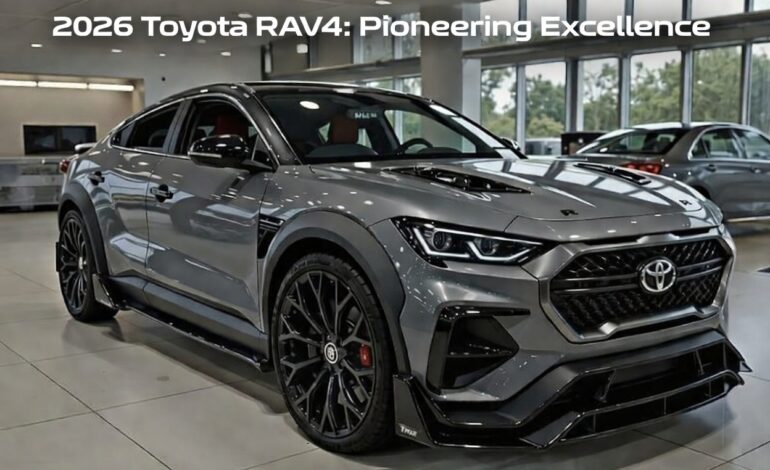

The Complete Guide — Gas, Hybrid & Prime PHEV, All 13 Trims, Used Prices & Honest Verdict
| Quick Answer: What Is the 2026 Toyota RAV4?
The 2026 Toyota RAV4 is a compact crossover SUV available in three powertrain families: gas (203 hp, 28-30 MPG), hybrid (219 hp, 40 MPG), and the new-for-2026 Prime PHEV (302 hp, 94 MPGe, 42-mile EV range). Six gas trims range from LE to TRD Off-Road. Five hybrid trims and two Prime trims complete a lineup of 13 total configurations. Original pricing ranged from $27,225 to $41,675. It earns a 4.8/5 reliability rating from Cars.com consumers and a NHTSA 5-star safety rating. |
Some vehicles earn their popularity honestly. The 2026 Toyota RAV4 is one of them.
In 2026, the RAV4 was the best-selling non-pickup vehicle in the United States — a position it had held for years and continues to defend. Not because of clever marketing or fleet discounts. Because year after year, it delivers exactly what compact crossover buyers need: reliable daily transportation, a practical interior, good fuel economy, confident safety technology, and a powertrain lineup broad enough to serve everyone from urban commuters to weekend off-roaders.
What made 2026 genuinely special was the arrival of the RAV4 Prime. Suddenly the world’s most popular crossover also had the world’s most capable compact crossover PHEV — 302 horsepower, 42 miles of EPA-rated all-electric range, and a 0-60 time of 5.7 seconds that made it the quickest four-door vehicle Toyota had ever built. The RAV4 Prime wasn’t just efficient. It was fast.
This guide covers the entire 2026 RAV4 family in depth — every powertrain, all 13 trim levels, the full off-road story, a head-to-head against nine competitors, and a detailed used-car value guide for buyers shopping in 2026. Whether you’re researching a used purchase, comparing options, or simply trying to understand why the RAV4 was America’s choice for so long, this is the guide you need.
1. 2026 Toyota RAV4 Family: Gas, Hybrid and Prime at a Glance
- Generation: Fifth generation (launched 2019; 2026 is a continuation with RAV4 Prime added)
- Body style: Compact five-seat crossover SUV
- Three powertrain families: Gas | Hybrid (HEV) | Prime (PHEV — new for 2026)
- Total trim levels: 13 (6 gas + 5 hybrid + 2 Prime)
- Best-selling compact SUV in the U.S. for multiple consecutive years
- Gas MSRP range (original): $27,225 (LE) to $37,710 (Limited)
- Hybrid MSRP range (original): $29,675 (LE Hybrid) to $39,460 (Limited Hybrid)
- Prime MSRP range (original): $39,425 (SE Prime) to $41,675 (XSE Prime)
- Assembly: Georgetown, Kentucky, USA
- com consumer reliability rating: 4.8/5 (gas) | 4.9/5 (hybrid)
- S. News Best Compact SUV ranking: Top 5 for 2026
- NHTSA Overall Safety Rating: 5 stars
- IIHS award: TOP SAFETY PICK+
2. The Three Powertrain Families: Full Side-by-Side Comparison
The 2026 RAV4 family offers more powertrain diversity than almost any other vehicle in the compact crossover segment. Here is the complete data for all three families.
| Spec | Gas (Standard) | Hybrid (HEV) | Prime (PHEV) |
| Engine | 2.5L 4-cyl (203 hp) | 2.5L 4-cyl hybrid (219 hp) | 2.5L 4-cyl PHEV (302 hp) |
| Drivetrain | FWD standard / AWD opt. | AWD standard (all trims) | AWD standard (all trims) |
| EPA City MPG | 27 mpg (FWD) | 41 mpg | 94 MPGe / 38 mpg (HV) |
| EPA Hwy MPG | 35 mpg (FWD) | 38 mpg | N/A / 38 mpg (HV) |
| EPA Combined MPG | 28-30 mpg | 40 mpg | 94 MPGe combined |
| EV Range | N/A | N/A | 42 miles (EPA) |
| Total Range | ~400-450 miles | ~580 miles | ~600 miles total |
| 0-60 mph (est.) | ~8.1 sec | ~7.8 sec | ~5.7 sec |
| Transmission | 8-speed automatic | ECVT | ECVT |
| Battery (hybrid) | None | NiMH | 18.1 kWh lithium-ion |
| Tow Rating | 1,500 lbs (FWD) | 1,750 lbs | 2,500 lbs |
| Base MSRP (orig.) | ~$27,225 (LE) | ~$29,675 (LE Hybrid) | ~$39,425 (SE Prime) |
| Trims Available | LE, XLE, XLE Premium, Adventure, TRD, Limited | LE, XLE, XLE Premium, XSE, Limited | SE, XSE |
| Which Powertrain Is Right for You? The One-Sentence Guide
Gas RAV4: Best if you want the lowest price and don’t care about maximum efficiency. Hybrid RAV4: Best if you want standard AWD and outstanding fuel economy without any charging. RAV4 Prime: Best if you want the maximum performance, the longest EV range, and can charge at home. |
3. What Was New for 2026: The RAV4 Prime Arrives
The conventional RAV4 and RAV4 Hybrid carried over largely unchanged from 2020. The major news for 2026 was the arrival of two brand-new models: the RAV4 Prime and a new XLE Premium trim for the RAV4 Hybrid.
The RAV4 Prime: Toyota’s PHEV Breakthrough
The RAV4 Prime was the first plug-in hybrid in Toyota’s RAV4 lineup — and it arrived as one of the most compelling PHEVs ever built. The numbers tell the story. At 302 horsepower, it was more powerful than any previous RAV4 by nearly 80 horsepower. At 5.7 seconds 0-60, it was the quickest four-door vehicle Toyota had ever produced. At 42 miles of EPA-rated EV range, it offered more all-electric capability than any other compact crossover PHEV on the market.
The RAV4 Prime ran on a massive 18.1 kWh lithium-ion battery — nearly triple the capacity of the standard hybrid. It could recharge from empty in as little as 90 minutes on a Level 2 charger. And when the battery ran out, it seamlessly switched to hybrid mode, continuing with approximately 38 MPG and a total range of around 600 miles.
The New RAV4 Hybrid XLE Premium Trim
Toyota also added a new mid-level XLE Premium trim to the RAV4 Hybrid lineup for 2026— a grade that had been available on the gas RAV4 but was missing from the hybrid. It slotted between the XLE and XSE hybrids, adding heated seats, rear seat vents, a heated steering wheel, and dual-zone climate control at a more approachable price point than the fully-loaded XSE or Limited.
4. All 13 Trim Levels — Original Prices, Features and Which to Buy
The 2026Toyota RAV4 offered more trim diversity than almost any other vehicle in the compact crossover class. Here is the complete lineup with original manufacturer pricing and key standard features.
| Trim | Type | Orig. MSRP | Key Standard Features |
| LE | Gas | ~$27,225 | Cloth seats, 7″ touchscreen, Apple CarPlay, Android Auto, Amazon Alexa, Wi-Fi hotspot, Toyota Safety Sense 2.0, 17″ wheels, 6-speaker stereo |
| XLE | Gas | ~$30,175 | Adds: 8-way power driver seat, 5 USB ports, push-button start, dual-zone climate, BSM, rear cross-traffic alert, LED headlights, fog lamps |
| XLE Premium | Gas | ~$33,900 | Adds: synthetic leather upholstery, power liftgate, moonroof, wireless charging option, front/rear parking sensors option |
| Adventure | Gas | ~$34,530 | Adds: 8″ touchscreen, 7″ digital cluster, Dynamic Torque Vectoring AWD, multi-terrain mode, 120V outlet, unique off-road styling and bumper |
| TRD Off-Road | Gas | ~$37,240 | Adds: TRD-tuned suspension, TRD skid plate, Falken all-terrain tires, LED fog lamps, moonroof, power liftgate, 18″ TRD alloys, red coil springs |
| Limited | Gas | ~$37,710 | Adds: JBL 11-speaker audio, digital rearview mirror, memory driver seat, heated front seats, universal garage door opener, front/rear parking sensors |
| LE Hybrid | HEV | ~$29,675 | All LE features + 219-hp hybrid system, standard AWD, 40 mpg combined, self-charging hybrid battery, multi-drive-mode selector |
| XLE Hybrid | HEV | ~$32,325 | Adds all XLE features on hybrid platform; BSM, rear cross-traffic alert, power driver seat, dual-zone climate |
| XLE Prem Hybrid | HEV | ~$33,675 | New for 2026. Adds: dual-zone climate, power-adjustable driver seat, heated steering wheel, rear seat vents |
| XSE Hybrid | HEV | ~$37,665 | Sporty appearance, sport-tuned suspension, 18″ black alloys, black accents, power liftgate, heated/ventilated front seats |
| Limited Hybrid | HEV | ~$39,460 | Adds: JBL audio, heated front seats, digital rearview mirror, panoramic moonroof option, premium interior |
| SE Prime | PHEV | ~$39,425 | Full PHEV system, 302 hp, 42-mile EV range, AWD standard, heated front seats, tri-zone climate, leather-trimmed steering wheel, auto LED headlights, 8″ touchscreen |
| XSE Prime | PHEV | ~$41,675 | Adds: sport-tuned suspension, moonroof, leatherette seats, 9″ touchscreen, JBL premium audio, 8-way power driver seat, 18″ alloys |
All original MSRP figures include the $1,175 destination fee. Actual transaction prices varied by region and dealer.
Gas Family — Best Buy: XLE
The base LE provides everything essential for daily transportation and is the right choice for buyers on the tightest budget. But the XLE adds blind-spot monitoring, push-button start, dual-zone climate, and LED headlights for roughly $2,950 more — and represents the sweet spot of the gas lineup. The XLE Premium and Limited are worth considering for buyers who want elevated interior quality. The TRD Off-Road is a specialized purchase; it makes sense only for buyers who genuinely need off-road hardware.
Hybrid Family — Best Buy: XLE Hybrid
The Hybrid XLE gives you standard AWD, 40 MPG combined, blind-spot monitoring, and dual-zone climate at a price that was only slightly above the equivalent gas XLE. The fuel economy advantage alone justifies the modest premium for most buyers who keep vehicles 5+ years.
Prime Family — One Clear Winner: SE Prime
With only two trim levels, the Prime SE was our recommended pick. It includes everything essential: 302 hp, 42-mile EV range, AWD standard, heated front seats, tri-zone climate, Apple CarPlay, and the full active safety suite. The XSE adds a sport-tuned suspension, moonroof, JBL audio, and leatherette seats for approximately $2,250 more. The XSE is the right choice if those upgrades specifically appeal to you.
| Editor’s Top Picks Across the RAV4 Family
Best budget choice: RAV4 LE Gas — everything you need, nothing you don’t. Best overall value: RAV4 XLE Hybrid — standard AWD + 40 MPG + blind-spot monitoring for ~$32,325. Best performance choice: RAV4 Prime SE — 302 hp, 42-mile EV range, AWD standard, still practical. Best off-road choice: RAV4 TRD Off-Road — proper hardware (skid plate, all-terrain tires, TRD suspension) for true trail use. |
5. Performance Deep-Dive: From Workhorse to Road-Rocket
Gas Model: Honest Capability
The 2.5-liter four-cylinder engine in the standard RAV4 produces 203 horsepower and 184 lb-ft of torque — adequate for everyday driving, highway merging, and carrying a full load of passengers and cargo. The 8-speed automatic transmission shifts smoothly in normal conditions. Reviewers consistently noted that hilly terrain or sustained mountain grades expose the engine’s limits — the CVT equivalent in competing vehicles sometimes felt more responsive in those scenarios.
KBB praised the gas RAV4 as delivering ‘solid feel’ with a ride that handles ‘more like a car than a high-riding truck.’ The stop-start system on upper trims saves fuel at stoplights but can occasionally feel abrupt. It’s a powertrain that prioritizes dependability and efficiency over excitement — which is exactly what the majority of RAV4 buyers want.
Hybrid Model: The Daily Driver Sweet Spot
The RAV4 Hybrid uses an Atkinson-cycle version of the same 2.5-liter engine, paired with front and rear electric motors. Combined output is 219 horsepower — 16 more than the gas model. More importantly, electric torque from the rear motor provides immediate, confident AWD traction that the gas model’s conventional AWD system can’t match for responsiveness.
The 0-60 time of approximately 7.8 seconds is modestly faster than the gas RAV4. More noticeable in daily driving is the smooth, quiet low-speed performance as the electric motor handles most urban driving loads. The hybrid is the version most owners find most satisfying in everyday conditions.
Prime PHEV: The Quickest RAV4 Ever Built
The RAV4 Prime rewrote expectations for what a family crossover could deliver. Its 302-horsepower twin-motor PHEV system launches from rest with a combination of gasoline and electric power that Car Connection called ‘unlike other plug-in hybrid crossovers’ in its focus on performance rather than just efficiency.
| “It’s not often that a range’s most fuel-efficient model is also its best performer, but that’s the case with the new Toyota RAV4 Prime. Deploying 302 horsepower, standstill to 60 mph happens in a claimed 5.7 seconds, making it Toyota’s quickest 4-door vehicle.” — Kelley Blue Book, 2026 RAV4 Review |
The XSE Prime’s sport-tuned suspension added handling sharpness that elevated it further from the SE and brought entertaining dynamics that no one expected from a five-seat family hauler. It remains one of the most compelling performance-per-dollar values Toyota has ever offered in the U.S. market.
6. Fuel Economy: Gas, Hybrid and Prime — Real-World Numbers
Gas Model EPA Ratings
- LE FWD: 27 city / 35 hwy / 30 combined MPG
- LE AWD: 25 city / 33 hwy / 28 combined MPG
- XLE through Limited FWD: 27 city / 35 hwy / 30 combined MPG
- Adventure / TRD (AWD standard): 25 city / 32 hwy / 28 combined MPG
Hybrid Model EPA Ratings
- All RAV4 Hybrid trims (AWD standard): 41 city / 38 hwy / 40 combined MPG
- Hybrid owners on Cars.com frequently report 41+ MPG in mixed real-world driving
- Advantage is most pronounced in city and suburban conditions where regenerative braking captures energy
RAV4 Prime EPA Ratings
- Electric mode: 94 MPGe combined (equivalent for comparison purposes)
- Hybrid mode (after EV range depleted): approximately 38 MPG combined
- Total range: approximately 600 miles
- EV-only range: 42 miles EPA-rated
- Level 2 (240V) charge time: approximately 90 minutes for full charge
- Standard outlet (120V): approximately 12 hours for full charge
TrueCar notes that Prime owners who charge regularly expect around 38 MPG in mixed driving when operating in hybrid mode — and near-zero fuel use on typical daily commutes within the 42-mile EV range. For commuters driving under 42 miles round-trip per day, weekly gasoline fill-ups become monthly occasions.
7. The RAV4 Prime PHEV: A Complete Breakdown
The RAV4 Prime deserves its own section — because it was genuinely unlike anything else in the compact crossover segment in 2026, and it remains a standout vehicle in the used market today.
How the Prime’s PHEV System Works
The Prime combines the same 2.5-liter gasoline engine found in the regular RAV4 with a significantly larger battery pack and more powerful electric motors. In EV mode, the gasoline engine shuts off entirely and the vehicle runs on electricity stored in the 18.1 kWh lithium-ion battery. The front and rear electric motors handle all propulsion.
When the battery is depleted below a threshold or when maximum power is demanded, the gasoline engine joins the electric system. The combined output of 302 horsepower is available when needed. Toyota calls this the Plug-in Hybrid Electric Vehicle (PHEV) system — more capable than a standard HEV, simpler than a pure BEV.
The 42-Mile EV Range — Why It Matters
The 42-mile EV range was the largest of any compact crossover PHEV available in 2026. The Ford Escape PHEV offered 37 miles. The Kia Niro PHEV offered 26 miles. The Mitsubishi Outlander PHEV offered 22 miles.
For the average American driver, 42 electric miles covers the entire round-trip daily commute on electricity alone. Federal data consistently shows that approximately 80% of American drivers commute fewer than 40 miles per day. This means most Prime owners with home charging capability could complete their typical workweek on near-zero gasoline.
Charging Options for the RAV4 Prime
- Level 1 (standard 120V household outlet): Full charge in approximately 12 hours overnight
- Level 2 (240V, 3.3 kW onboard charger): Full charge in approximately 90 minutes at home or public charger
- No DC fast charging capability (Level 3 not supported)
- Toyota recommends installing a dedicated 240V Level 2 EVSE for best charging experience
- Estimated home Level 2 EVSE installation cost: approximately $500-$1,500 including hardware and electrician
The Prime Tax Credit — What Happened
When new in 2026, the RAV4 Prime qualified for a federal tax credit of $7,500 under the IRS Plug-in Electric Drive Vehicle Credit (Section 30D). However, Toyota reached its manufacturer cap on federal credits in 2022, which phased out eligibility for new Toyota PHEVs bought new after that point. Buyers purchasing a used 2026 RAV4 Prime today may be eligible for a used clean vehicle credit — consult a tax professional and verify at IRS.gov.
8. Off-Road Capability: Adventure vs. TRD Off-Road
One of the RAV4’s strongest differentiators in its class is a genuine off-road hardware option at the TRD Off-Road trim level. Most compact crossover competitors offer rugged styling but no actual off-road-specific components. Toyota went further.
Adventure Trim — The Style Statement
The Adventure trim provides aggressive styling without the full off-road hardware package. You get the Dynamic Torque Vectoring AWD system (which actively distributes torque between rear wheels), a multi-terrain mode selector with five settings, and a distinctive design package including black overfenders and a model-specific front bumper. The 120V household outlet in the rear cargo area is standard — a practical feature for outdoor use.
What the Adventure doesn’t have is the TRD’s dedicated suspension hardware, skid plate, or all-terrain tires. It’s a crossover for buyers who want the rugged look and some enhanced all-weather capability without committing to true trail use.
TRD Off-Road Trim — The Real Thing
The TRD Off-Road is what you buy when you actually intend to go off-road. Standard equipment includes a Toyota Racing Development (TRD)-tuned suspension with unique shocks, struts, and red-painted coil springs that raise ground clearance. A steel TRD skid plate protects the undercarriage. Falken Wildpeak AT Trail all-terrain tires provide genuine off-road traction. LED fog lamps mounted low improve visibility in terrain conditions.
TrueCar notes it ‘can certainly hold its own with any logical competitor, including the Jeep Cherokee Trailhawk.’ For a family crossover at a non-off-road-specialist price, the TRD Off-Road delivers capabilities that most buyers never fully explore — but deeply appreciate when they need them.
| “The TRD Off-Road version can certainly hold its own with any logical competitor in off-road situations. The Dynamic Torque Vectoring AWD system and all-terrain tires give it genuine capability beyond what crossover buyers typically expect.”
— TrueCar Editorial Review, 2026 Toyota RAV4 |
9. Interior, Technology and Cargo Space
The 2026 RAV4 interior divides opinion — and that division is worth understanding before you buy.
What the Interior Does Well
- Generous headroom and legroom for five adults — tall passengers fit comfortably in rear seats
- Supportive front seats praised in multiple long-trip reviews for reducing driver fatigue
- Well-organized dashboard with intuitive controls within easy reach
- Substantial storage throughout cabin: center console, door pockets, rear cargo net
- Available 120V household power outlet (Adventure and above) — uniquely practical
- Excellent outward visibility — helps with parking and awareness of surroundings
- Upper trims offer attractive contrast stitching and quality synthetic leather
What the Interior Gets Wrong
The base LE interior uses basic cloth upholstery and hard plastics extensively. Car Connection described the interior as ‘a mishmash of soft-touch materials and hard plastics.’ This is an accurate assessment at lower trim levels. The Limited and Prime XSE substantially improve material quality, but the improvement comes at a price premium.
The base 7-inch touchscreen is the other consistent criticism. U.S. News called it ‘unimpressive’ — and the infotainment system’s responsiveness and interface design trail competitors from Hyundai and Mazda at the same price points. Upper trims with the 8 or 9-inch screens are better but still not class-leading.
Technology Features by Trim
- All trims: 7″ touchscreen (LE) or 8″ (XLE+), Apple CarPlay, Android Auto, Amazon Alexa, Wi-Fi hotspot
- XLE and above: Bluetooth, push-button start, USB ports (up to 5)
- XLE Premium and above: available wireless device charging
- Adventure and above: 8″ touchscreen standard, 7″ digital instrument cluster
- Limited: JBL 11-speaker 800-watt premium audio (also available as option on other upper trims)
- Prime XSE: 9″ touchscreen standard, premium audio standard
Cargo Dimensions
- Cargo behind rear seats: 37.6 cubic feet
- Cargo with rear seats folded: 69.8 cubic feet
- Rear seat: 60/40 split-folding — flat when folded
- Rear cargo floor is level with folded seats for easy loading
- Note: RAV4 Prime has slightly reduced cargo (33.5 cu ft / 63.3 folded) due to battery placement
10. Safety: Toyota Safety Sense 2.0 and NHTSA Ratings
Safety is one of the RAV4’s strongest selling points — and one of the primary reasons it consistently tops the compact crossover segment. Every 2026 RAV4, including the base LE gas model, comes standard with Toyota Safety Sense 2.0 (TSS 2.0) at no extra cost.
Toyota Safety Sense 2.0 — Standard on All Trims
- Pre-Collision System with Pedestrian Detection (automatic emergency braking)
- Lane Departure Alert with Steering Assist
- Lane Tracing Assist (active lane centering on highways)
- Automatic High Beams
- Radar Cruise Control (full-speed range; stop-and-go included)
Additional Safety Features by Trim
- XLE and above: Blind-Spot Monitoring (BSM) with Rear Cross-Traffic Alert
- XLE Premium and above: Front and Rear Parking Sensors (some trims optional)
- TRD Off-Road and Limited: Available Rear-View Camera with expanded view
- Limited: Available Panoramic View Monitor / Surround View Camera system
- Prime (both trims): All safety features standard
Crash Test Ratings
- NHTSA Overall Safety Rating: 5 stars
- NHTSA Frontal Crash: 5 stars
- NHTSA Side Crash: 5 stars
- NHTSA Rollover: 4 stars
- IIHS Rating: TOP SAFETY PICK+ (2026 model year with specific headlight configurations)
11. 2026 Toyota RAV4 vs. 9 Major Competitors
The 2026 RAV4 competed in the most competitive vehicle segment in the U.S. market. Here is how it measured up across the key dimensions that matter to compact crossover buyers.
| Model | Base Price (orig.) | MPG comb. | HP | PHEV? | Best For |
| 2026 Toyota RAV4 ★ | ~$27,225 | 28-30 mpg | 203 | No (gas) | Reliability + versatility |
| 2026 RAV4 Hybrid ★ | ~$29,675 | 40 mpg | 219 | No (HEV) | Best efficiency + AWD std. |
| 2026 RAV4 Prime ★ | ~$39,425 | 94 MPGe | 302 | Yes (42mi) | PHEV performance + EV range |
| 2026 Honda CR-V | ~$26,400 | 28 mpg | 190 | No | Interior space, cargo |
| 2026 Honda CR-V Hybrid | ~$31,735 | 40 mpg | 212 | No (HEV) | HEV efficiency rival |
| 2026 Nissan Rogue | ~$26,750 | 27 mpg | 181 | No | Spacious interior, smooth |
| 2026 Subaru Forester | ~$25,645 | 28 mpg | 182 | No | Standard AWD, visibility |
| 2026 Mazda CX-5 | ~$26,700 | 28 mpg | 187 | No | Driving dynamics, premium |
| 2026 Ford Escape PHEV | ~$33,040 | 100 MPGe | 221 | Yes (37mi) | PHEV with EV range |
| 2026 Kia Sportage | ~$24,590 | 26 mpg | 181 | No | Value pricing |
vs. Honda CR-V — The Classic Rival
The CR-V and RAV4 have been the two dominant forces in the compact crossover segment for a decade. The CR-V offers more rear seat legroom and cargo space than the RAV4. The RAV4 has stronger brand reliability perception in J.D. Power surveys and a broader powertrain lineup including the PHEV. The RAV4 Hybrid’s 40 MPG matches the CR-V Hybrid’s city figure but beats it on highway. This is a close comparison — test drive both.
vs. Nissan Rogue — The Space Leader
The 2026 Rogue offers more interior space than the RAV4 in a number of dimensions, and its ProPilot Assist semi-autonomous driving feature is impressive at this price point. The RAV4’s powertrain diversity (three options vs. Rogue’s gas-only) and its reliability advantage are the primary counter-arguments. For buyers who prioritize interior space over powertrain options, the Rogue deserves a look.
vs. Mazda CX-5 — The Driver’s Choice
The CX-5 offers a distinctly more engaging driving experience with better steering feel and a more premium interior at comparable prices. It has no hybrid option. The RAV4’s powertrain diversity and stronger family-oriented practicality are its key advantages. If driving enjoyment is paramount, the CX-5 wins. If practical ownership over 5+ years is the priority, the RAV4’s reliability edge typically prevails.
vs. Ford Escape PHEV — The Prime Rival
The Escape PHEV was the RAV4 Prime’s closest rival. It offered 37 miles of EPA-rated EV range versus the Prime’s 42, and had a slightly lower starting price. The RAV4 Prime countered with 302 hp vs. Escape PHEV’s 221 hp, more EV range, standard AWD, and Toyota’s stronger long-term reliability reputation. In head-to-head comparisons, the RAV4 Prime consistently earned the stronger recommendation.
12. 2026 Toyota RAV4 Used Car Buying Guide (2026 Prices)
In 2026, the 2026 Toyota RAV4 is a well-proven, mature used vehicle — five years into its ownership cycle with a documented track record. Here’s what buyers need to know.
| Model | Used Price Range (2026 est.) | Value Verdict |
| 2026 RAV4 LE Gas | ~$18,000-$22,000 | Best entry point; excellent reliability for the money |
| 2026 RAV4 XLE Gas | ~$20,000-$24,500 | Sweet spot for most buyers; adds key comfort features |
| 2026 RAV4 TRD Off-Road | ~$26,000-$30,000 | Premium for off-road capability; still holds value well |
| 2026 RAV4 Limited | ~$24,000-$28,000 | Well-equipped; JBL audio and digital mirror standard |
| 2026 RAV4 Hybrid XLE | ~$24,000-$27,000 | Strong value; 40 MPG + AWD standard is hard to beat |
| 2026 RAV4 Hybrid Ltd. | ~$28,000-$33,000 | Premium hybrid; expect to pay more for the efficiency |
| 2026 RAV4 Prime SE | ~$30,000-$36,000 | Still commands premium; 42-mile EV range very desirable |
| 2026 RAV4 Prime XSE | ~$33,000-$40,000 | Top-spec PHEV; highest resale in the RAV4 family |
Why the 2026 RAV4 Holds Its Value
Toyota vehicles consistently rank among the highest resale value vehicles in the automotive market. The RAV4 specifically benefits from sustained strong demand in the used market, driven by reliability reputation, brand recognition, and the continued popularity of the nameplate. iSeeCars data consistently places the RAV4 in the top tier of compact crossovers for 5-year value retention.
The hybrid and Prime variants command significant premiums in the used market — often 15-20% above equivalent gas versions at the same mileage. This premium reflects both the fuel economy advantage and the relative scarcity of RAV4 Primes, which were supply-constrained at launch.
Key Items to Inspect on a Used 2026 RAV4
- Service history: Toyota recommends oil changes every 10,000 miles or 12 months. Verify compliance.
- Hybrid battery health: Request a dealer diagnostic scan of battery state of health — should be 95%+ at 5 years / 60,000 miles on well-maintained vehicles.
- Prime charging history: Check charging port condition. Verify the included 120V charging cable is present.
- AWD system: Test multi-terrain modes on Adventure and TRD models.
- Infotainment: Test all screen functions, CarPlay/Android Auto, and speaker system.
- Under-body inspection: On TRD and Adventure models, check skid plate and underbody for impact damage.
- NHTSA recall status: Check VIN at nhtsa.gov to confirm all open recalls have been addressed.
Recalls to Be Aware Of
The 2026 RAV4 has had several NHTSA recall actions during its service life, primarily related to fuel system components (some gasoline models), brake system issues, and software updates. Always check the current recall status of any specific VIN at nhtsa.gov/recalls before purchase. Most recalls are remedied free by Toyota dealers regardless of current ownership.
13. Long-Term Reliability: Why RAV4 Owners Keep Coming Back
Ask almost any long-term RAV4 owner why they chose a RAV4 for their second or third purchase, and the answer is almost always the same: because the first one never gave them a problem.
The 2026 RAV4 earns a 4.8 out of 5 reliability rating from Cars.com consumers. The RAV4 Hybrid scores 4.9 — an exceptional figure for a complex powertrain. Toyota’s hybrid technology, now in its fifth generation and in commercial production since 1997, has accumulated more than 20 million units of real-world data globally. The 2026 system is the most refined iteration of a technology Toyota has proven across decades.
Common Owner Praises in Long-Term Reviews
- Zero unexpected mechanical failures — multiple owners report 80,000+ miles with no unscheduled repairs
- Fuel economy consistently meets or exceeds EPA estimates (particularly hybrid owners)
- Ride quality appreciated for both short commutes and long highway trips
- Cargo versatility praised for family and outdoor use
- Service costs below average for the segment — Toyota dealers report lower labor hours than comparable compact crossovers
Common Owner Criticisms in Long-Term Reviews
- CVT transmission behavior in hilly terrain — mentioned repeatedly by mountain-region drivers
- Base interior material quality below what the price suggests (particularly LE trim)
- Infotainment system responsiveness trails competitors from South Korea and Germany
- Stop-start system on upper gas trims can feel abrupt in heavy traffic
- Rear visibility slightly compromised by thick C-pillar on some sight lines
14. Pros, Cons and Who Each Powertrain Is Best For
Who Should Buy the Gas RAV4
- Buyers seeking the lowest purchase price in the RAV4 family
- Drivers who primarily use highways (hybrid advantage diminishes at sustained highway speeds)
- Buyers who want the widest trim selection including TRD Off-Road
- Those who need maximum towing without hybrid complexity
Who Should Buy the RAV4 Hybrid
- City and suburban drivers who want outstanding fuel economy without any charging
- All-weather AWD drivers who want standard four-wheel capability
- Families who drive 12,000+ miles per year and want to minimize fuel costs
- Buyers who want Toyota’s most proven hybrid powertrain in a practical crossover
- Anyone who values strong resale value — hybrid RAV4s hold value exceptionally well
Who Should Buy the RAV4 Prime
- Commuters who drive less than 42 miles per day and can charge at home
- Buyers who want the best performance in the RAV4 lineup without sacrificing practicality
- Drivers who want maximum efficiency on short trips but range confidence on long trips
- Anyone who wants the quickest stock Toyota four-door ever made at a practical price
- Buyers who qualify for EV tax credits and want to maximize the incentive value
Overall Pros (All RAV4 Models)
- Outstanding long-term reliability — one of the best in the compact crossover class
- Exceptional powertrain diversity: three families covering every buyer need
- Strong safety technology standard across all trims at no extra cost
- Practical interior with genuine cargo space for families
- Strong resale value — among the best in the segment
- Assembled in the USA (Georgetown, Kentucky) — domestic manufacturing
- Top safety ratings: NHTSA 5-star, IIHS TOP SAFETY PICK+
Overall Cons (All RAV4 Models)
- Base interior materials below class average quality for the price point
- Infotainment system less refined than Hyundai/Mazda competitors
- Gas model lacks the driving engagement of the Mazda CX-5
- Prime supply was constrained at launch — used examples priced accordingly
- Not the most spacious interior in the segment (Rogue, CR-V offer more room)
15. Frequently Asked Questions
How many trim levels does the 2026 Toyota RAV4 come in?
The 2026 Toyota RAV4 family includes 13 total configurations across three powertrain families. The gas model comes in six trims: LE, XLE, XLE Premium, Adventure, TRD Off-Road, and Limited. The RAV4 Hybrid comes in five trims: LE, XLE, XLE Premium, XSE, and Limited. The RAV4 Prime PHEV comes in two trims: SE and XSE.
What is the MPG of the 2026 Toyota RAV4?
Gas model: 27 city / 35 highway / 30 combined MPG (FWD), 25/33/28 MPG (AWD). Hybrid model: 41 city / 38 highway / 40 combined MPG. Prime PHEV: 94 MPGe combined in electric mode; approximately 38 MPG in hybrid mode after EV range is depleted. The 42-mile EV range allows most daily commuters to complete their workweek on near-zero gasoline.
What is new for the 2026 Toyota RAV4?
The major news for 2026 was the addition of the all-new RAV4 Prime PHEV — available in SE and XSE trims at launch. With 302 horsepower, 42 miles of EPA-rated all-electric range, and a 5.7-second 0-60 time, it was Toyota’s most powerful and quickest four-door vehicle at the time. Toyota also added a new XLE Premium trim to the RAV4 Hybrid lineup. The gas RAV4 and base hybrid carried over unchanged from 2020.
What is the difference between RAV4, RAV4 Hybrid and RAV4 Prime?
The standard gas RAV4 uses a 203-hp 2.5L four-cylinder, gets 28-30 MPG, and offers FWD or optional AWD. The RAV4 Hybrid uses 219 hp from a gas-electric system, gets 40 MPG, and includes standard AWD on all trims. The RAV4 Prime PHEV uses 302 hp, offers 42 miles of all-electric range, gets 94 MPGe in EV mode, and includes standard AWD. The Prime requires charging for maximum efficiency benefit.
Is the 2026 RAV4 Prime worth buying used?
Yes — the 2026 RAV4 Prime is one of the most compelling used PHEV purchases available in 2026. It delivers 302 hp, 42 miles of EV range, standard AWD, and Toyota’s legendary reliability in a practical five-seat crossover. Used prices range from approximately $30,000 to $40,000 depending on trim, mileage, and condition. Verify all recall completions at nhtsa.gov and request a hybrid battery diagnostic scan before purchase.
What is the towing capacity of the 2026 Toyota RAV4?
Towing capacity varies by powertrain: Gas FWD: 1,500 lbs. Gas AWD: 3,500 lbs with tow prep package. Hybrid (all AWD): 1,750 lbs. Prime PHEV (all AWD): 2,500 lbs. AWD-equipped gas RAV4s with the tow prep package offer the highest towing capacity. Always verify the specific VIN’s equipped tow rating — not all AWD gas models are equipped for 3,500-lb towing.
Where is the 2026 Toyota RAV4 made?
The 2026 Toyota RAV4 is assembled in Georgetown, Kentucky, USA — at Toyota Motor Manufacturing Kentucky (TMMK). Some versions are also produced at the Toyota plant in Woodstock, Ontario, Canada. The RAV4 Prime is assembled in Japan. Assembly location may matter for buyers with domestic manufacturing preferences.
How reliable is the 2026 Toyota RAV4?
The 2026 Toyota RAV4 earns a 4.8 out of 5 consumer reliability rating from Cars.com. The RAV4 Hybrid scores 4.9 — among the highest for any compact crossover. Toyota’s hybrid system has decades of proven reliability across millions of global units. J.D. Power consistently ranks Toyota and Lexus at or near the top for long-term vehicle dependability. Owner reviews frequently cite 80,000+ miles with zero unscheduled repairs.
16. Key Takeaways
The 2026 Toyota RAV4’s dominance of the American compact crossover market was earned through consistent execution across every dimension that buyers measure. It didn’t try to be the most exciting vehicle in the class — it tried to be the most capable, reliable, practical, and well-rounded. By those measures, it succeeded comprehensively.
The arrival of the RAV4 Prime in 2026 elevated the family significantly. A 302-horsepower PHEV with 42 miles of EV range in a practical five-seat crossover was genuinely unprecedented. It remains one of the most compelling used purchases in the compact crossover segment today — for buyers with home charging access, the Prime SE offers a combination of performance, efficiency, and reliability that few vehicles at any price match.
| Key Takeaways — 2026 Toyota RAV4
Three powertrain families: Gas (203 hp, 28-30 MPG) | Hybrid (219 hp, 40 MPG) | Prime PHEV (302 hp, 94 MPGe, 42-mi EV) 13 total trim configurations across all three families RAV4 Prime was new for 2026— Toyota’s quickest 4-door vehicle ever at launch Best used value: RAV4 XLE Hybrid (~$24,000-$27,000 in 2026) — standard AWD + 40 MPG Best performance used buy: RAV4 Prime SE (~$30,000-$36,000) — 302 hp + 42-mile EV range Off-road: TRD Off-Road has real hardware (TRD suspension, skid plate, all-terrain tires) Safety: NHTSA 5-star overall | IIHS TOP SAFETY PICK+ | Toyota Safety Sense 2.0 standard on ALL trims Reliability: 4.8-4.9/5 consumer rating — among highest in the compact crossover class Assembled in Georgetown, Kentucky (gas/hybrid) and Japan (Prime) For used buyers in 2026: Always verify NHTSA recall completions and request hybrid battery diagnostic |
Sources
- Kelley Blue Book — ‘2026 Toyota RAV4 Price, Value, Depreciation & Reviews’ (kbb.com)
- S. News and World Report — ‘2026 Toyota RAV4 Review, Pricing, & Pictures’ (cars.usnews.com)
- com — ‘2026 Toyota RAV4 Specs, Prices, MPG, Reviews & Photos’ (cars.com)
- TrueCar — ‘2026 Toyota RAV4 Review: Pricing, Trims & Photos’ (truecar.com)
- TrueCar — ‘2026 Toyota RAV4 Prime Review: Pricing, Trims & Photos’ (truecar.com)
- The Car Connection — ‘2026 Toyota RAV4 Review, Ratings, Specs, Prices, and Photos’ (thecarconnection.com)
- CarFAX — ‘2026 Toyota RAV4 Review, Pricing, & Specs’ (carfax.com)
- EPA fueleconomy.gov — Official 2026 Toyota RAV4 EPA fuel economy ratings
- NHTSA — 2026 Toyota RAV4 NHTSA crash test and recall database (nhtsa.gov)
Copyright 2026 AutoGuide Editorial | Published February 26, 2026 | Original MSRP figures are historical. Current used pricing from KBB and CarFAX. Always verify VIN-specific recalls at nhtsa.gov before purchase.
Discover more from MatterDigest
Subscribe to get the latest posts sent to your email.