2026 Toyota Corolla Cross: The Complete Buyer’s Guide — Gas vs. Hybrid, All Trims, Specs & Rivals
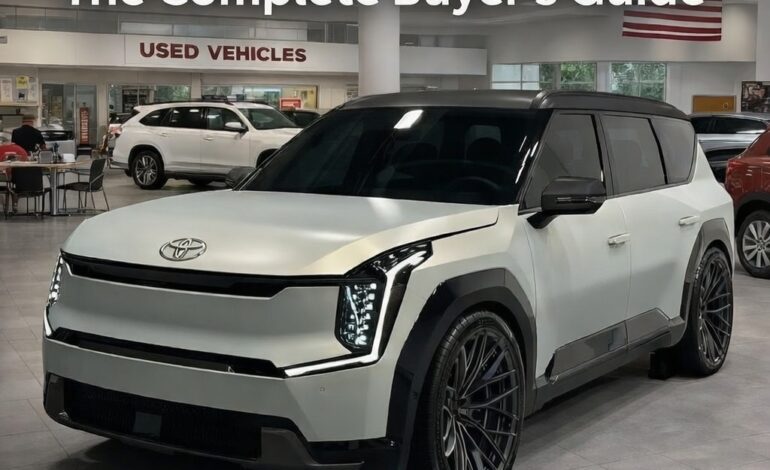

|
It doesn’t win drag races. It won’t make your neighbors jealous. And it will almost certainly never be the most exciting car in any parking lot.
That’s kind of the whole point.
The 2026 Toyota Corolla Cross is engineered for a specific kind of buyer: someone who wants a reliable, fuel-efficient, practical small SUV — at a price that doesn’t require creative financing to justify. And in a market drowning in bloated crossovers with inflated prices, this understated Toyota has quietly become one of the smartest decisions in the segment.
For 2026, Toyota gave it a meaningful mid-cycle refresh. Two distinct front fascias (different designs for gas and hybrid). A reworked center console. A new 10.5-inch touchscreen on upper trims. Fresh colors. And the same proven mechanical package underneath.
This guide covers everything: both powertrains compared precisely, every trim level explained honestly, the full feature breakdown, how it stacks up against every major rival, a detailed ownership cost analysis, and a straight answer on which version you should buy — and why.
1. Is the 2026 Toyota Corolla Cross a Hybrid, Electric, or Gas?
This is the most searched question about this vehicle. Here’s the precise answer.
The 2026 Toyota Corolla Cross is available in two versions — a gasoline model and a self-charging hybrid model. It is not a plug-in hybrid (PHEV) and it is not a fully electric vehicle (BEV).
The Three Versions — Explained Simply
- Gas model (L, LE, XLE): Powered by a 2.0-liter four-cylinder engine only. 169 hp. Available in front-wheel drive or AWD. No electric assistance. Fill with regular unleaded gasoline.
- Hybrid model (S, SE, XSE): Powered by the same 2.0-liter engine paired with three electric motors and Toyota’s 5th Generation Hybrid system. 196 hp total. Standard AWD. Delivers 42 MPG combined. Never needs to be plugged in — charges itself through braking and engine power.
- Fully electric Toyota crossovers (NOT the Corolla Cross): If you want a fully electric Toyota SUV, the options are the 2026 Toyota C-HR BEV ($38,450, 338 hp, 287-mile range) or the 2026 Toyota bZ ($36,350).
| HEV vs PHEV vs BEV — Quick Reference HEV (Hybrid Electric Vehicle): Gas + electric. Self-charging only. No plug. Example: 2026 Corolla Cross Hybrid. PHEV (Plug-in Hybrid): Gas + electric. Plug in for short all-electric range. Example: Toyota RAV4 Prime. BEV (Battery Electric Vehicle): Fully electric. Always plug in. Example: 2026 Toyota C-HR, Toyota bZ. The Corolla Cross is HEV only for 2026. No PHEV or BEV version exists for the U.S. market. |
2. What’s New for 2026: Every Confirmed Change
Toyota officially announced the 2026 Corolla Cross refresh on October 21, 2025 via its U.S. pressroom. The changes focus on three areas: visual identity, interior ergonomics, and technology upgrades. The mechanical platform is unchanged — a deliberate choice to preserve the reliability of a proven formula.
| What Changed | Details |
| Two Distinct Front Ends | Gas model gets a bold, rugged black-contrast grille. Hybrid gets a sleek, color-matched lattice grille — visually separated for the first time. |
| New LED DRL Signature | Fresh daytime running light design across all grades for a more premium, modern look. |
| Reworked Center Console | Redesigned gear shifter surround, improved ergonomics, new phone-stabilizing divider on wireless charging pad, more usable storage beneath. |
| Available 10.5″ Touchscreen | New larger screen option available on XLE and XSE. Standard 8″ continues on L, LE, and S grades. |
| 12.3″ Digital Gauge Cluster | XSE hybrid gets a full digital instrument panel. Other grades receive a 7-inch digital cluster as standard. |
| New Exterior Color: Cavalry Blue | Exclusive to Hybrid XSE. A rich, deep navy that pairs beautifully with the black contrast roof option. |
| New Interior Color: Portobello | Warm brown upholstery newly available on XLE — gives the cabin a more premium, inviting feel. |
| Updated 18″ Alloy Wheels | Two new wheel finishes available on upper trims — refreshes the exterior without changing ride dynamics. |
| Made in Alabama, USA | Both gas and hybrid versions assembled in Huntsville, Alabama — unchanged but prominently communicated for 2026. |
|
One of the smartest decisions Toyota made for 2026: giving gas and hybrid models visually distinct front ends. In previous years they looked nearly identical — frustrating for buyers trying to show off the hybrid badge. Now a glance tells you which powertrain is under the hood.
3. Gas vs. Hybrid: Full Head-to-Head Powertrain Comparison
Most buyers enter a Corolla Cross search knowing they want a small SUV — and then hit the gas-vs-hybrid question. Here’s the complete data to answer it.
| Specification | ⛽ Gas (2.0L 4-Cyl) | ⚡ Hybrid (2.0L + 3 Motors) |
| Starting MSRP (+ destination) | ~$26,370 (L FWD) | ~$31,195 (S AWD) |
| Engine | 2.0L Dynamic Force | 2.0L Dynamic Force |
| Horsepower | 169 hp | 196 hp |
| Drivetrain | FWD standard; AWD opt. | AWD standard — all trims |
| Transmission | CVT | ECVT (Electronic CVT) |
| Toyota Hybrid Generation | N/A | 5th Generation THEV |
| EPA City MPG | 31 mpg (FWD) | 45 mpg |
| EPA Highway MPG | 33 mpg (FWD) | 38 mpg |
| EPA Combined MPG | 32 mpg (FWD) | 42 mpg |
| 0–60 mph (est.) | ~9.5 sec | ~8.1 sec |
| Towing Capacity | Not rated | 1,500 lbs |
| Battery (hybrid only) | N/A | Li-Ion, self-charging |
| Plug-in charging required? | No | No — self-charging HEV |
| Assembly Location | Huntsville, Alabama | Huntsville, Alabama |
| Federal Tax Credit eligible? | No (ICE vehicle) | No (HEV only) |
The Hybrid’s Decisive Advantages
- 42 MPG combined vs. 32 MPG gas FWD — a 31% fuel efficiency gain every single tank
- AWD standard on all three hybrid trims — no upcharge, no option to forget
- 196 hp vs. 169 hp — a noticeably more responsive and confident power delivery
- Three electric motors fill in torque at low speeds — city driving is smoother and quieter
- 1,500-lb tow rating — the gas model carries no tow rating at all
- 8-year / 100,000-mile hybrid battery warranty provides long-term peace of mind
- Higher resale value — hybrid Toyotas consistently command stronger residuals at auction
When the Gas Model Makes More Sense
- Budget is the overriding concern — the gas L starts ~$4,825 less than the hybrid S
- Mostly highway driving narrows the MPG advantage (hybrid excels in city/suburban conditions)
- FWD in mild climates — if AWD truly isn’t needed, paying for it is wasteful
- Shorter ownership window (2–3 years) means less fuel savings to recover the premium
The Fuel Savings Math — Done Precisely
Assume 15,000 miles annually and $3.50 per gallon. The gas AWD model at 30 MPG combined costs approximately $1,750 per year in fuel. The hybrid at 42 MPG costs approximately $1,250 per year — a $500 annual savings.
The hybrid’s premium over an equivalent gas AWD trim is roughly $2,500–$3,200 depending on grade. At $500 annual savings, the payback period is approximately 5–6.4 years — well within the vehicle’s likely ownership window for buyers who keep cars long-term.
| The Real Value Equation
Pure fuel math alone may not justify the hybrid premium for low-mileage drivers. But add in the standard AWD (which the gas model charges extra for), the higher resale value, the smoother power delivery, and the tow rating — and the Hybrid SE at ~$31,200 becomes one of the best all-in values in the subcompact SUV segment. |
4. All 6 Trim Levels — Prices, Features & Which to Buy
The Corolla Cross lineup is organized into two distinct families — three gas grades and three hybrid grades. All prices below are MSRP before destination. Toyota’s destination and handling fee is $1,495 — add this to every figure.
| Trim | Type | MSRP* | Key Standard Features |
| L | Gas | ~$24,875 | 8″ touchscreen, wireless CarPlay/Android Auto, TSS 3.0, BSM, rear-seat vents, ToyotaCare, 6 speakers |
| LE | Gas | ~$26,275 | Adds: heated front seats, push-button start, sunroof prep wiring, updated multimedia |
| XLE | Gas | ~$28,975 | Adds: 10.5″ touchscreen option, leather-trimmed seats, power driver seat, 18″ alloys, Portobello color |
| S | Hybrid | ~$29,700 | All L features + 5th Gen hybrid, standard AWD, 42 MPG combined, ECVT, color-matched grille |
| SE | Hybrid | ~$31,200 | Adds: heated front seats, 8-speaker audio, power driver seat, SofTex upholstery, reworked console |
| XSE | Hybrid | ~$33,900 | Adds: 10.5″ touchscreen, 12.3″ digital cluster, sunroof, JBL audio option, Cavalry Blue color, sport suspension |
*MSRP figures from Edmunds and KBB as of February 2026. Add $1,495 destination for total base price. Final dealer pricing may vary.
Gas Model — Best Value Pick: LE
The base L is genuinely well-equipped — wireless CarPlay, full safety suite, and rear-seat vents are not standard on many competitors at this price. But the LE adds heated front seats and push-button start for only ~$1,400 more. For most buyers, the LE is the right gas choice.
The XLE adds leather seating, a power driver seat, and the option for the 10.5-inch screen. If you plan to own the car 5+ years, the XLE’s premium materials justify the extra cost.
Hybrid Model — Editor’s Pick: SE
The Hybrid SE is our top recommendation for most buyers. At ~$31,200, it gives you heated front seats, 8-speaker audio, SofTex-trimmed seating, the full hybrid system, standard AWD, and 42 MPG — without the price jump of the XSE.
The XSE is worth considering if you specifically want the 10.5-inch touchscreen, the 12.3-inch digital gauge cluster, or the panoramic sunroof. Those features are XSE-exclusive — you can’t add them to the SE at any price.
| Editor’s Pick: 2026 Toyota Corolla Cross Hybrid SE (~$32,695 incl. destination) Best overall value in the lineup. Standard AWD + 42 MPG + heated seats + SofTex upholstery + full Toyota Safety Sense 3.0. No significant feature gaps at this price point. Runner-up: Hybrid XSE if the large touchscreen or digital gauge cluster are priorities for you. |
5. Fuel Economy Deep-Dive: Real-World MPG Expectations
Official EPA Ratings — Confirmed for 2026
- Gas L/LE/XLE FWD: 31 city / 33 hwy / 32 combined MPG
- Gas L/LE/XLE AWD: 29 city / 31 hwy / 30 combined MPG
- Hybrid S/SE/XSE AWD: 45 city / 38 hwy / 42 combined MPG
What Real-World Drivers Actually See
The hybrid’s advantage is most dramatic in city driving — 45 MPG city vs. 31 MPG for the FWD gas model. The electric motors handle low-speed propulsion and braking energy recovery, where gasoline engines are inherently inefficient.
Based on owner data from fueleconomy.gov and Edmunds long-term tests, expect approximately 38–41 MPG in actual mixed driving for the hybrid under normal conditions. The gas model typically achieves 33–36 MPG on steady highway stretches.
Cold weather (below 32°F) reduces hybrid efficiency by 10–20% as the battery operates less efficiently and the cabin heating system draws more energy. Hybrid drivers in northern climates should plan for closer to 34–37 MPG combined in winter months.
6. Interior, Technology & Cabin Space
The 2026 Technology Upgrade — What Changed
The most visible interior change for 2026 is the reworked center console. The gear shifter is now easier to reach, the wireless charging pad has a stabilizing phone divider (your phone no longer slides during cornering), and the storage tray beneath is larger and more usable. These are exactly the kind of small-but-real improvements that improve daily ownership.
- Standard on all grades: 8-inch Toyota Audio Multimedia touchscreen
- Available on XLE and XSE: 10.5-inch Toyota Audio Multimedia (newly available for 2026)
- Standard gauge cluster: 7-inch digital display (all grades except XSE)
- XSE only: 12.3-inch full digital instrument panel
- Standard on all grades: Wireless Apple CarPlay and Wireless Android Auto
- Available on XLE and XSE: JBL premium audio system
- Standard: Rear-seat climate vents — an uncommon feature at this price
- Remote Connect (1-year trial): Lock/unlock, engine start, vehicle locator via smartphone app
- Safety Connect (5-year trial): Emergency notifications and roadside alerts
- Dual wireless charging pad on SE and above
Cabin Dimensions & Cargo Space
- Seating capacity: 5 passengers
- Front headroom: 37.9 inches
- Rear headroom: 38.6 inches
- Front legroom: 42.1 inches
- Rear legroom: 32.0 inches — comfortable for most adults, tight for very tall passengers
- Cargo volume (rear seats up): 21.5 cubic feet
- Cargo volume (seats folded): 52.0 cu ft (gas) / 61.8 cu ft (hybrid — different rear floor due to battery layout)
- Rear seatback: 60/40 split-folding standard
One Known Interior Trade-Off
| “The biggest issue I had was the Corolla Cross’ extensive use of cheap interior materials — patches of rough-cut plastic edges and a ridiculously cheap-looking headliner in my well-optioned XLE and XSE test cars were unpleasant standouts.”
— Cars.com Editorial, September 2025 |
This is a fair criticism. The Corolla Cross is an entry-level-priced vehicle, and some interior panels — particularly the headliner and lower door cards on lower trims — reflect that. The SE and XSE hybrid trims improve things considerably with SofTex and leather, but the headliner remains unchanged across the lineup. Set expectations accordingly.
7. Safety: Toyota Safety Sense 3.0 Across All Trims
Every 2026 Corolla Cross — including the base gas L — comes standard with Toyota Safety Sense 3.0 (TSS 3.0). This is genuinely impressive for a vehicle at this price point. Most competitors charge extra for comparable safety packages on base trims.
Standard on Every Trim — TSS 3.0 Includes
- Pre-Collision System with Pedestrian Detection — automatic emergency braking
- Lane Departure Alert with Steering Assist
- Lane Tracing Assist — active lane centering
- Radar Cruise Control — full-speed range including stop-and-go
- Automatic High Beams
- Road Sign Assist — reads and displays speed limit signs
- Blind-Spot Monitor with Rear Cross-Traffic Alert — standard on all 2026 grades
Upper-Trim Safety Additions
- Front and Rear Parking Assist with Automatic Braking — LE and above
- Rear Cross-Traffic Braking — XLE and XSE
- 360-degree Panoramic View Monitor — XSE hybrid only
- Rear-seat reminder — all grades
The TSS 3.0 system uses a single forward-facing camera and radar sensor working in combination. The third-generation system improved pedestrian and cyclist detection accuracy versus the prior TSS 2.0, and extended automatic braking performance at higher speeds.
8. Exterior Design: How the 2026 Refresh Changes the Look
Two Different Front Fascias — Finally
The single biggest exterior change for 2026 is the decision to give gas and hybrid models distinct front-end designs. Previously, they were nearly identical — which made it impossible to identify a hybrid from 20 feet away. That’s been fixed.
- Hybrid model: A clean, horizontal color-matched grille with a fine hexagonal lattice pattern. Smooth, modern, premium-feeling. Closer to Lexus design language than the previous generation.
- Gas model: A bolder, blacked-out grille with more contrast and visual weight. Rugged, utilitarian, better suited to the adventurous crossover positioning.
Shared 2026 Exterior Updates
- New LED daytime running light signature — all grades, both powertrains
- Updated 18-inch alloy wheel designs in two finishes (upper trims)
- New Cavalry Blue exterior color (Hybrid XSE exclusive)
- Black contrast roof continues as an available option on select grades
- 1 inches of ground clearance — unchanged, adequate for light off-road or deep snow
The overall proportions are unchanged — the Corolla Cross remains compact and urban-friendly, measuring approximately 175 inches long. It sits lower than a traditional SUV, giving it a car-like ride quality that many buyers prefer over the bouncier dynamics of truck-based crossovers.
9. 2026 Corolla Cross vs. 8 Major Competitors
The subcompact SUV segment is the most crowded in the market. Here’s the complete picture of how the Corolla Cross measures up across every key dimension.
| Model | Base Price | MPG comb. | HP | AWD | Standout |
| 2026 Corolla Cross Hybrid ★ | ~$29,700 | 42 mpg | 196 | Standard | Best efficiency + AWD value |
| 2026 Corolla Cross Gas | ~$24,875 | 32 mpg | 169 | Optional | Lowest entry price |
| 2026 Honda HR-V | $24,895 | 31 mpg | 158 | Optional | Best rear seat space |
| 2026 Hyundai Kona | $24,400 | 32 mpg | 147 | Optional | Most standard tech |
| 2026 Mazda CX-30 | $24,595 | 29 mpg | 191 | Optional | Best driving dynamics |
| 2026 Subaru Crosstrek | $26,390 | 29 mpg | 152 | Standard | Best ground clearance |
| 2026 Nissan Kicks | $20,580 | 33 mpg | 141 | FWD only | Lowest sticker price |
| 2026 Hyundai Kona Hybrid | $27,450 | 41 mpg | 139 | Optional | Only real mpg rival |
| 2026 Toyota C-HR BEV | $38,450 | BEV 287mi | 338 | Standard | Toyota’s full EV option |
vs. Honda HR-V — The Space Battle
The HR-V offers more rear legroom and a Magic Seat rear bench that reconfigures for cargo in ways the Corolla Cross can’t match. The HR-V has no hybrid option. The Corolla Cross Hybrid delivers 42 MPG vs. the HR-V’s 31 MPG — a substantial everyday advantage. The HR-V wins for rear passenger comfort; the Corolla Cross Hybrid wins on everything else.
vs. Hyundai Kona — The Tech Battle
The Kona packs more standard infotainment technology at its base price and also offers a fully electric version (Kona Electric). The Corolla Cross Hybrid counters with better fuel economy (42 vs. 32 MPG), standard AWD at a comparable price, and Toyota’s long-term reliability advantage. The Kona Hybrid ($27,450, 41 MPG, optional AWD) is the closest true rival in efficiency terms.
vs. Mazda CX-30 — The Driver’s Choice
The CX-30 is the most engaging car to drive in this class — better steering feedback, more sophisticated suspension tuning, a more premium interior at comparable prices. But it has no hybrid option, which is a decisive disadvantage for efficiency-focused buyers. For driving enthusiasts the CX-30 wins; for practical daily-use buyers the Corolla Cross Hybrid wins.
vs. Subaru Crosstrek — The AWD Battle
Both the Crosstrek and the Corolla Cross Hybrid offer standard AWD. The Crosstrek has better ground clearance (8.7 vs. 8.1 inches) and more genuine off-road credibility. The Corolla Cross Hybrid wins decisively on fuel economy: 42 MPG vs. 29 MPG for the base Crosstrek — a 45% efficiency advantage that adds up to real money over years of ownership.
vs. Toyota C-HR BEV — The Fully Electric Option
These serve entirely different buyers. The C-HR BEV starts at $38,450 and is a fully electric vehicle with 338 hp, 287-mile range, and NACS charging port for Tesla Supercharger access. The Corolla Cross Hybrid starts at $29,700 and never needs charging. If you want the Toyota brand and are ready for a full EV, the C-HR is the answer. If you want the Toyota brand with zero charging infrastructure concerns, the Corolla Cross is the answer.
10. 5-Year Ownership Cost Analysis
Purchase price is only part of the equation. Here’s the full 5-year cost picture for both powertrain options.
| Cost Category | Gas Model (est.) | Hybrid Model (est.) |
| Base Price (incl. destination) | ~$26,370 | ~$31,195 |
| Est. Annual Fuel (15k mi/$3.50) | ~$1,641 | ~$1,250 |
| 5-Year Fuel Savings (vs Gas FWD) | — | ~$1,955 saved |
| 5-Year Hybrid Premium Payback | — | ~12.4 years (AWD vs AWD gas) |
| Scheduled Maintenance (Yr 1–2) | Free – ToyotaCare | Free – ToyotaCare |
| Insurance (est. annual) | ~$1,400–$1,700 | ~$1,450–$1,750 |
| Powertrain Warranty | 5yr / 60k mi | 5yr / 60k mi |
| Hybrid Battery Warranty | N/A | 8yr / 100k mi |
| 5-Year Resale Value (est.) | ~52% retained | ~55% retained |
| Overall 5-Yr Cost Advantage | Lower upfront | Lower running costs |
Assumptions: 15,000 miles/year, $3.50/gallon, average insurance rates, standard maintenance schedule. Fuel savings calculated gas AWD vs. hybrid AWD for fair comparison. Resale value estimates based on historical Toyota and iSeeCars data.
The Corolla Cross consistently ranks among the top resale value vehicles in its segment — particularly the hybrid. Toyota hybrids carry a reliability premium in the used car market that makes the upfront cost easier to justify over a full ownership cycle.
11. Who Should Buy the Hybrid — and Who Should Buy the Gas?
Buy the Hybrid If:
- You drive more than 10,000 miles per year — fuel savings compound meaningfully
- You want standard AWD without paying extra for it
- City or suburban commuting is most of your driving — hybrid is at its best in stop-and-go
- You plan to own the vehicle for 5 or more years
- You occasionally tow a small trailer, kayak rack, or utility trailer (1,500-lb capacity)
- You want Toyota’s most advanced powertrain technology in this vehicle class
- Long-term peace of mind matters — 8-year / 100k hybrid battery warranty
Buy the Gas Model If:
- Budget is the primary driver — the gas L starts nearly $5,000 below the hybrid S
- Most of your driving is highway miles — the MPG gap narrows significantly above 60 mph
- You live in a mild climate where FWD is genuinely sufficient
- You’re buying as a second car or for a new driver where cost-per-month matters most
- You prefer the simplest possible powertrain for ease of ownership
12. Toyota’s Full 2026 Crossover Family — Where Corolla Cross Fits
Toyota now offers a broad range of crossovers spanning from the budget-friendly Corolla Cross to the full-size Sequoia. Understanding where each sits helps you confirm you’re looking at the right vehicle.
- Corolla Cross Hybrid — from ~$29,700. Most affordable Toyota crossover with standard AWD. Best for: efficiency-first buyers, first-time SUV buyers, urban/suburban drivers.
- RAV4 Hybrid — from ~$33,900. Larger, more powerful (219 hp), better tow rating (3,500 lbs). Best for: families, buyers needing more cargo space.
- RAV4 Prime (PHEV) — from ~$44,300. Plug-in hybrid with ~42-mile EV range. Best for: buyers who can charge at home and want to minimize gas usage without committing to full EV.
- Toyota C-HR BEV — from $38,450. Fully electric compact crossover. 338 hp, 287-mile range. Best for: EV-ready buyers wanting Toyota reliability with no gas costs.
- Toyota bZ — from ~$36,350. Fully electric mid-size crossover. Best for: larger-vehicle EV buyers.
- Toyota bZ Woodland — from ~$46,750. Fully electric adventure crossover. 375 hp. Best for: outdoor/active lifestyle buyers willing to pay for the flagship BEV.
The Corolla Cross Hybrid fills a specific and important gap: the most affordable Toyota with standard AWD and a genuine efficiency advantage. Nothing else in Toyota’s lineup hits this combination at this price point.
13. Frequently Asked Questions
What is the difference between the 2026 Toyota Corolla Cross and the Toyota C-HR?
They are fundamentally different vehicles. The 2026 Toyota Corolla Cross is a gasoline or hybrid subcompact SUV starting from ~$24,875, designed for everyday practicality and fuel efficiency. The 2026 Toyota C-HR is a fully electric (battery-only) compact crossover starting at $38,450, with 338 hp, 287 miles of range, and NACS charging port access to Tesla Superchargers. The C-HR is Toyota’s performance EV; the Corolla Cross is the affordable, never-plug-in daily driver.
Is the 2026 Toyota Corolla Cross fully electric?
No. The 2026 Toyota Corolla Cross is not a fully electric vehicle. It is available as a gasoline model (169 hp, from ~$24,875) or a self-charging hybrid (196 hp, 42 MPG, from ~$29,700). The hybrid never needs to be plugged in. If you want a fully electric Toyota crossover, consider the 2026 C-HR BEV or the 2026 Toyota bZ.
Does the 2026 Corolla Cross Hybrid need to be plugged in?
No. The Corolla Cross Hybrid is a traditional self-charging hybrid (HEV). It charges its own battery through regenerative braking and excess engine power. You fill it with regular unleaded gasoline — just less often than a gas-only car. There is no charging port and no need for a home charger.
What is the MPG of the 2026 Toyota Corolla Cross Hybrid?
The 2026 Toyota Corolla Cross Hybrid is EPA-rated at 45 MPG city, 38 MPG highway, and 42 MPG combined. This applies to all three hybrid trims (S, SE, and XSE), all of which come with standard AWD. Real-world fuel economy typically falls 5–10% below the EPA estimate depending on driving conditions.
What is the starting price of the 2026 Toyota Corolla Cross?
The 2026 Toyota Corolla Cross gas model starts at approximately $24,875 (L trim FWD) before destination. Adding Toyota’s $1,495 destination fee brings the total base price to approximately $26,370. The Hybrid S trim starts at approximately $29,700 before destination ($31,195 total). All prices are MSRP — dealer market adjustments may apply on high-demand trims.
What is new for the 2026 Toyota Corolla Cross?
Key 2026 updates include: two distinct front-end designs differentiating gas vs. hybrid models; redesigned center console with improved ergonomics and phone stabilizer; new optional 10.5-inch touchscreen on XLE and XSE; new 12.3-inch digital gauge cluster on XSE; new Cavalry Blue exterior color (Hybrid XSE exclusive); new Portobello interior color option; updated 18-inch alloy wheel designs.
Does the 2026 Corolla Cross come with AWD?
The hybrid model includes standard Electronic On-Demand AWD on all three trims (S, SE, XSE) at no extra charge. The gas model offers AWD as a paid option on all three gas trims (L, LE, XLE). If AWD is important to you, the hybrid is the better value — you get it automatically without paying an upcharge.
Where is the 2026 Toyota Corolla Cross made?
Both the gas and hybrid versions of the 2026 Toyota Corolla Cross are assembled at Toyota Motor Manufacturing Alabama in Huntsville, Alabama. This makes it a U.S.-built vehicle, which is relevant for certain buyers prioritizing domestic assembly.
Does the 2026 Toyota Corolla Cross qualify for the federal EV tax credit?
No. The gasoline Corolla Cross is not eligible because it is not an electric vehicle. The hybrid Corolla Cross is not eligible because federal EV tax credits require plug-in capability — self-charging HEVs are excluded. No federal EV incentive applies to any version of the 2026 Corolla Cross.
Which 2026 Corolla Cross trim is the best value?
For the hybrid lineup, the SE (~$31,200 before destination) is our top recommendation — it includes heated seats, SofTex upholstery, standard AWD, 42 MPG, and the full Toyota Safety Sense 3.0 suite. For the gas lineup, the LE (~$26,275 before destination) adds heated seats and push-button start over the base L for only ~$1,400 more, making it the best value in the gas family.
14. Key Takeaways & Next Steps
The 2026 Toyota Corolla Cross Hybrid is one of the best-value compact crossovers on sale today. Standard AWD, 42 MPG, Toyota’s proven reliability, and a comprehensive safety suite on every trim — all starting under $31,200. The 2026 refresh makes a good car measurably better with improved technology, sharper styling, and a more ergonomic interior.
The gas model remains the right answer for buyers where upfront cost is the deciding factor. The hybrid is the right answer for almost everyone else.
| Key Takeaways — 2026 Toyota Corolla Cross
NOT a fully electric vehicle — gas or self-charging hybrid only Hybrid: 196 hp, standard AWD on all trims, 42 MPG combined — from ~$31,195 (incl. destination) Gas: 169 hp, optional AWD, 32 MPG combined — from ~$26,370 (incl. destination) 6 trim levels: Gas L/LE/XLE | Hybrid S/SE/XSE 2026 updates: Distinct front fascias for gas/hybrid, 10.5″ screen option, reworked console, new colors Assembled in Huntsville, Alabama — U.S.-built, both powertrains ToyotaCare: 2 years / 25,000 miles free scheduled maintenance + 2-year roadside Toyota Safety Sense 3.0 standard on ALL trims — including base gas L Hybrid battery warranty: 8 years / 100,000 miles Editor’s Pick: Hybrid SE (~$32,695 incl. destination) — best all-round value Want a fully electric Toyota? Look at the C-HR BEV ($38,450) or Toyota bZ ($36,350) |
Next Steps
- Build and price your Corolla Cross at toyota.com/corollacross
- Find current inventory and dealer pricing at toyota.com/find-a-dealer
- Compare trim features in detail on Edmunds at edmunds.com
- Check state-level incentives (hybrids may qualify in some states) at dsireusa.org
- Verify final EPA fuel economy ratings at fueleconomy.gov
- Check IIHS safety ratings at iihs.org when 2026 results are published
Sources
- Toyota USA Newsroom — ‘Assembled in America and Arriving Now: 2026 Toyota Corolla Cross,’ October 21, 2025 (pressroom.toyota.com)
- Kelley Blue Book — ‘2026 Toyota Corolla Cross Review, Pricing, Specs & Photos’ (kbb.com)
- Edmunds — ‘2026 Toyota Corolla Cross Specs, Features & Options’ (edmunds.com)
- com Editorial — ‘2026 Toyota Corolla Cross: Expert Review,’ September 24, 2025 (cars.com)
- Consumer Reports — ‘2026 Toyota Corolla Cross Hybrid Preview’ (consumerreports.org)
- CarsDirect — ‘2026 Toyota Corolla Cross Hybrid: Reviews, Prices, Ratings and Specs’ (carsdirect.com)
- EPA Fuel Economy Guide — Official MPG ratings (fueleconomy.gov)
© 2026 AutoGuide Editorial | Published February 26, 2026 | Prices exclude destination. Verify current pricing and availability with your local Toyota dealer.
Discover more from MatterDigest
Subscribe to get the latest posts sent to your email.