5 Everyday Habits That Are Quietly Destroying Your Brain Health

A Science-Backed Guide to Protecting Your Mind
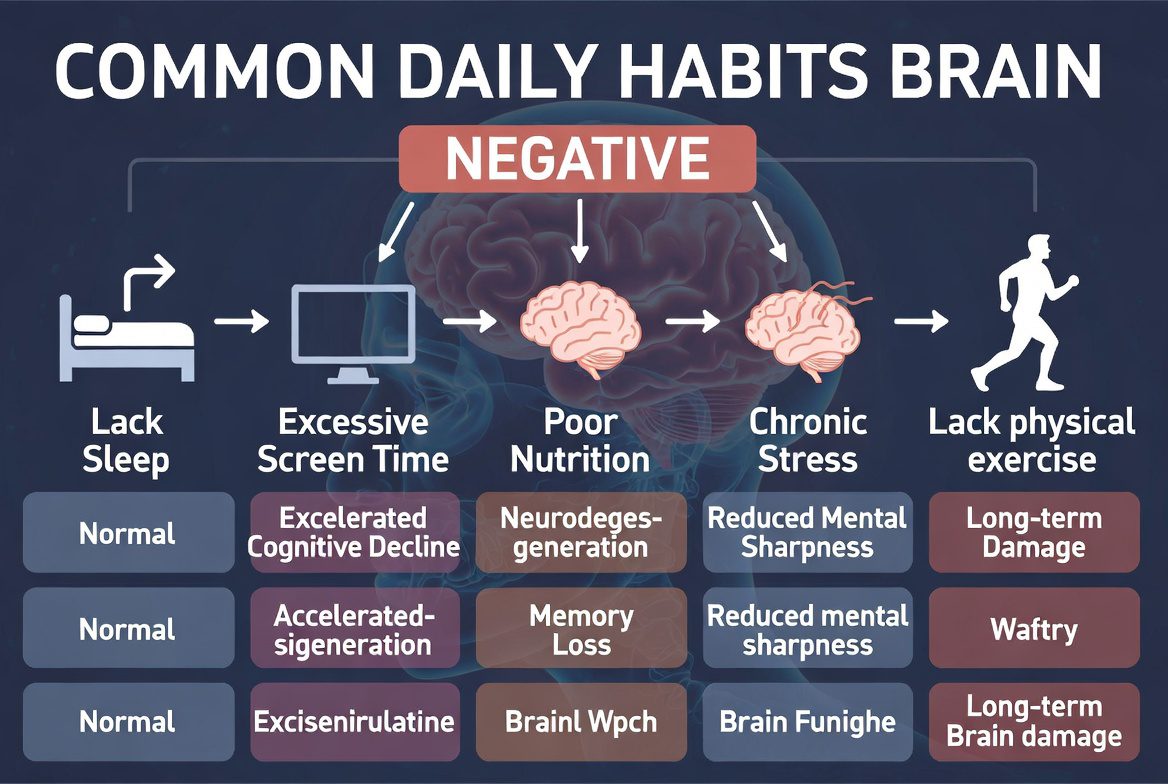
QUICK ANSWER: The five everyday habits most damaging to brain health are chronic sleep deprivation, eating ultra-processed foods, prolonged sitting, unmanaged chronic stress, and social isolation. Each disrupts key neurological processes including memory consolidation, neurogenesis, and the clearance of toxic brain waste.
Why Your Brain Is at Risk Right Now
Here’s a sobering fact: Alzheimer’s disease and other dementias now affect more than 55 million people worldwide, and that number is projected to nearly triple by 2050 according to the World Health Organization.
But here’s what most people don’t realize — brain decline rarely happens overnight. It sneaks up on you. It hides in your daily routines. That’s what makes it so dangerous.
The habits we’re about to cover aren’t exotic or extreme. They’re ordinary. You’re probably doing at least one of them right now. And while none of them will send you to the ER today, researchers increasingly link them to measurable neurological damage over time.
The good news? Most of this is reversible — especially if you catch it early. This guide breaks down each habit, what the science actually says, and exactly what you can do to course-correct.
Habit #1: Chronic Sleep Deprivation
Your Brain’s Overnight Cleaning Crew
You probably know that skimping on sleep makes you foggy the next day. But the damage goes much deeper than that.
During sleep — specifically deep, slow-wave sleep — your brain activates the glymphatic system. Think of it as your brain’s overnight janitorial crew. It flushes out toxic waste products, including beta-amyloid and tau proteins — the exact proteins that accumulate in Alzheimer’s disease. Miss enough sleep, and the garbage piles up.
A landmark 2019 study published in Science found that just one night of sleep deprivation significantly increased beta-amyloid accumulation in the human brain — particularly in the hippocampus, the region critical for memory formation.
How Much Sleep Is Actually Enough?
The American Academy of Sleep Medicine recommends 7–9 hours per night for adults. Chronic sleep restriction (6 hours or fewer) has been linked to:
- Accelerated cognitive decline over 10–25 years (Sabia et al., Nature Communications, 2021)
- Shrinkage of the hippocampus and prefrontal cortex
- Impaired emotional regulation and decision-making
- Increased risk of depression and anxiety
The ‘Catch Up on Weekends’ Myth
Social jetlag — staying up late and sleeping in on weekends — doesn’t fully compensate for weekday sleep debt. A 2019 study in Current Biology found that ‘recovery sleep’ on weekends failed to reverse metabolic and cognitive impairments caused by chronic insufficient weekday sleep.
What to Do Instead
- Set a consistent bedtime and wake time, even on weekends
- Keep your bedroom cool (65–68°F / 18–20°C)
- Eliminate blue light exposure for at least 60 minutes before bed
- Treat sleep as a non-negotiable health pillar, not a luxury
Habit #2: Eating an Ultra-Processed Diet
The Diet-Brain Connection Most People Overlook
What you eat doesn’t just affect your waistline. It shapes your brain — literally.
The gut-brain axis is a bidirectional communication network linking your digestive system to your central nervous system. Your gut microbiome produces neurotransmitters, regulates inflammation, and influences the blood-brain barrier. When you routinely eat ultra-processed foods — packaged snacks, fast food, sugary beverages, refined carbohydrates — you disrupt this entire system, driving chronic neuroinflammation.
What the Research Shows
A major 2022 study in JAMA Neurology followed over 10,000 adults for nearly a decade and found that each 10% increase in ultra-processed food consumption was associated with a 16% faster rate of cognitive decline and a 28% faster rate of global brain aging.
Meanwhile, the MIND diet — rich in leafy greens, berries, fish, olive oil, nuts, and whole grains — has been shown to reduce Alzheimer’s risk by up to 53% in those who follow it most closely (Rush University Medical Center).
What to Do Instead
- Replace ultra-processed snacks with whole-food alternatives (nuts, berries, Greek yogurt)
- Eat fatty fish (salmon, sardines, mackerel) at least twice per week for omega-3 DHA
- Add leafy greens daily — even one cup of spinach per day was linked to slower cognitive aging
- Reduce added sugar to under 25g per day (WHO recommendation)
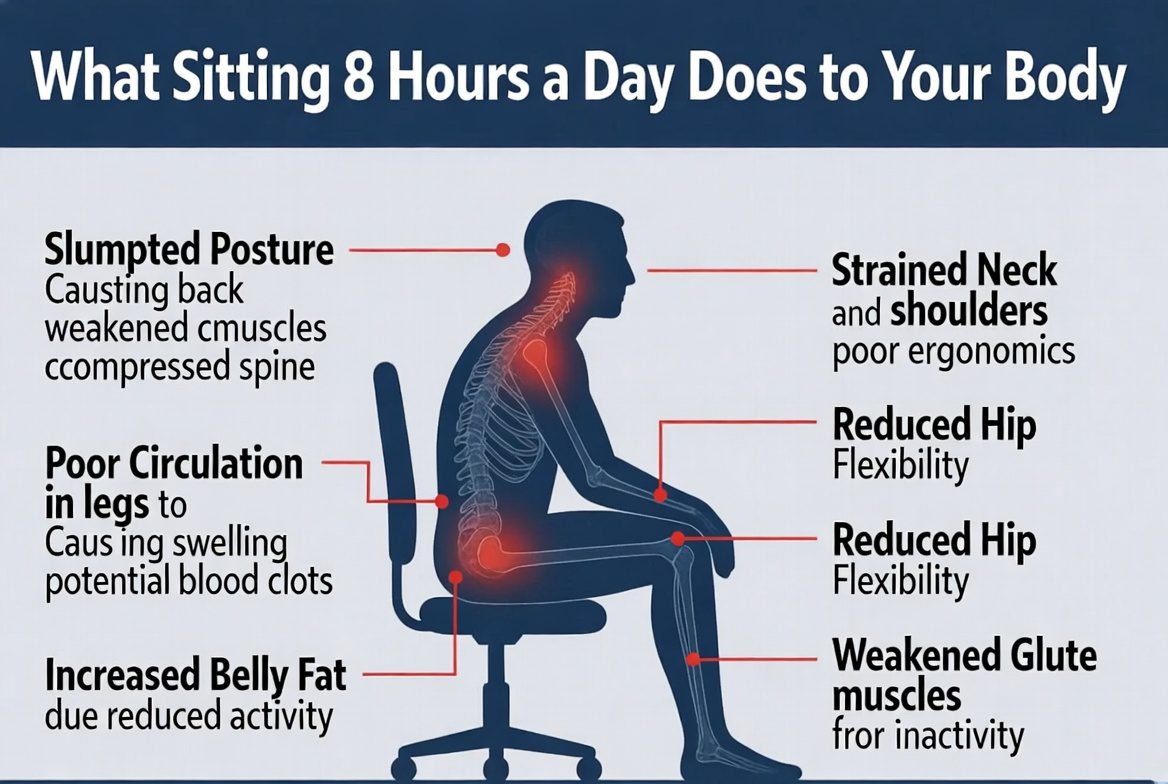
Habit #3: Sitting All Day
Your Brain Needs Movement to Thrive
Physical activity triggers the release of brain-derived neurotrophic factor (BDNF) — a protein often called ‘Miracle-Gro for the brain.’ BDNF stimulates the growth of new neurons (neurogenesis), strengthens existing synaptic connections, and protects the brain against age-related decline. Sit for hours every day, and your BDNF levels drop.
The Research Is Clear
A 2018 study in PLOS ONE found that thickness of the medial temporal lobe was thinner in people who sat for more hours each day — even among those who exercised regularly. Prolonged sitting appears to harm the brain independently of whether you go to the gym afterward.
Regular aerobic exercise, on the other hand, has been shown to increase hippocampal volume by 2% in older adults after just 6 months (Erickson et al., PNAS, 2011), and reduce risk of Alzheimer’s disease by up to 45%.
What to Do Instead
- Aim for at least 150 minutes of moderate aerobic exercise per week (brisk walking counts)
- Break up sitting every 30–45 minutes with a short walk or movement break
- Consider strength training 2x per week — resistance exercise also boosts BDNF
- Walk after meals — even 10 minutes improves blood sugar control and brain blood flow
Habit #4: Chronic Stress Without Recovery
Cortisol’s Assault on Your Brain
Short-term stress sharpens your focus. It’s adaptive. Chronic, unrelenting stress? That’s a different story entirely.
When your brain perceives ongoing threat — from a toxic workplace, financial pressure, or constant worry — it keeps pumping cortisol. And sustained high cortisol is neurotoxic. The hippocampus has a dense concentration of cortisol receptors. Prolonged cortisol exposure damages and eventually kills hippocampal neurons, leading to measurable shrinkage of this memory-critical structure.
The Stress-Inflammation Loop
Chronic stress also promotes systemic inflammation. Cortisol dysregulates the immune system, allowing inflammatory cytokines to cross the blood-brain barrier and cause damage. A 2021 review in Neuroscience & Biobehavioral Reviews found that high allostatic load was strongly associated with cognitive impairment in midlife and older adults.
What to Do Instead
- Practice slow, diaphragmatic breathing: inhale 4 counts, exhale 6–8 counts — this directly stimulates the vagus nerve and lowers cortisol
- Incorporate mindfulness meditation — even 10 minutes daily increases gray matter density within 8 weeks
- Spend time in nature — ‘forest bathing’ (shinrin-yoku) has demonstrated measurable cortisol-lowering effects in peer-reviewed research
- Prioritize genuine leisure — activities with no productivity goals
Habit #5: Social Isolation and Loneliness
The Brain Killer Nobody Talks About
The U.S. Surgeon General declared loneliness a public health epidemic in 2023. And the brain science behind that designation is alarming.
Social isolation triggers chronic stress responses. The socially isolated brain enters a state of threat vigilance, keeping cortisol elevated and inflammation high. But social engagement also actively exercises the brain — conversations require real-time language processing, emotional attunement, perspective-taking, and memory retrieval.
What the Numbers Say
- Lonely individuals have a 26% increased risk of dementia (Nature Aging, 2022)
- Social isolation was associated with a 26% higher risk of premature death — comparable to smoking up to 15 cigarettes per day (Holt-Lunstad meta-analysis)
- The 75-year Harvard Study of Adult Development concluded that quality of relationships is the single strongest predictor of healthy aging, including brain health
What to Do Instead
- Prioritize depth over breadth in your social life — invest in a few close relationships
- Make social engagement a scheduled, non-negotiable part of your week
- Volunteer or join community groups — purpose-driven social activity offers compounding brain benefits
- Limit passive social media scrolling, which often increases feelings of isolation rather than reducing them
FAQ: Your Brain Health Questions Answered
Can brain damage from these habits be reversed?
The brain has remarkable plasticity, especially in earlier stages of decline. Many changes caused by poor sleep, diet, inactivity, stress, and isolation are at least partially reversible — particularly if addressed before significant neurodegeneration occurs. The hippocampus, in particular, can regrow neurons in response to exercise and enriched environments.
Which habit is most damaging to the brain?
Research suggests that chronic sleep deprivation may have the most acute and far-reaching effects, given its direct role in amyloid clearance. However, these habits rarely occur in isolation — they interact and compound each other. Addressing all five is the most effective strategy.
How long before I see cognitive improvements?
Some improvements — like better focus and mood after consistent sleep — appear within days. Measurable structural changes in the brain (like hippocampal volume increase from exercise) have been demonstrated within 6 months in clinical studies. Long-term protection against dementia accumulates over years.
Are brain supplements effective?
Most supplements marketed for brain health have weak or inconsistent evidence. Omega-3 DHA, vitamin D (if deficient), and B-vitamins (for those with deficiency) have the most evidence behind them. No supplement replaces the foundational habits covered in this article.
Your Brain Health Action Plan
You don’t need to overhaul your entire life overnight. Small, consistent changes produce real results.
This Week — Pick One
- Go to bed 30 minutes earlier than usual
- Add one serving of fatty fish or a handful of walnuts to your daily diet
- Take a 20-minute walk after dinner each evening
- Schedule one meaningful social interaction (in person if possible)
- Try 5–10 minutes of slow breathing or guided meditation before bed
This Month — Build a Foundation
- Establish a consistent sleep schedule (same bedtime and wake time daily)
- Replace one ultra-processed food habit with a whole-food alternative
- Commit to 150 minutes of moderate exercise per week
- Identify your primary chronic stressor and take one concrete step to address it
This Year — Compound Your Gains
- All five habits become non-negotiable parts of your routine
- Get an annual check-in on cardiovascular health markers — vascular health is closely tied to brain health
- Consider cognitive baseline testing if you’re over 50
Key Takeaways
Your brain is not on an inevitable decline. The trajectory is shaped — in large part — by what you do every day.
- Sleep protects your brain’s cleaning system — don’t shortchange it
- A whole-food diet fights neuroinflammation that quietly erodes cognition
- Movement grows new neurons — even walking counts
- Stress management preserves your hippocampus — chronic cortisol destroys it
- Meaningful connection keeps your brain cognitively engaged and biologically resilient
None of these changes require expensive supplements or radical lifestyle overhauls. They require intention, consistency, and the knowledge that your brain is worth protecting. Start today.
Sources & Further Reading
- Xie, L. et al. (2013). Sleep drives metabolite clearance from the adult brain. Science, 342(6156), 373–377.
- Sabia, S. et al. (2021). Association of sleep duration in middle and old age with incidence of dementia. Nature Communications, 12, 2289.
- Kesse-Guyot, E. et al. (2022). Ultra-processed food consumption and cognitive decline. JAMA Neurology, 79(6).
- Erickson, K.I. et al. (2011). Exercise training increases size of hippocampus and improves memory. PNAS, 108(7), 3017–3022.
- Holt-Lunstad, J. et al. (2015). Loneliness and social isolation as risk factors for mortality. Perspectives on Psychological Science, 10(2), 227–237.
This article is for informational purposes only and does not constitute medical advice. Consult a qualified healthcare professional for personalized guidance regarding cognitive health concerns.
Discover more from MatterDigest
Subscribe to get the latest posts sent to your email.